
How Much Do Outdoor Christmas Lights Increase Your Energy Bill in Sacramento 2026?
People ask me this almost apologetically every year: how much is this going to add to my bill? Here's the honest Sacramento number, and why it's usually way less than you'd think.
How much do outdoor Christmas lights increase your energy bill in Sacramento? For most homes running a modest LED display, the increase is a small fraction of your monthly bill, often just a few dollars a month. Incandescent displays cost noticeably more, sometimes $50 to $75 a month for a full setup running several hours a night. SMUD reports that LED holiday lights use about 80 percent less energy than older incandescent strings, and California's electricity rates run higher than the national average, which makes the switch to LED worth more here than in most parts of the country.
Want a display that looks great without the guilt?
Free design consultation, transparent pricing, no obligation.
This is one of those questions people ask me almost apologetically, like they're worried the answer is going to ruin their holiday spirit. "Clark, be honest, how much is this going to add to my SMUD bill?" The honest answer is usually a lot less than people expect, especially if you're running LED. But the type of lights you use and how long they're on each night make a real difference, so let's actually run the numbers.
I'm Clark, I run Santa's Lights here in Sacramento, and we design displays for homes all over the area, from Land Park to Elk Grove to Folsom. Here's what a display actually costs to run, and how you can figure out your own number.
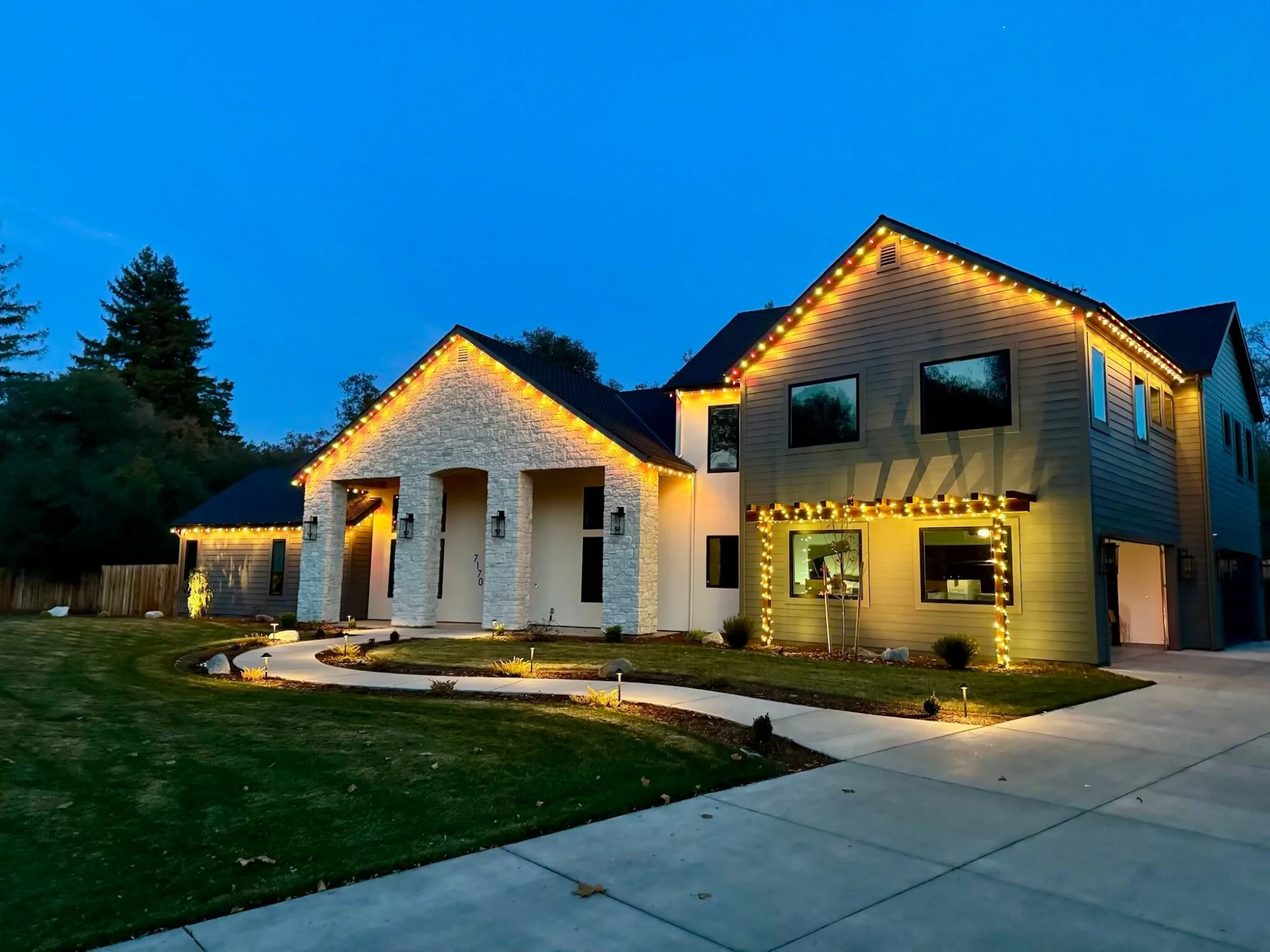
What's the Real Cost Breakdown for Outdoor Christmas Lights?
The type of bulb matters more than almost anything else in this equation. Here's roughly what it costs to run a typical display for a month, running about 6 hours a night.
| Display type | Typical monthly cost | Why |
|---|---|---|
| Small LED display | A few dollars | Low wattage per strand, minimal draw even running nightly |
| Full roofline LED display | $10 – $20 | More strands, but LED's low draw keeps the total manageable |
| Full roofline incandescent display | $50 – $75+ | Older bulbs draw far more power per strand, and it adds up fast over a full house |
Real numbers from the Department of Energy: lighting a 6 foot tree for 12 hours a day over 40 days costs around 27 cents with LED versus roughly $10 with incandescent, according to the U.S. Department of Energy. Scale that up to a full roofline and the gap only gets wider.
How Do You Calculate Your Own Display's Cost?
If you want your actual number instead of a general range, here's the simple formula. It looks more complicated written out than it actually is.
-
Find the wattage
Check the tag on your light strand, or look up the model. Most LED strands run 3 to 7 watts per 100 bulbs. Incandescent runs 30 to 50 watts for the same count.
-
Add up your total watts
Multiply by how many strands you're running.
-
Convert to kilowatts
Divide your total watts by 1,000.
-
Multiply by hours run per day, then by your rate
SMUD's residential rate runs roughly 25 to 40 cents per kilowatt hour depending on your plan and time of use.
Example: ten strands of 100 LED lights at 5 watts each is 500 watts, or half a kilowatt. Running 6 hours a night at 30 cents per kilowatt hour works out to about 90 cents a night, or roughly $27 for a full 30 day season. The same setup in incandescent, at roughly 40 watts per strand, would run closer to $7 a night, or over $200 for the season.
Why Sacramento's Electricity Rates Make This Matter More
California electricity rates run higher than the national average, and Sacramento sits solidly in that range through SMUD. That means the exact same display costs more to run here than it would in a lot of other states, which is exactly why the LED versus incandescent choice matters more locally than the national average numbers suggest.
- Higher baseline rates. California rates generally run above the national average, so every watt costs a bit more here.
- Time of day pricing. SMUD's standard residential rate is higher during peak hours, typically 5 to 8pm, which happens to be exactly when most people run their holiday lights.
- LED's savings compound. Since rates are higher here, the percentage savings from switching to LED translate to a bigger real dollar difference than in a lower cost state.
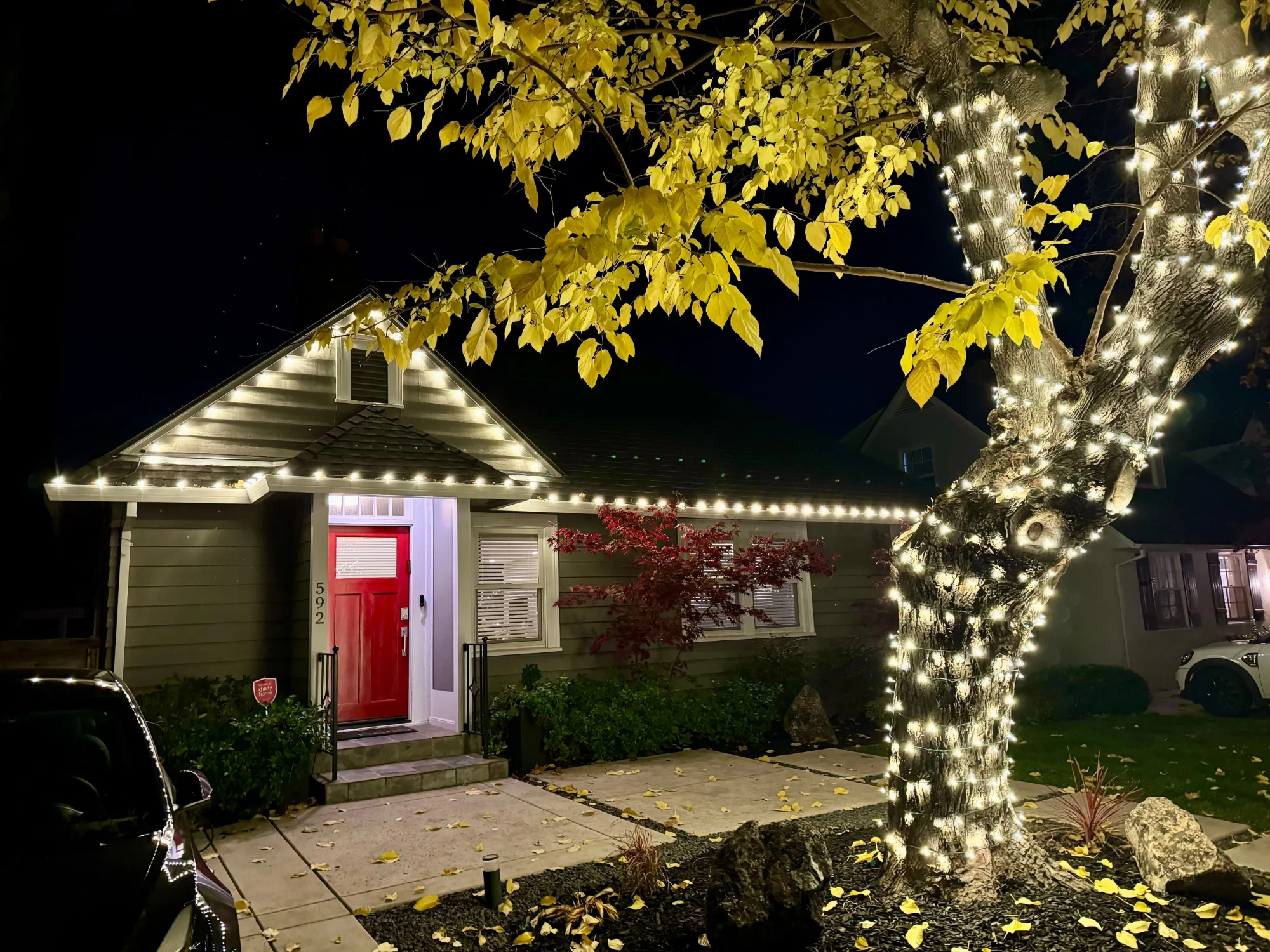
How Do You Keep the Bill Increase Small?
A few genuinely simple habits make a real difference here, straight from what SMUD itself recommends every season.
-
Use LED, always
This is the single biggest factor by far. Everything else is a smaller adjustment on top of this one.
-
Put lights on a timer
Running from sunset to midnight uses roughly twice the energy of running until 10pm. A timer handles this automatically so you're not leaving lights on longer than you actually enjoy them.
-
Avoid running lights all night
Nobody's awake to see them at 3am anyway.
-
Check your strands each season
A cheap, aging strand can develop resistance issues that waste energy and create a fire risk, which is one more reason a quality system pays for itself.
-
Run lights outside peak hours where you can
If your plan has time of use pricing, shifting even an hour or two outside the 5 to 8pm window can shave a little off the total.
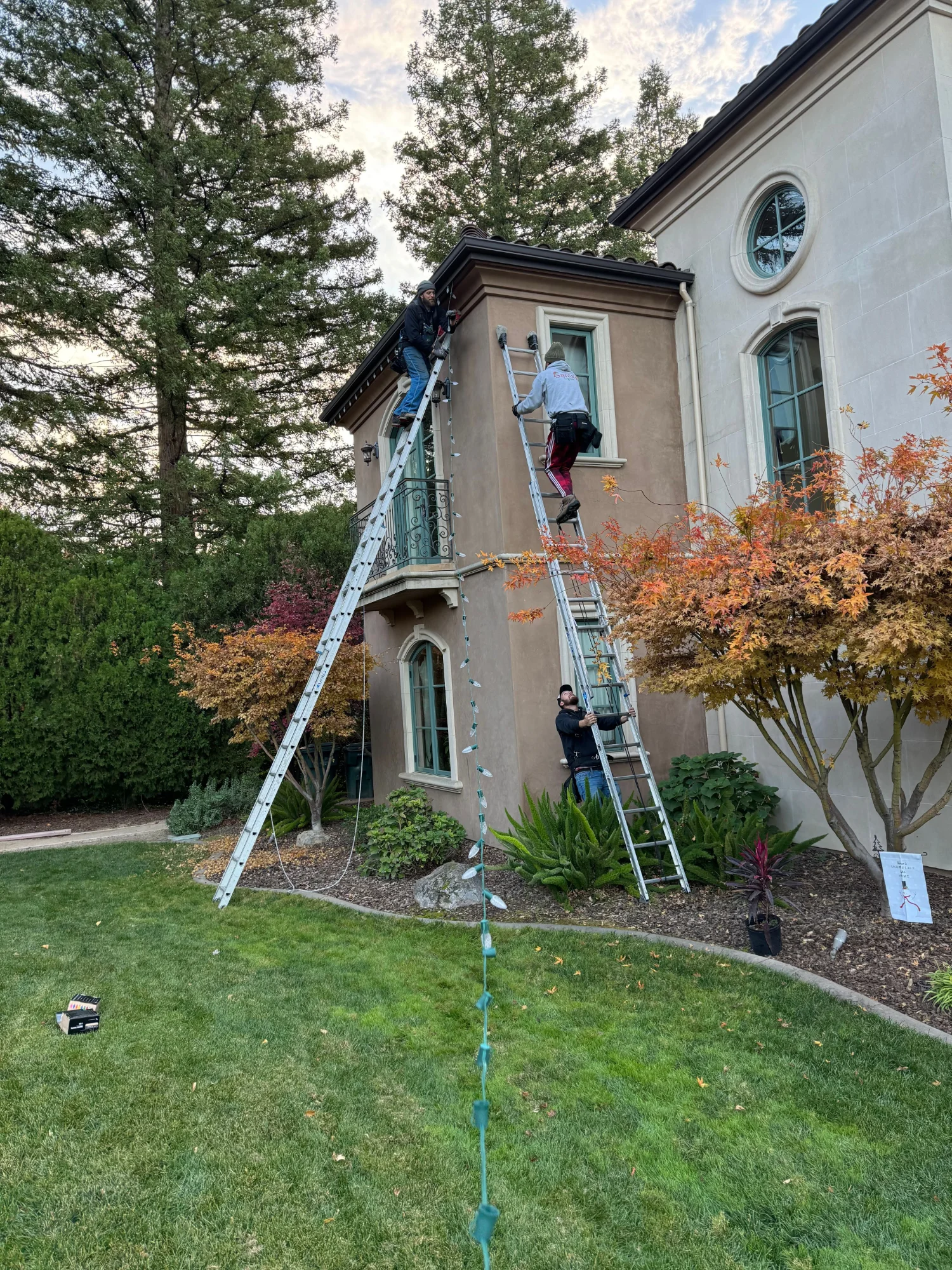
We had a family in Elk Grove who'd been dreading their December SMUD bill every year because of an old incandescent display they'd built up over a decade. We swapped the whole thing to LED and put it on a smart timer. Same look from the street, brighter even, and their bill barely moved that December. They were genuinely surprised how small the difference was.
Let us design a display that's beautiful and efficient.
We use LED for every project, so you get the look without the bill shock.
What Does a Full Holiday Season Actually Cost?
Most people run their display for around 5 to 6 weeks, roughly Thanksgiving through early January. Here's what that adds up to across the season, not just a single month.
| Display size | LED, full season | Incandescent, full season |
|---|---|---|
| Small display, few strands | $5 – $10 | $40 – $60 |
| Medium roofline display | $15 – $30 | $100 – $150 |
| Large full home display | $30 – $50 | $200+ |
Common Energy Myths About Christmas Lights, Debunked
- "Leaving lights on all night barely uses more power." Not true. Running from sunset to sunrise roughly doubles or triples your runtime compared to switching off at 10 or 11pm, and cost scales directly with hours run.
- "Old incandescent lights aren't that much worse." They genuinely are. The Department of Energy puts LED's advantage at roughly 70 to 90 percent less energy for the same brightness.
- "A bigger display always means a bigger bill." Size matters less than bulb type. A large LED display often costs less to run than a small incandescent one.
- "Permanent lighting must cost a fortune to run year round." Since it's the same efficient LED technology, the per night cost stays low even with more total nights of use across the year.
Does Permanent Lighting Change the Energy Math?
If you're running permanent lighting year round rather than just for the holidays, the same LED efficiency applies every single night, not just in December. Since permanent systems tend to get used more often, for holidays, birthdays, game days, the low operating cost of LED matters even more over the course of a full year than it does for a display that only runs six weeks a season.
"The lights look incredible, so much brighter and cleaner than what we had before. We already booked them again for next season."
Dave Mishoe, Google Review, Sacramento HomeownerCurious what an efficient display would look like on your home?
Try our AI Visualizer and see it before you commit to anything.
FAQ: Christmas Light Energy Costs in Sacramento, Answered
Will Christmas lights significantly raise my SMUD bill?
For a modest LED display, the increase is typically small, often just a few dollars a month. Larger incandescent displays run much higher, sometimes $50 or more a month.
Are LED Christmas lights really that much cheaper to run?
Yes. SMUD and the Department of Energy both confirm LED lights use roughly 70 to 80 percent less energy than incandescent, which adds up fast over a full holiday season.
Does Sacramento's electricity rate make this worse than other places?
California rates run above the national average, so the same display does cost more here than in a lower rate state. That also means switching to LED saves you more in real dollars here than it would elsewhere.
Does a timer actually make a noticeable difference?
Yes. Running lights from sunset to midnight uses roughly double the energy of running until 10pm. A timer is a simple way to cut runtime without cutting your display short.
How do I figure out what my own display actually costs?
Check the wattage on your strands, add up your total watts, convert to kilowatts, then multiply by your nightly runtime and your electricity rate. Most LED displays land at just a few dollars a month using this math.
What does a full holiday season cost, not just a month?
A typical LED roofline display running the standard 5 to 6 week season usually lands somewhere between $15 and $50 total, compared to well over $100 for the same size display in incandescent.
Is permanent lighting more expensive to run than seasonal lights?
Since it uses the same efficient LED technology, permanent lighting isn't significantly more expensive per night. It just gets used more often throughout the year, holidays, birthdays, game days, so total annual cost is a bit higher, but the cost per use stays low.
Every year somebody tells me they almost skipped their display because they were worried about the bill. Almost every time, once we actually run the numbers together, the real cost is a fraction of what they'd imagined, especially with LED. Don't let bill anxiety talk you out of a good display. Run the actual numbers first.
Clark, Santa's Lights

Clark started Santa's Lights back in 2014 with a ladder, a truck, and way too much confidence in his own knot tying. Since then he's lit up thousands of homes across Sacramento, Folsom, Roseville, and beyond, and he still shows up to jobs himself often enough to know exactly what he's talking about. When he's not on a roofline, he's probably answering your call directly, because that's still how this business works.