

Color Temperature & Bulb Style Guide for Sacramento Christmas Lights
If you've ever stood in the lighting aisle completely overwhelmed, this is for you. Kelvin ratings, bulb shapes, and the one mistake that makes most displays look off.
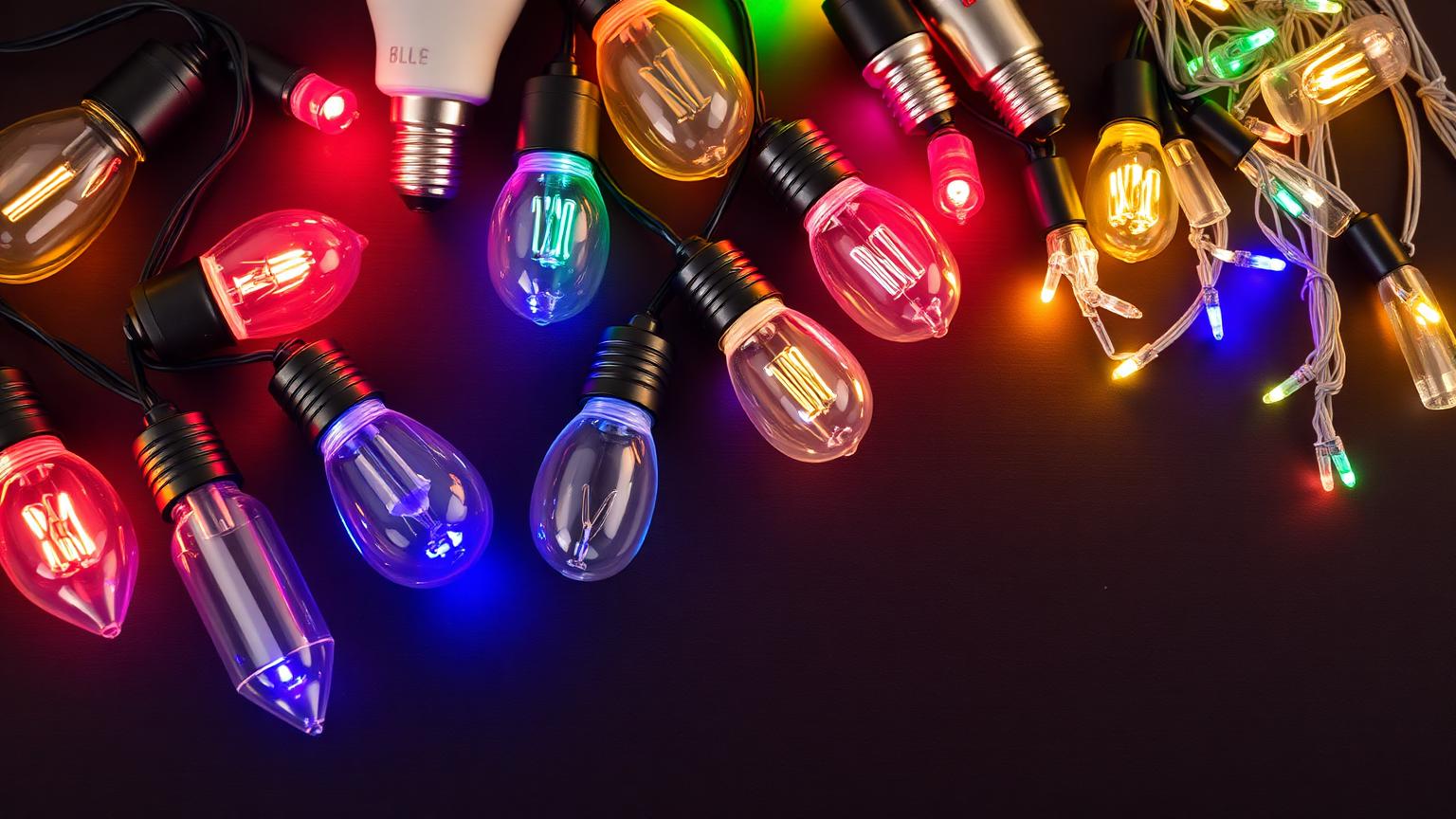
What color temperature and bulb style should you use for Christmas lights? For most Sacramento homes, warm white in the 2700K range is the safest, most classic choice, paired with C9 bulbs on the roofline and mini lights wrapped on trees and landscaping. Color temperature is measured in Kelvin, lower numbers look warmer and more amber, higher numbers look cooler and more blue. The single biggest mistake homeowners make isn't picking the wrong bulb, it's mismatching the color temperature between the roofline and the trees, which is the fastest way to make an otherwise good display look amateur.
Skip the lighting aisle entirely.
Free design consultation, transparent pricing, no obligation.
If you've ever been overwhelmed at the lighting aisle, this is for you. Between Kelvin ratings, bulb shapes, and about six different names for what's basically the same string of lights, it's genuinely confusing even for people who care a lot about how their home looks.
I'm Clark, I run Santa's Lights here in Sacramento, and this is the exact breakdown I walk homeowners through on every design consultation. Here's how to actually think about it.
Color Temperature, Decoded
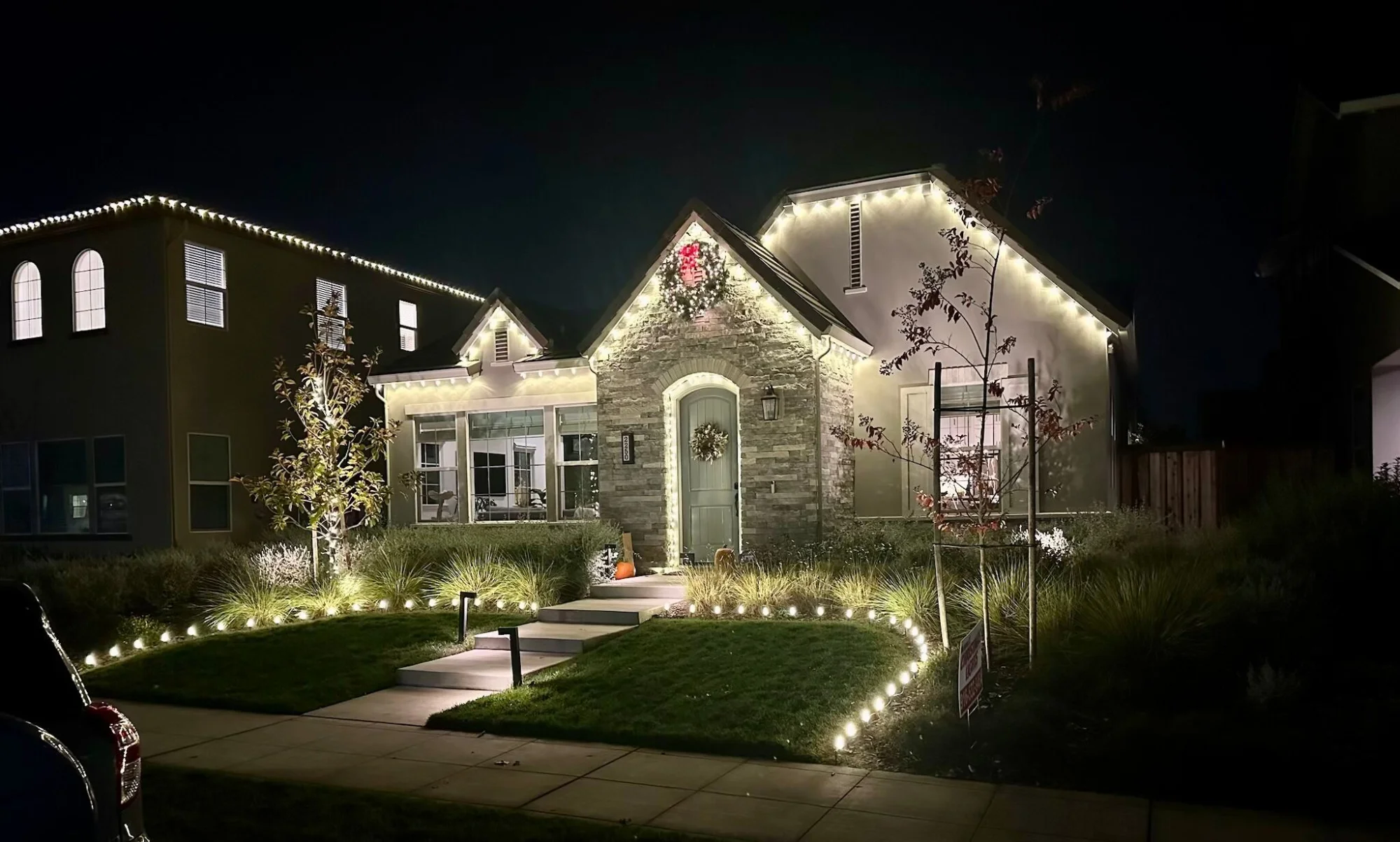
Color temperature is measured in Kelvin (K). Lower numbers look warmer and more orange. Higher numbers look cooler and more blue.
| Kelvin | Look | Best for |
|---|---|---|
| 2200K | Candle, amber | Vintage and intimate, great for bistro string lights at events |
| 2700K | Warm white | The classic incandescent look, best for traditional homes, brick, dark trim |
| 3000K | Soft white | A touch crisper, pairs well with modern white stucco |
| 4000K | Neutral white | Reads as office lighting, avoid outdoors unless you want a sterile look |
| 5000K+ | Cool, daylight | Don't use this on your house, it looks like a parking lot |
Why this matters more than people expect: we covered this same warm-white shift as one of the biggest 2026 lighting trends, and it's not just a fashion preference. Warmer temperatures genuinely photograph and read better against most home exteriors than cooler ones.
Bulb Shapes for Holiday Lighting
Once you've picked a color temperature, the bulb shape determines how the light actually reads from the street.
| Bulb type | Size | Best for |
|---|---|---|
| C9 | About 1.25 inches wide, screw-in | The right pick for rooflines on most homes, reads from across the street |
| C7 | About 0.75 inches wide | Smaller homes, single-story, or a more delicate look |
| Mini lights (5mm) | Tiny LED dots | Tree wraps, garlands, and bushes |
| Icicle lights | Drooping strands | Use sparingly, over a porch or front entry, not the whole roofline |
| Bistro / globe | Large café-style bulbs on a string | Backyards, patios, and events, almost always 2200K |
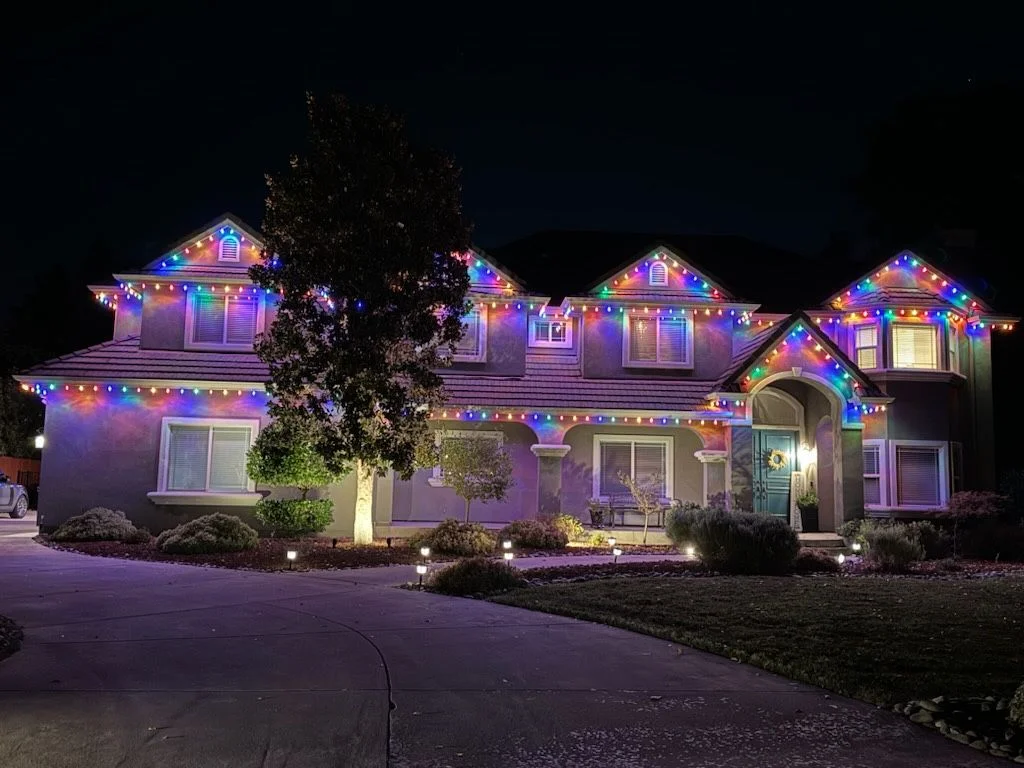
We got a call from a homeowner in Rocklin who couldn't figure out why her display, which she'd put real effort into, still looked slightly off from the street. Her roofline was 2700K warm white, but the mini lights on her trees were 3000K soft white, close enough that most people wouldn't clock it consciously, but different enough to feel visually inconsistent. We swapped the tree lights to match, and the whole display suddenly read as intentional instead of just busy.
Let us match temperature and bulb style for you.
No more guessing at the lighting aisle.
Mixing Styles, Carefully
The pro move is picking one bulb style for the architecture, usually C9 on the roof, and one bulb style for landscaping, usually mini lights wrapped on trees. Don't introduce a third unless there's a strong design reason to, since every additional bulb style adds another variable that has to stay visually consistent with everything else.
Match the color temperature across both. If your roof is 2700K, your trees should be 2700K too. Mismatched warmth is the single most common thing that makes an otherwise good display look amateur, even when every individual choice looked fine on its own in the store. It's a subtle enough difference that most people can't immediately name what's bothering them about a display, they just sense something feels slightly off.
What Actually Works on Sacramento Homes?
Home style plays a real role here. Traditional homes with brick or dark trim, common across Land Park and East Sacramento, tend to look best in 2700K warm white with C9 bulbs. Newer stucco homes out in Elk Grove, Folsom, and Roseville can pull off 3000K soft white without it feeling cold. Whatever the base, avoid drifting toward 4000K or above on any residential exterior, it reads as commercial or institutional rather than festive, regardless of home style.
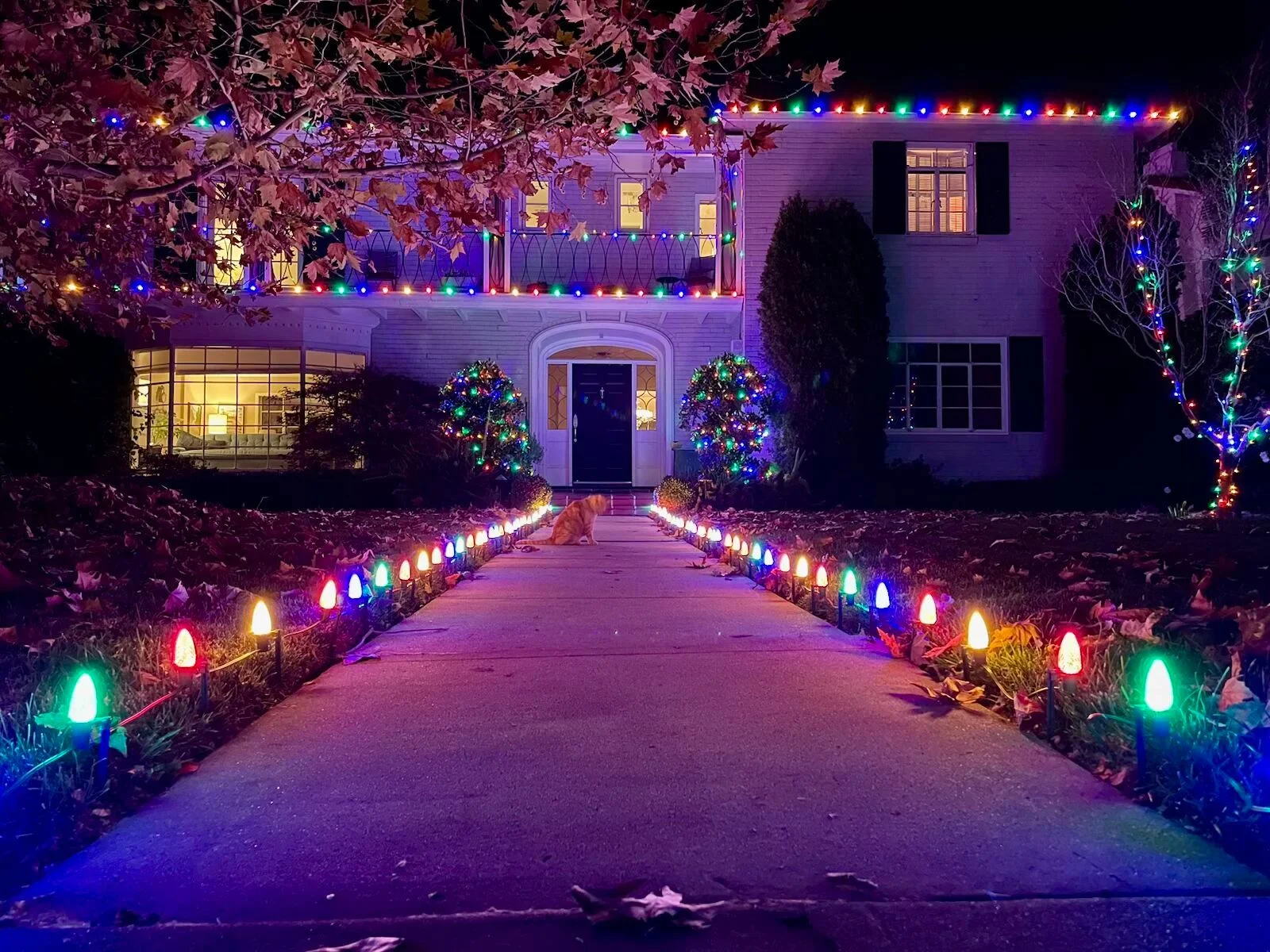
Roof and trim color matters just as much as home style. Darker trim tends to absorb more of a cooler white light, making the display look dimmer than it actually is, while warm white holds its visual punch against nearly any trim color. That's part of why 2700K has become the default recommendation for most rooflines regardless of architectural style, it's simply the safest choice across the widest range of home exteriors.
"We finally had our lights professionally hung and Clark's team was thorough and artistic. The trees looked fantastic and the whole crew was a pleasure to work with."
Tania Fowler, Google Review, Sacramento HomeownerSee the right color temperature on your own home.
Try our AI Visualizer before you decide on anything.
When in Doubt
Warm white. C9 on the roof. Mini lights on the trees, matched to the same temperature. You will never regret it.
FAQ: Color Temperature and Bulb Styles, Answered
What color temperature should I use for Christmas lights?
2700K warm white is the safest, most classic choice for most homes. It's the closest match to traditional incandescent lighting and works well on nearly any exterior.
What's the difference between C9 and C7 bulbs?
C9 bulbs are larger, about 1.25 inches, and read well from the street on most rooflines. C7 bulbs are smaller, about 0.75 inches, and work better on smaller homes or for a more delicate look.
Should my roofline and trees be the same color temperature?
Yes, always. Mismatched color temperature between different parts of a display is the most common thing that makes it look inconsistent, even when each individual choice seemed fine on its own.
Is cool white or daylight ever a good choice for holiday lighting?
Generally no. 4000K and above tends to read as commercial or institutional rather than festive on a residential exterior.
What bulb style is best for wrapping trees?
Mini lights, the small 5mm LED style, are the standard for tree wraps, garlands, and bushes, since they follow the shape of branches better than larger bulbs.
Does my trim color affect which color temperature I should choose?
Yes. Darker trim tends to absorb more of a cooler light, making it look dimmer than it actually is, while warm white holds its visual punch against nearly any trim color.
Most of what separates a display that looks professionally designed from one that looks like a pile of whatever was on sale comes down to exactly this, matched temperature, intentional bulb choice, nothing mismatched. It's simple once you know what to look for.
Clark, Santa's Lights

Clark started Santa's Lights back in 2014 with a ladder, a truck, and way too much confidence in his own knot tying. Since then he's lit up thousands of homes across Sacramento, Folsom, Roseville, and beyond, and he still shows up to jobs himself often enough to know exactly what he's talking about. When he's not on a roofline, he's probably answering your call directly, because that's still how this business works.