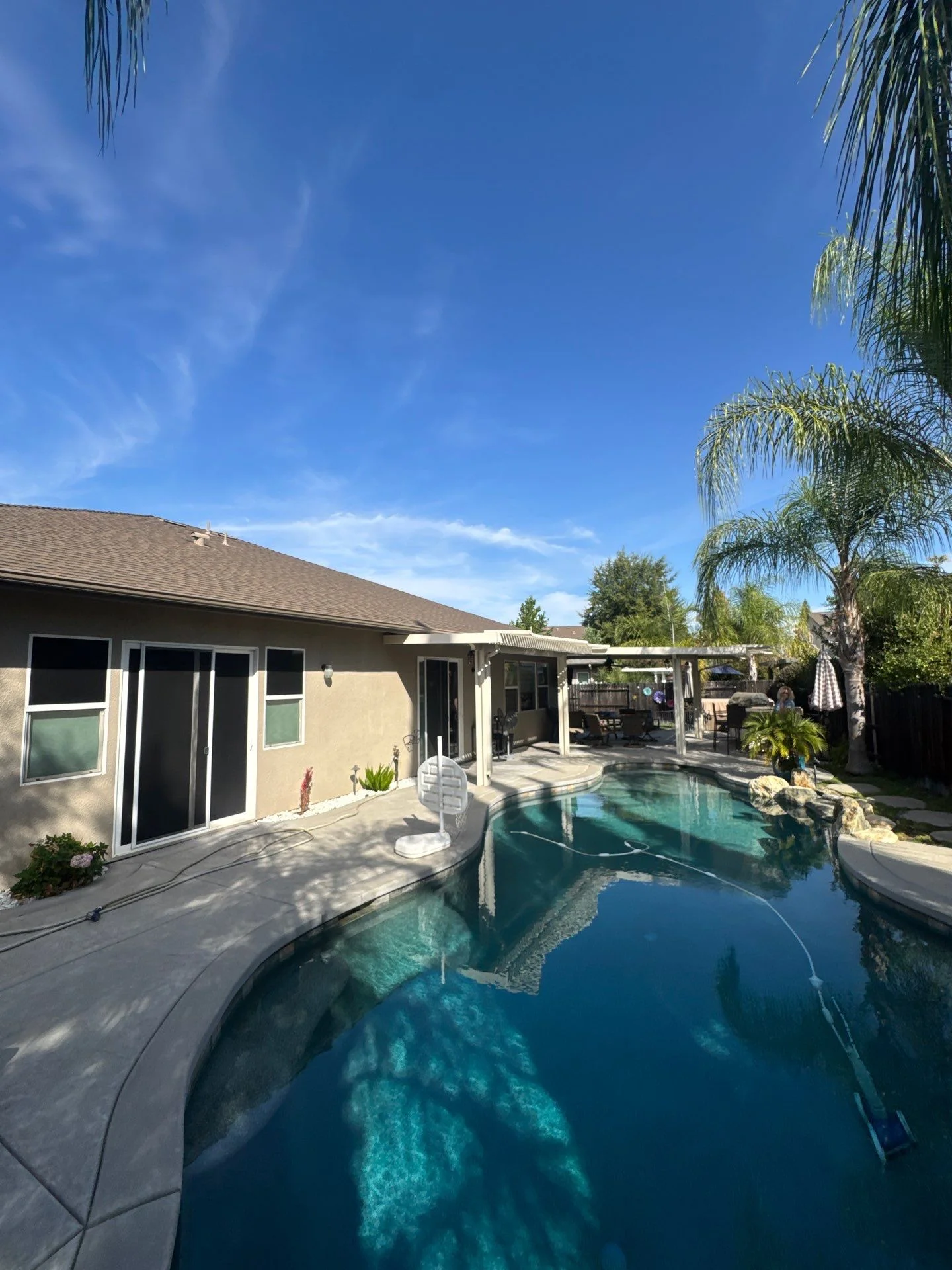
Permanent Lighting on a Large Brick and Stucco Home in Sacramento
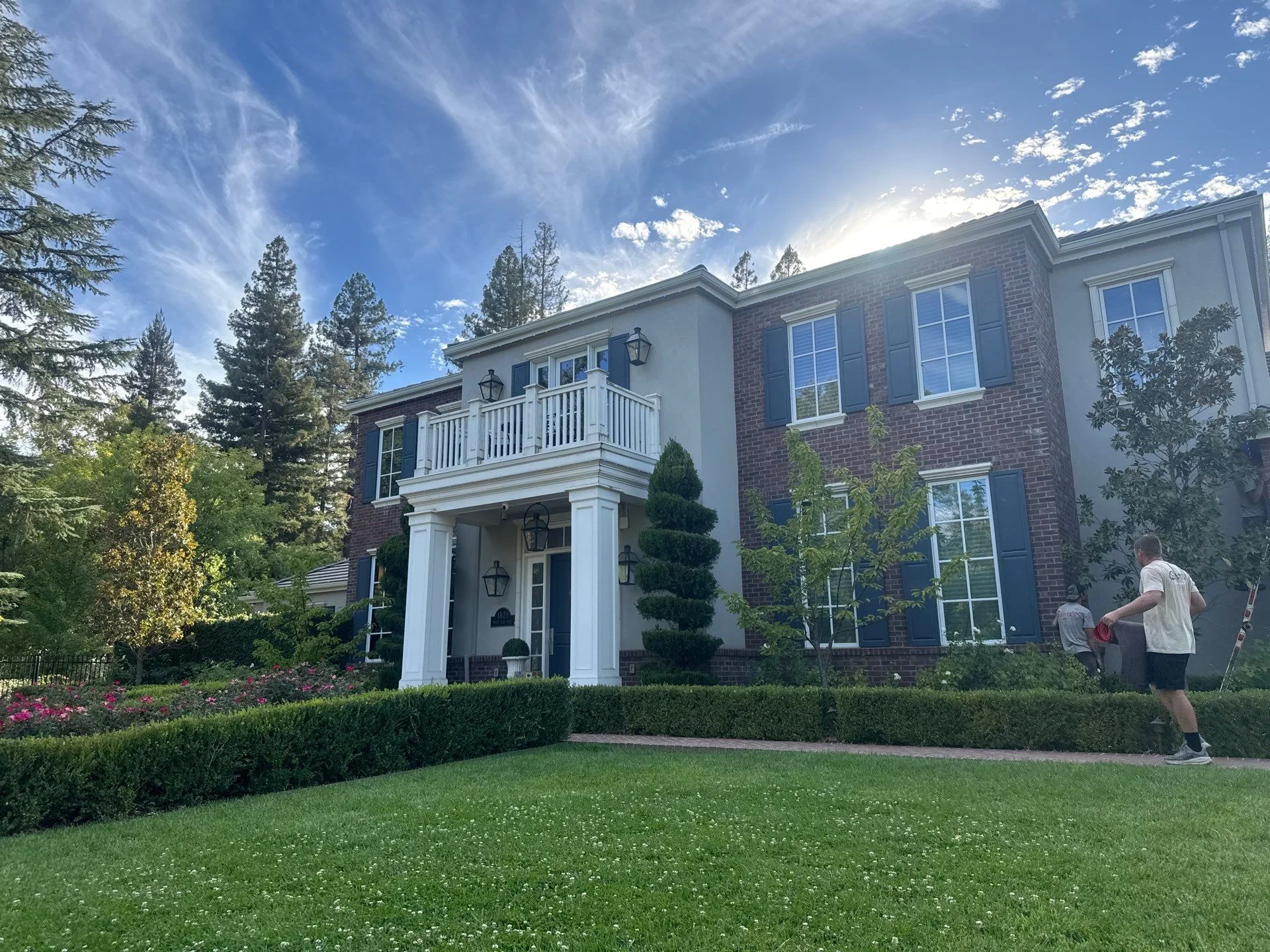
A real Sacramento project: permanent lighting on a formal two-story home with a columned entry, a flat tile roof and a covered patio, installed by a four-person crew.
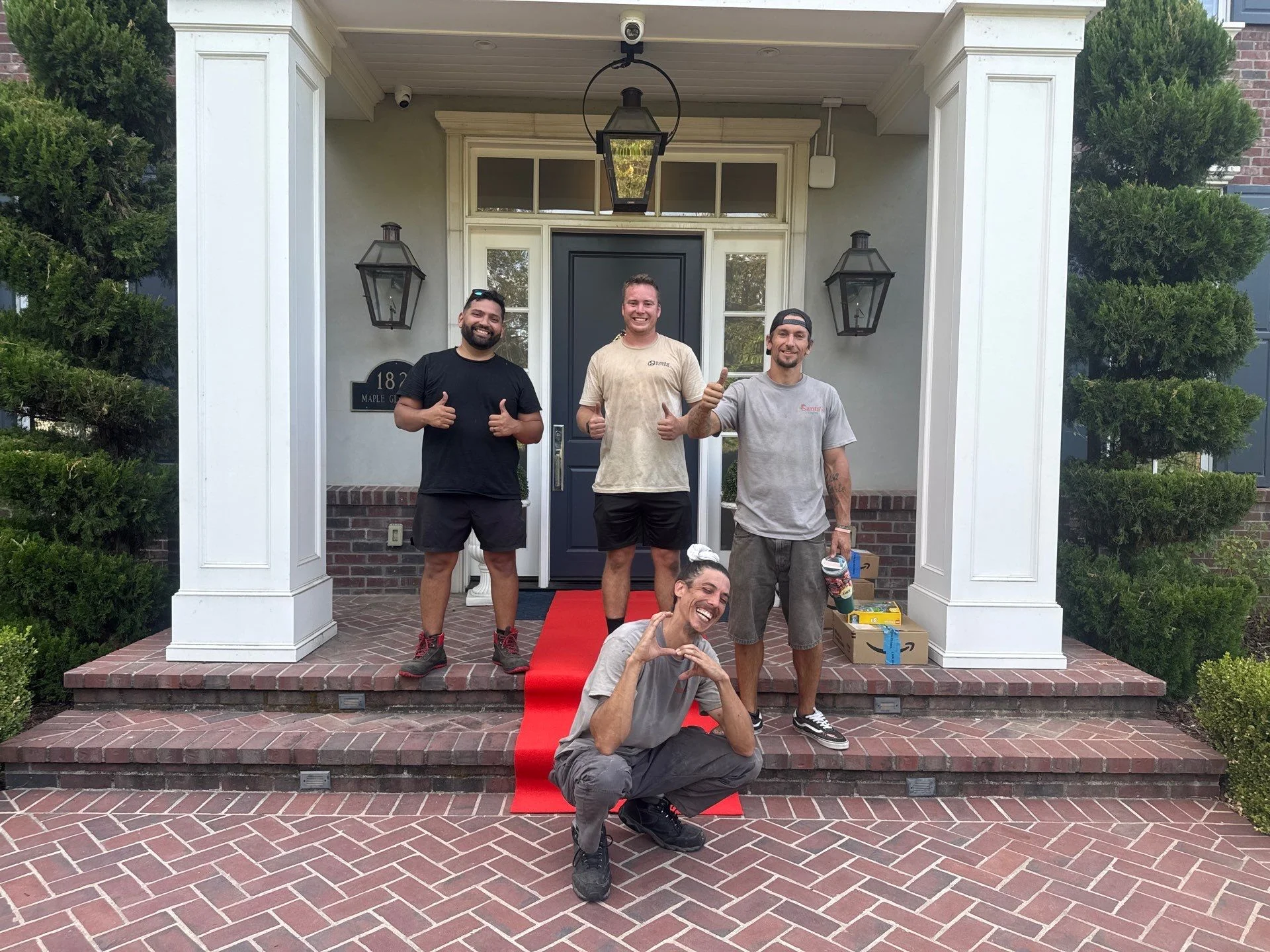
The job: permanent track lighting for James on a large, classic two-story brick and stucco home in Sacramento, with a columned entry, a balcony, a flat tile roof broken into many sections, and a covered patio at the back. The challenge: hiding the track, the wiring and the power supply on a formal home where every line is visible and every detail has been chosen. The result: a clean permanent lighting line across the front and both sides of the house, plus the inside of the patio cover, installed by a four-person crew.
Own a formal or traditional home?
Free design consultation, transparent pricing, no obligation.
Some homes can take a lot of lights and still look good. A formal Georgian style house with brick, stucco, white columns and gas lanterns is not one of them. Everything on it is symmetrical and deliberate, so anything we add has to look like it was always part of the design. That was the brief when James called us about permanent lighting.
Here is how the job came together, from the roof plan we drew up before the first ladder went up, to the small details that make a permanent system look invisible in daylight.
A Formal Home With a Lot of Roof
James's home sits on a deep, tree filled lot in an established part of Sacramento, the kind of street where tall redwoods and cedars frame the houses and the front hedges are trimmed to the inch. The house itself is a two-story brick and stucco design with a columned entry, a balcony over the front door, navy shutters, and a row of gas style lanterns along the front. The roof is a low profile flat tile that steps across the main house and the single-story wings on either side.
That layout looks calm from the street, but from above it is a puzzle. The roof breaks into many sections: hips, valleys, a taller main block, lower side wings and a back patio structure. Each one has its own length, its own height and its own place where power can reach. A system like this has to be mapped in advance, or the install turns into a series of surprises.
It is also a home where the finish matters more than usual. Brick, stucco, painted trim and clean white columns leave nowhere for a messy cord or a mismatched track color to hide. That is exactly the situation permanent lighting handles well, because the whole system is designed to sit flush and disappear when it is switched off.
Planning the Footprint From Above
Before any work starts, we look at the property from above. On this job our plan marked the scope in three parts: the front of the house and both sides outlined in green, the inside of the rear patio cover marked on its own, and two smaller detached roofs on the lot outlined separately in yellow, one near the pool and one beside the tennis court. Marking things this way helps the homeowner see exactly what is included and what is not, and it helps the crew understand where every run starts and stops.
| Area | How we handled it |
|---|---|
| Front of the house | The main focus. A continuous line along the roof edge so the home reads as one clean shape from the street |
| Both sides | Carried down each side so the lighting does not stop abruptly at the corners |
| Inside the patio cover | Tracked separately, since it is a different structure with its own power and its own look |
| Detached roofs (pool and court) | Outlined on the plan as separate structures, so they can be priced and scheduled on their own |
A plan like this also protects the budget. It is far easier to talk about a front and sides first, then add the patio or the detached roofs later, than to discover mid-job that the scope has grown. If you want to see how scope drives cost, our permanent lighting cost guide breaks it down by linear foot and by complexity.
Want your roof mapped before you commit?
Send us your address and we will outline a scope you can review.
Making the Track Disappear
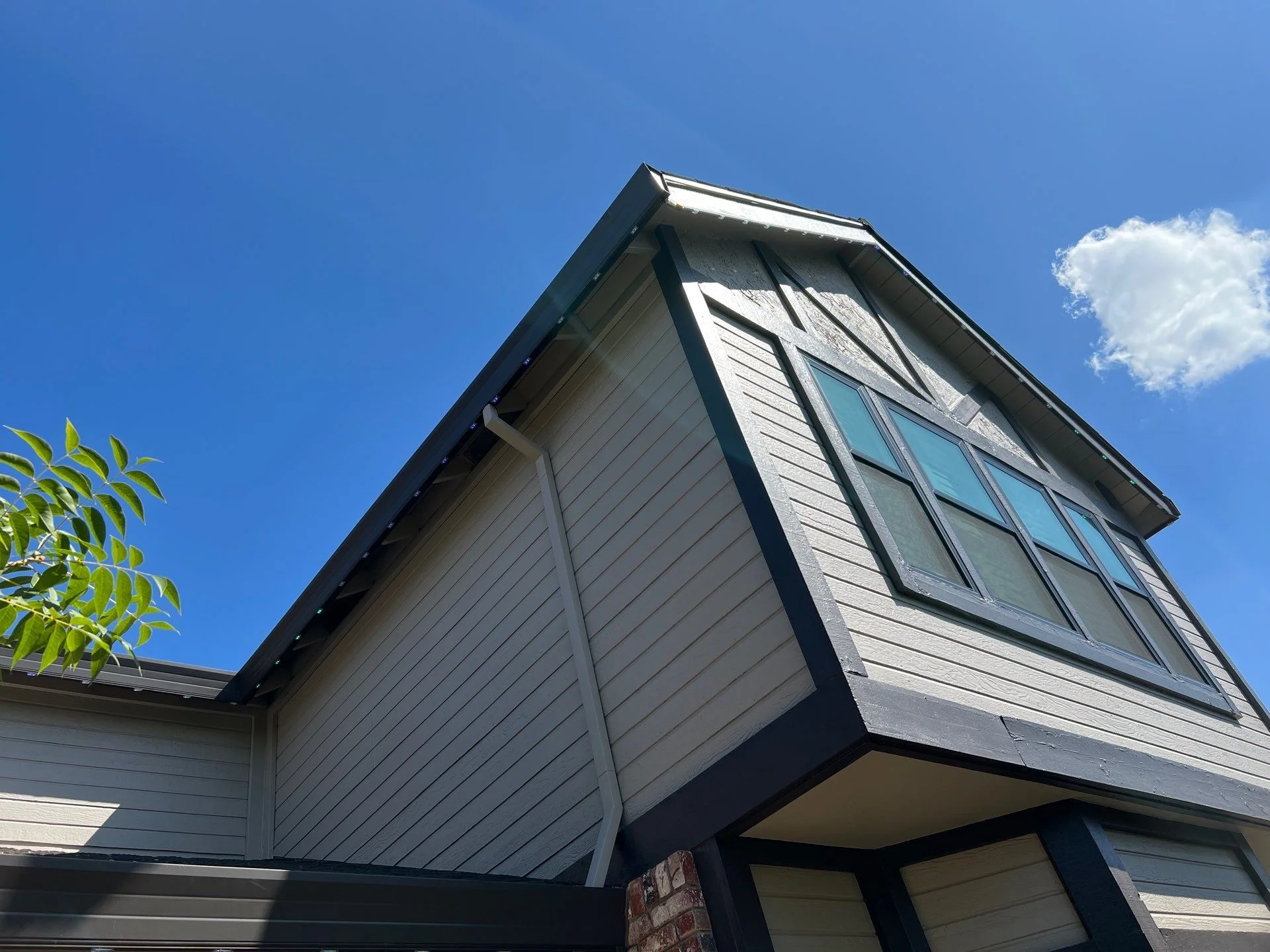
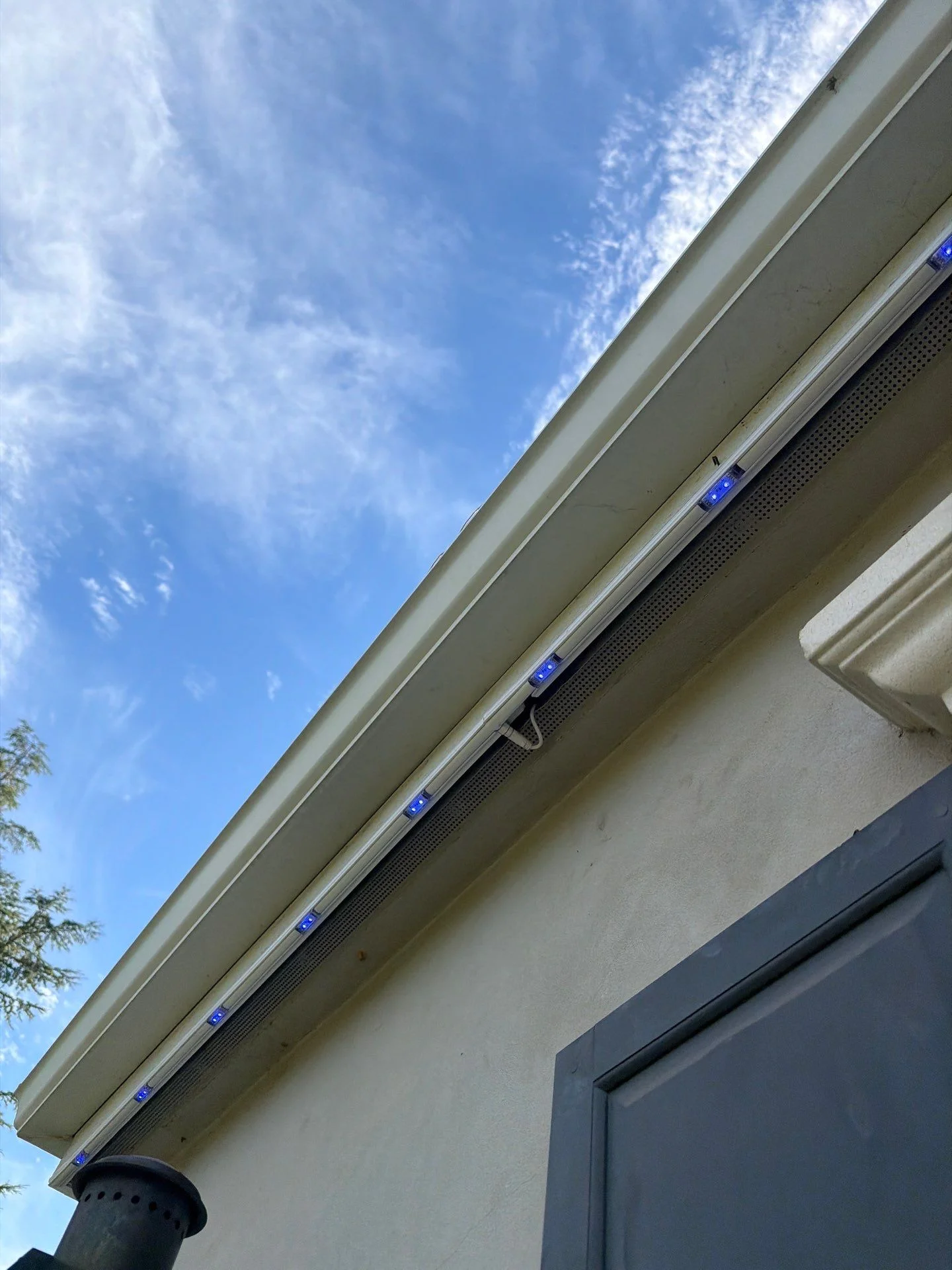
Permanent lighting runs on a slim track that mounts along the roof edge, and the lights themselves are small pebble style fixtures that sit inside it. In our systems each pebble holds two diodes, and the track comes in several colors so it can match the surface it sits on. On this home the track is a soft white that blends into the painted fascia and trim, and much of it is tucked up against the underside of the gutter, right above the perforated aluminum soffit vents.
That placement is deliberate. Putting the track under the lip of the gutter keeps it out of direct sight from the ground and shields it from the worst of the weather. Close-up photos from the day show the track following the roof edge, turning corners cleanly, and sitting right against a brick return with the fixtures lined up at even intervals.
| Detail | Why it matters on this house |
|---|---|
| Track color matched to trim | The line fades into white fascia and painted trim instead of standing out in daylight |
| Mounted under the gutter lip | Out of sight from the street and partly shielded from weather |
| Even fixture spacing | Gives the lit line a steady rhythm, which suits a formal, symmetrical home |
| Clean corner turns | No gaps or kinks where the roof changes direction, including at brick returns |
If you are curious what the system looks like when it is off, our post on what permanent lights look like during the day goes into it in detail. The short version: on a home like this one, most visitors would not notice it.
Wiring, Raceways and the Power Supply
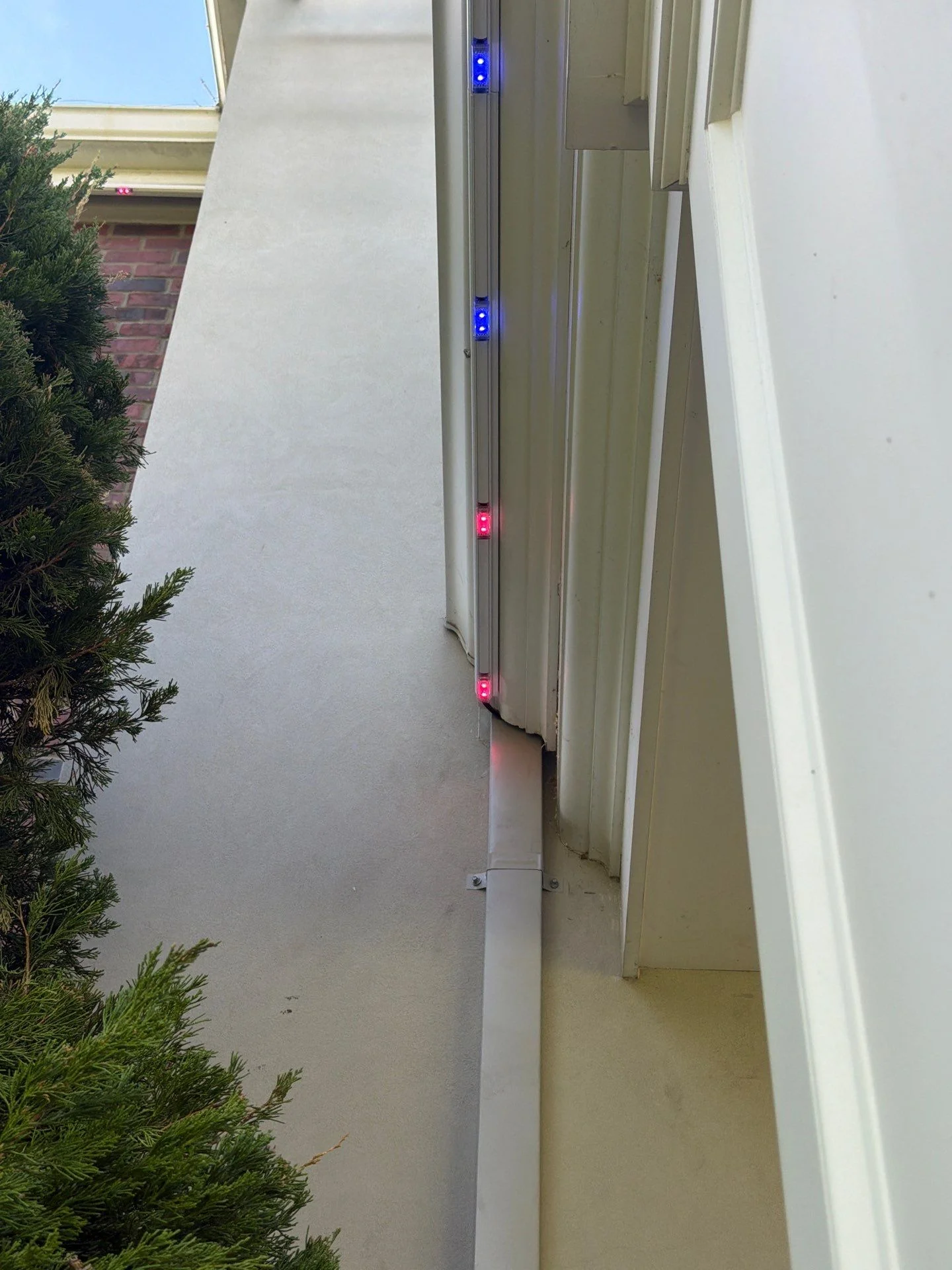
The part of a permanent system most homeowners never think about is how the power gets to the roof. On a home with brick and smooth stucco, a loose cable is a problem, so the crew used a surface raceway, a narrow channel painted to match the wall, to carry the wiring from the roofline down to the ground. In the photos you can see the channel fastened with small brackets at a downspout location and running down the wall in a corner where it is hard to notice.
The power supply sits on the side of the house in a low, sheltered spot, mounted on the stucco and partly screened by rose bushes, close to the garden hose reel and the air conditioning enclosure. It is placed so it is out of the way, close to a power source and easy to reach for service. Every run in the system traces back to that one location.
- One power supply location. Chosen for access to power and to keep the equipment out of sight from the street.
- Painted raceway. Carries wiring down the wall and keeps it protected instead of leaving loose cable on the stucco.
- Planned run lengths. Each section of track is measured against the power supply so lights stay bright from one end to the other.
- Clean transitions. Corner and wing connections are made so the line looks continuous, not patched together.
Why this matters: the quality of a permanent install is mostly in the parts you never see. Good track and good lights will not make up for a messy power plan. If you want to understand what separates one system from another, read our post on why Minleon is the gold standard.
Testing Colors Before We Leave
Several close-up photos from this job show the lights glowing blue, red and purple in the middle of a bright afternoon. That is a normal step. Before a crew packs up, we power the system on and cycle through colors to confirm that every fixture along every run is responding the way it should. A dead pixel or a loose connection is far easier to find while the crew is still on site.
Permanent lights are individually addressable, which means each fixture can show its own color. That is what makes warm white for everyday evenings, red and green for the holidays or team colors for a game night possible from the same system. We go deeper on the options in our guide to whether Christmas lights can change colors.
Four People, One Big Roofline
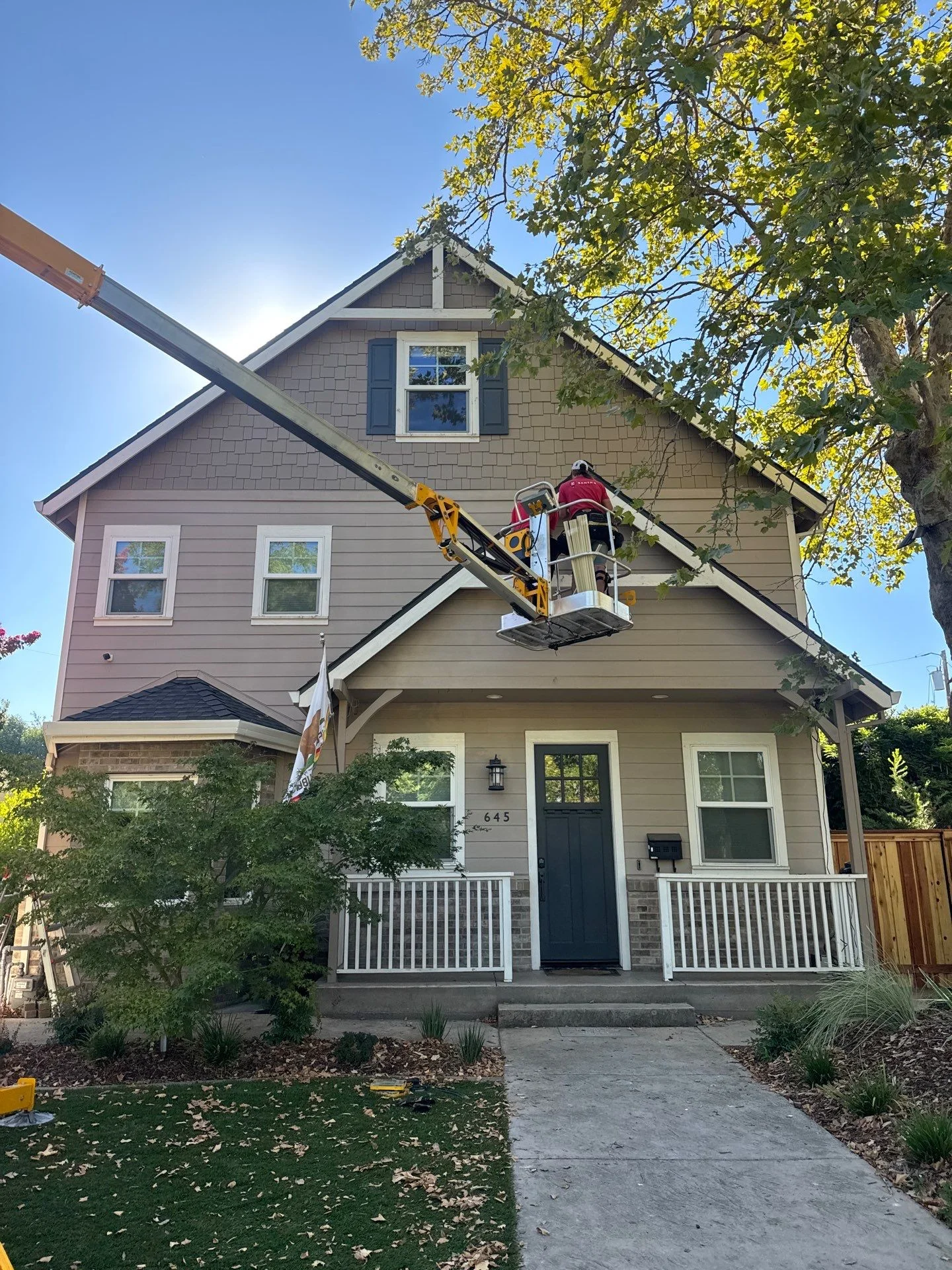
A home of this size needs more hands than a typical install. The photos show a four-person team: some working ladders at the corners, some handling the tracks and wiring, and one on the ground keeping the work organized. Splitting the job that way keeps each person focused on one task and keeps the work moving across a roofline that has many separate sections.
- Ladder work at the corners. The most exposed positions, handled by two people so the ladder is always footed.
- Track and wiring. One crew member keeps the track and the lights supplied, so the person on the ladder is never reaching for material.
- Ground coordination. Someone checks the line from the street and calls out anything that is off.
- Finish and cleanup. A final walk of the whole house, and a color test before anyone leaves.
We also roll out a red carpet at the front door during installs, so the entry steps stay clean while the crew works. It is a small touch, and it shows up in the photo at the end of this job, with the crew posing on it in front of the columned entry.
"Great experience year after year. If anything comes loose, Clark comes right away to fix it, and he schedules takedown way ahead of time, which is so convenient."
Kelley Kalin, Google Review, Sacramento Area HomeownerWhat to Ask Before Booking Permanent Lighting on a Large Home
Bigger homes bring bigger decisions, and the answers should be clear before any work starts. These are the questions we encourage every homeowner with a large or multi-section roof to ask, whoever they hire.
| Question | What a good answer sounds like |
|---|---|
| What exactly is included in the scope? | A written outline of every roof section, with anything excluded or phased listed clearly |
| Where will the power supply go? | A specific location that is sheltered, accessible and not visible from the street |
| How will the wiring be hidden? | A plan for raceways, color matched to your walls, instead of loose cable |
| What color will the track be? | A color chosen to match your fascia and trim, shown to you in advance |
| Who maintains it and who do I call? | A named local company that answers the phone and returns to fix anything that comes loose |
If a quote does not answer those five questions, ask for them in writing. A large home has more places for a shortcut to hide, and the questions above are where shortcuts tend to show up first.
Safety and Electrical Basics
A two-story house with a balcony and a deep roof is exactly where falls happen. The U.S. Consumer Product Safety Commission estimates that holiday decorating has sent 12,000 or more people to emergency departments every year since 2009, and falls were the most frequently reported incident. A permanent system changes that equation in a useful way: it goes up once, with a trained crew, and you never need to climb a ladder to hang lights again.
On the electrical side, the Electrical Safety Foundation International advises using equipment marked for outdoor use, plugging outdoor lighting into ground fault circuit interrupter protected outlets, and keeping cords clear of standing water. A permanent system built around a dedicated power supply and protected wiring is designed with those principles in mind.
Efficiency is the other practical point. ENERGY STAR reports that certified LED decorative light strings use about 92 percent less energy than incandescent strings, and the same LED efficiency is what makes it practical to leave a permanent system installed all year. For the equipment side of tall jobs, see our post on when a job needs scaffolding or a lift.
The Finished Result
By the end of the day, James's home had a clean, continuous lighting line across the front and both sides, with the inside of the patio cover tracked as its own section. From the driveway, the track is difficult to spot. At night, the roofline can glow in a warm white that suits the brick and stucco, or shift to a color for a holiday or an event.
On a formal home, restraint is the goal. The lights should show off the architecture, the columns, the balcony, the strong roof edge, and then step back. That is what a well planned permanent system does, and it is the difference between lighting a house and decorating it.
Good to know: permanent lighting of $4,000 or more also qualifies you for free Christmas lights this year, a $799 value, through our current offer. Financing is available with a soft credit pull, with payments as low as $150 a month.
Curious how it would look on your house?
Try our AI Visualizer, completely free.
FAQ: Permanent Lighting on Large, Formal Homes, Answered
Can permanent lighting work on a brick and stucco home?
Yes. The track mounts at the roof edge, gutter and fascia, so it does not need to be fastened to the brick or the stucco face itself.
Will you see the track in the daytime?
We match the track color to the trim and tuck it under the gutter lip where possible, so on most homes it is hard to notice from the street.
How do you hide the wiring on smooth stucco?
We use a painted surface raceway to carry wiring down the wall, so there are no loose cables on the finish.
Where does the power supply go?
In a sheltered, low spot near a power source, usually on a side wall and often screened by landscaping, so it is out of sight but easy to service.
Can you light a covered patio and detached structures too?
Yes. We outline each structure on the plan, so a patio cover or a pool roof can be included in the first phase or added later.
Why were the lights glowing in different colors during the day?
That is a color test. We cycle through colors before we leave to confirm every fixture is responding properly.
How long does an install on a large home take?
It depends on the number of roof sections and the crew size. A larger house like this one is planned for a bigger crew so the work moves steadily.
What does it cost?
Pricing depends on the length of the roofline and its complexity. Our permanent lighting cost guide explains how it is calculated, and a free quote gives you an exact figure.
Do you serve this part of Sacramento?
Yes. We install permanent lighting across Sacramento and the surrounding area.
Homes like James's are a reminder that the best lighting is the kind that respects the house. A formal design deserves a system that is planned carefully, installed cleanly and quiet when it is off. That is what we aim for on every job.
Clark, Santa's Lights

Clark started Santa's Lights back in 2014 with a ladder, a truck, and way too much confidence in his own knot tying. Since then he's lit up thousands of homes across Sacramento, Loomis, Folsom, and beyond, and he still shows up to jobs himself often enough to know exactly what he's talking about. When he's not on a roofline, he's probably answering your call directly, because that's still how this business works.