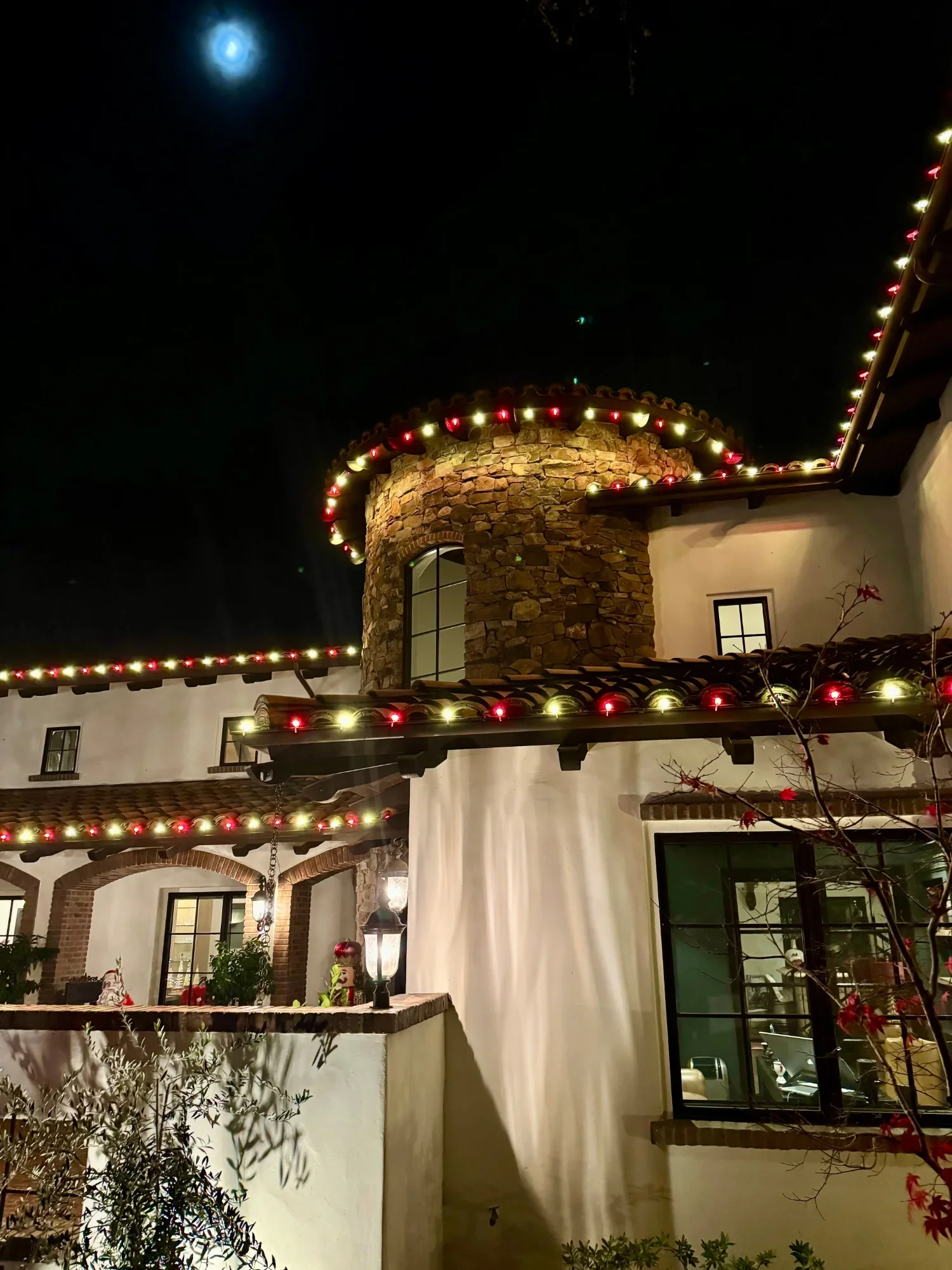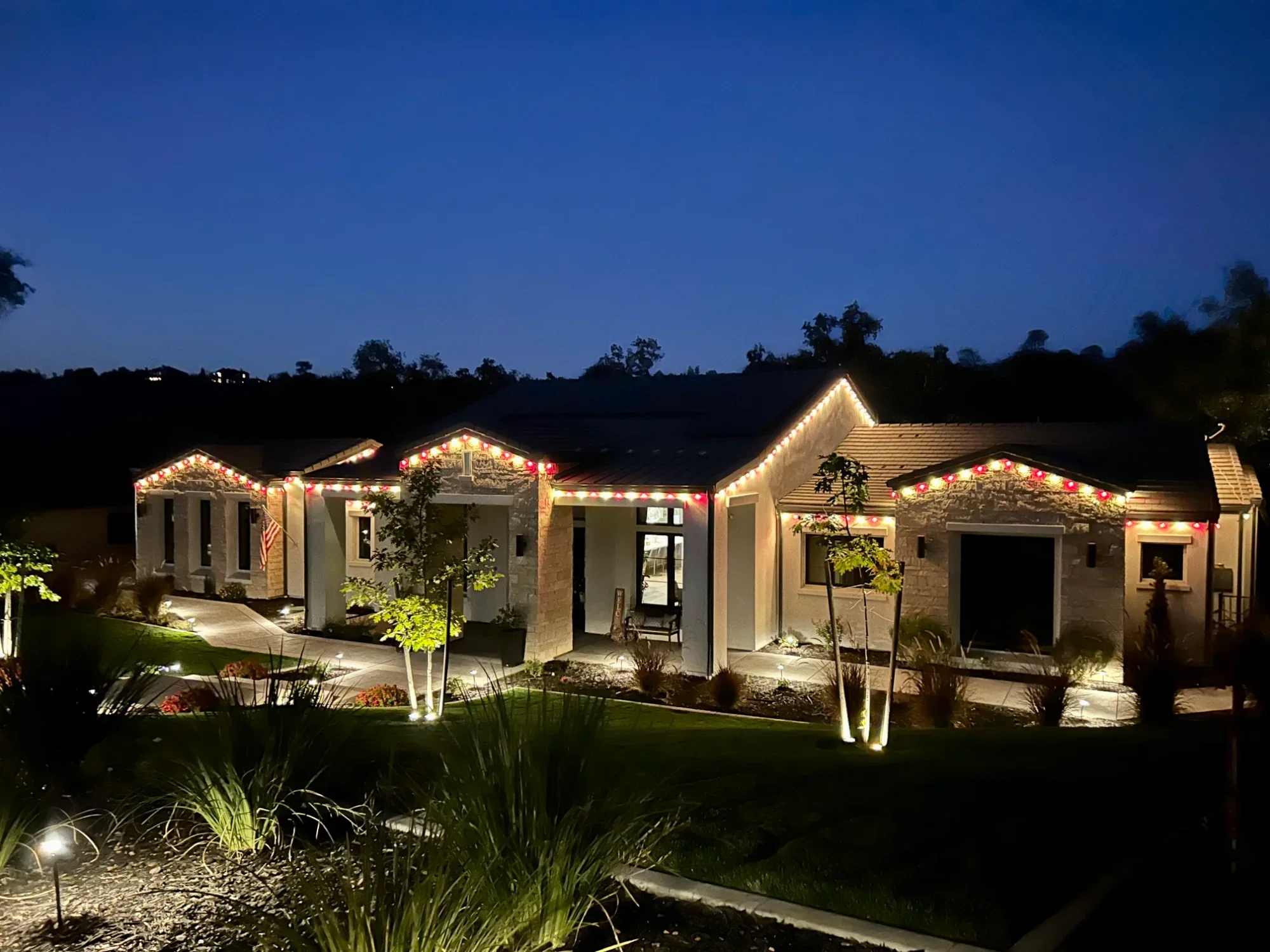

Can Christmas Lights Stay On All Night Safely in Sacramento?
This question always comes with a little embarrassment, like it should be obvious. It's not. Here's the honest breakdown on what actually makes an overnight display safe, and what doesn't.

Can Christmas lights stay on all night safely? Generally yes, if they're LED, properly rated for outdoor use, plugged into a GFCI protected outlet, and not overloaded on a single circuit. LED lights run cool enough that overnight use is low risk when installed correctly. Incandescent lights carry more risk since they run hotter, and the Electrical Safety Foundation International reports around 150 home fires a year begin with holiday lights and decorative lighting. Professional installation reduces that risk further, since a licensed installer plans circuits and connections properly instead of homeowners improvising with whatever outlets and extension cords are closest.
- How real is the fire risk, actually?
- What actually causes most lighting fires?
- Does LED vs. incandescent matter for overnight use?
- What makes an overnight display actually safe?
- What about extension cords?
- Does Sacramento's rainy season add risk?
- Should you use a timer even with LED?
- What to do if something seems off
- Quick safety checklist
- Is permanent lighting safer for constant use?
- FAQ
Want a display designed to run safely, all night, every night?
Free design consultation, transparent pricing, no obligation.
This question comes up every single year from people who feel a little silly asking it, like it should have an obvious answer. It doesn't, honestly, because the real answer depends on what kind of lights you have and how they're set up, not a simple yes or no that applies to every display equally.
I'm Clark, I run Santa's Lights here in Sacramento, and here's the honest breakdown, not just "sure, it's fine" or fear mongering in the other direction. We install and maintain displays all over the area, from Rancho Cordova to Orangevale to El Dorado Hills, and the same safety fundamentals apply no matter which neighborhood we're working in.

How Real Is the Fire Risk, Actually?
It's not zero, but it's also not the kind of risk that should scare anyone away from decorating. According to the Electrical Safety Foundation International, around 150 home fires a year begin with holiday lights and other decorative lighting nationally, causing an estimated 8 deaths and 16 injuries annually. That's a real number, but it's small relative to how many homes decorate every single year, and it's heavily weighted toward older incandescent lighting, damaged cords, and overloaded circuits rather than well maintained LED displays.
Context matters here too. The same research puts total holiday season home fires from all causes, trees, candles, cooking, and lighting combined, at a far higher number, meaning lights specifically are a smaller slice of a bigger seasonal risk picture, and one of the more preventable ones with the right setup.
What Actually Causes Most Lighting Fires?
It helps to know exactly what tends to go wrong, since almost all of it is preventable with the right setup rather than random bad luck.
| Common cause | Why it happens |
|---|---|
| Overloaded circuits | Chaining too many strands together and drawing more current than the outlet or breaker is rated for |
| Damaged or aging cords | Cracked insulation from repeated seasonal use, sun exposure, or rodents chewing through cords in storage |
| Indoor lights used outdoors | Products not rated for moisture failing once exposed to rain or dew |
| Old incandescent strands | Higher heat output combined with age-related wear on the socket and wiring |
| Lights left touching dry material | Direct contact with dry brush, mulch, or decorations that can ignite from sustained heat |
Does LED vs. Incandescent Actually Matter for Overnight Use?
Significantly, yes. We've covered this in more detail in our LED vs incandescent comparison, but the short version for overnight safety specifically comes down to heat.
| Incandescent | LED | |
|---|---|---|
| Heat generated | Can get hot enough to be uncomfortable to touch | Cool enough to touch safely |
| Risk near dry materials | Higher, given sustained heat output | Lower |
| Safe for multi-hour or overnight use | Possible, but higher risk | Generally considered safe when properly installed |
What Actually Makes an Overnight Display Safe?
-
Outdoor rated lights
Make sure whatever's outside is actually rated for outdoor and wet conditions, not an indoor-only product.
-
GFCI protected outlets
These cut power automatically if they detect a ground fault, which matters even more with any moisture around, common during a Sacramento winter.
-
No overloaded circuits
Chaining too many strands together on one outlet is one of the more common causes of overheating.
-
Undamaged cords and connections
Cracked insulation or exposed wire is a real risk, especially after a strand's been used for several seasons.
-
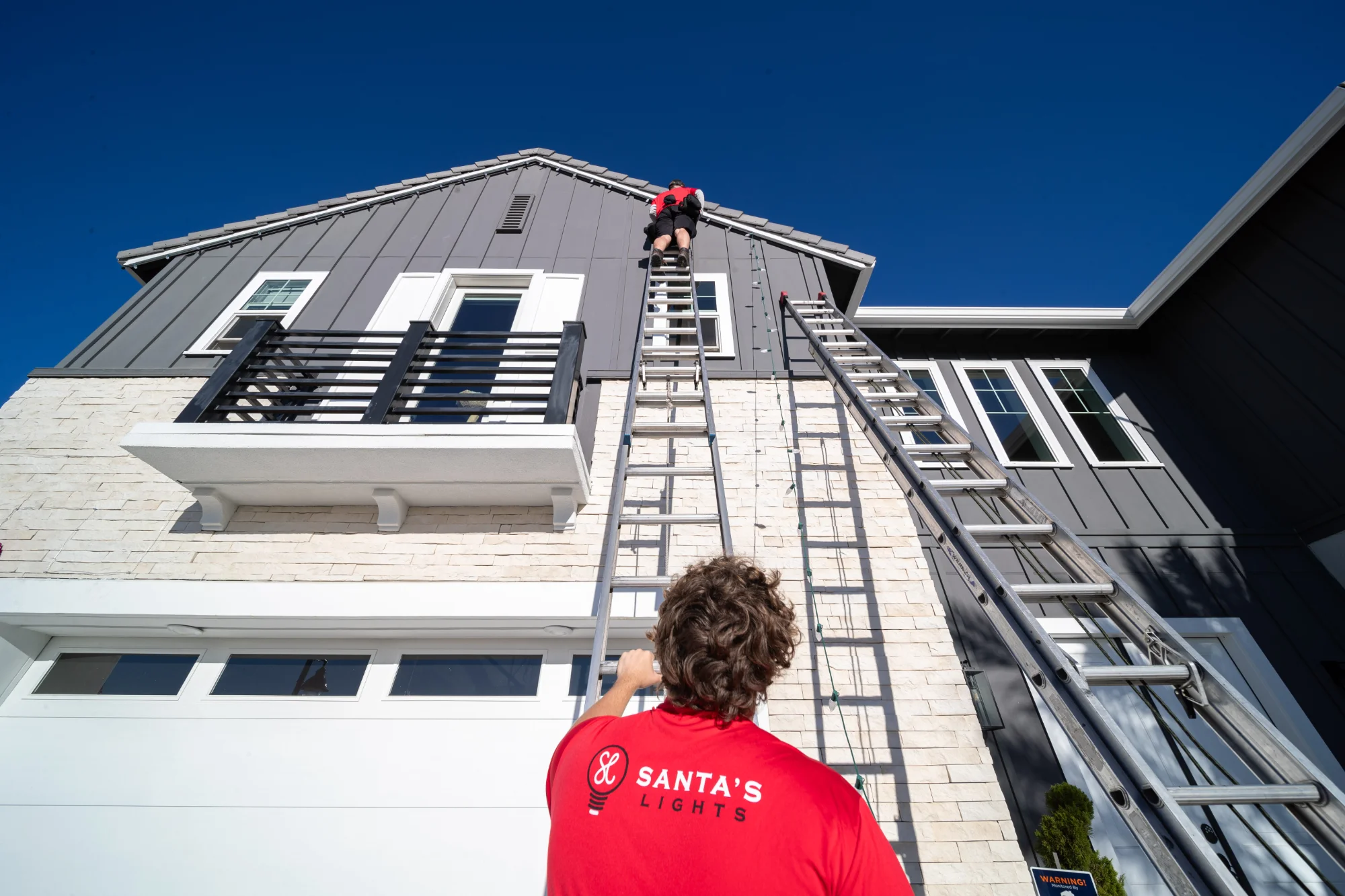
Professional installation
A licensed installer plans circuits properly ahead of time instead of improvising connections as the display grows.

We got a call a few years back from a homeowner in Fair Oaks whose neighbor's old incandescent strand had been chained together across nearly the whole yard, running off a single extension cord looped through a window. It never caused a fire, but the cord was warm to the touch by the end of the night, which is exactly the kind of setup that does eventually go wrong. We redesigned her own display with proper circuit planning from the start, and it's been trouble free ever since. We've run into near-identical setups on service calls in Citrus Heights and Antelope too, it's a more common shortcut than people realize.
Let us plan the circuits properly, from the start.
Professional installation means you don't have to think about any of this.
What About Extension Cords Specifically?
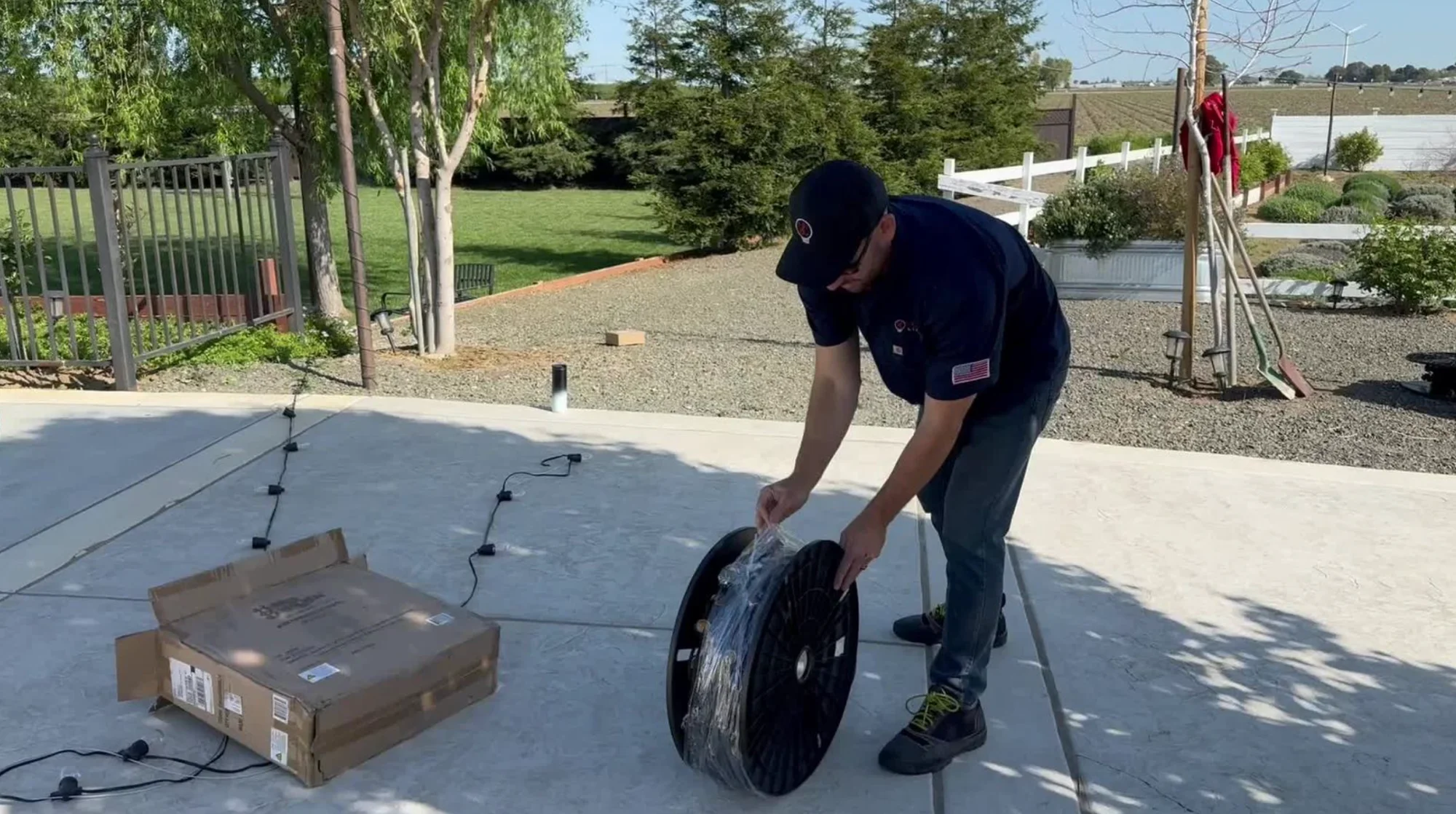
Extension cords are actually one of the bigger overlooked risks in the whole equation. The CPSC estimates around 4,000 extension cord related injuries are treated in emergency rooms each year, not limited to holiday decorating but relevant to it. Outdoor-rated, undamaged cords, kept away from standing water, matter just as much as the lights themselves.
Does Sacramento's Rainy Season Add Any Extra Risk?
It does add a factor worth thinking through, since our holiday lighting season overlaps with the wettest stretch of the year here. Most of Sacramento's rain falls between November and March, right on top of when displays are typically up and running in Natomas, Land Park, and everywhere in between. The lights themselves aren't the concern if they're properly outdoor rated, that's exactly what they're built for. The real risk is connections and outlets that weren't sealed or protected correctly, since standing water combined with an unprotected connection is where problems actually start.
The fix is simple: GFCI protection plus properly sealed, elevated connections handle the wet season without any extra effort on your part. This is exactly the kind of detail a design consultation accounts for ahead of time rather than something you have to think about once the rain starts.
Should You Use a Timer Even With Safe LED Lights?
It's not a safety requirement in the same way GFCI protection is, but it's a genuinely good habit for a couple of reasons beyond just the energy savings we've covered elsewhere. A timer means your display isn't running unattended for hours longer than necessary, and it reduces the total number of hours any connection is under load over the course of the season, which is a small but real reduction in overall risk on top of being easier on your electric bill.
What Should You Do If Something Seems Off?
Even a well installed display is worth a quick check now and then. If you notice any of the following, it's worth addressing right away rather than waiting.
-
A cord or plug feels warm to the touch
Unplug that section and have it inspected. Warmth beyond mild is a sign of a loose connection or an overloaded circuit.
-
You notice flickering or a section going dim
This often points to a failing connection point rather than a single bad bulb, worth a proper look rather than ignoring it.
-
You smell anything like burning plastic
Unplug the display immediately and don't reconnect it until the issue's been found and fixed.
-
A GFCI outlet keeps tripping
That's the safety feature doing its job. Don't keep resetting it repeatedly without figuring out why it's tripping in the first place.
Quick Checklist Before Leaving Lights On Overnight
| Check | Why it matters |
|---|---|
| Lights are LED, not incandescent | Significantly lower heat output and lower fire risk |
| Everything is rated for outdoor use | Indoor-only products aren't built to handle moisture |
| Plugged into a GFCI outlet | Automatically cuts power if it detects a ground fault |
| No single circuit is overloaded | Too many strands chained together is a common overheating cause |
| Cords and connections show no damage | Cracked insulation or exposed wire is a real fire hazard |
"Great experience year after year. If anything comes loose, Clark comes right away to fix it, and he schedules takedown way ahead of time, which is so convenient."
Kelley Kalin, Google Review, Sacramento HomeownerIs Permanent Lighting Safer for Constant Use?
In a lot of ways, yes. Permanent lighting systems are designed from the ground up to run for extended periods, since they're built to be used far beyond just six weeks in December. The wiring, connections, and weatherproofing are engineered for constant use in a way that seasonal string lights, even good ones, simply aren't designed around. If your household tends to leave lights running most nights of the year rather than just for the holidays, that's a meaningful reason to consider a permanent system over repeatedly relying on seasonal setups. This holds true whether we're installing for a family in Roseville who runs their display year round for holidays and game days, or a household in Folsom just looking for a simpler, safer setup once and done.
See what a safely designed display looks like on your home.
Try our AI Visualizer before you decide anything.
FAQ: Leaving Christmas Lights On Overnight, Answered
Is it safe to leave LED Christmas lights on all night?
Generally yes, as long as they're properly rated for outdoor use, plugged into a GFCI protected outlet, and not overloaded on a single circuit.
Is it safe to leave incandescent Christmas lights on all night?
It carries more risk than LED, since incandescent bulbs generate significantly more heat. If you're running incandescent overnight, extra caution with circuit load and cord condition matters even more.
How common are fires caused by Christmas lights?
The Electrical Safety Foundation International reports around 150 home fires a year begin with holiday lights and decorative lighting nationally, a real but relatively small number given how many homes decorate each season.
What actually causes most lighting related fires?
Overloaded circuits, damaged or aging cords, indoor products used outdoors, and old incandescent strands with worn wiring account for the large majority of cases.
Do I need a GFCI outlet for outdoor Christmas lights?
Yes, strongly recommended. GFCI outlets cut power automatically if they detect a ground fault, which is especially important with any moisture present.
Does Sacramento's rainy season make overnight lights riskier?
Not if the display is properly rated and sealed. The real risk during our wet months is an unprotected connection meeting standing water, which GFCI protection and proper sealing address directly.
Is a timer worth using even with safe LED lights?
It's not required for safety the way GFCI protection is, but it reduces total hours under load over the season and saves on your electric bill, so it's a good habit either way.
What should I do if a cord feels warm or I smell burning?
Unplug that section immediately. A warm cord or plug points to a loose connection or overload, and any burning smell means the display shouldn't be reconnected until the issue is found and fixed.
Is permanent lighting safer than seasonal lights for overnight use?
Generally yes. Permanent systems are engineered for extended, constant use year round, while seasonal lights are designed primarily for a shorter six week season.
Does professional installation actually reduce fire risk?
Yes. A licensed installer plans circuit loads, uses properly rated outdoor equipment, and inspects connections, all of which address the most common causes behind lighting related fires.
The honest answer is that yes, you can leave good lights on overnight safely, but "good lights, properly installed" is doing a lot of work in that sentence. That's exactly why we plan every circuit before anything goes up, so you never have to think twice about it.
Clark, Santa's Lights

Clark started Santa's Lights back in 2014 with a ladder, a truck, and way too much confidence in his own knot tying. Since then he's lit up thousands of homes across Sacramento, Folsom, Roseville, and beyond, and he still shows up to jobs himself often enough to know exactly what he's talking about. When he's not on a roofline, he's probably answering your call directly, because that's still how this business works.