
Permanent Lighting on a Folsom Tudor: Matching Track to Dark Half Timbering
Dark half timbering and a roofline full of gables make a Tudor beautiful and tricky to light. Here's how a Folsom permanent install made the track disappear.
The job: a permanent lighting install on Paul's Tudor style home in Folsom, with brick columns, pale stucco panels, dark half timbering, and a three car garage topped by a tall front gable. The challenge: make a lit track system disappear against dark trim in daylight, keep every wire out of sight at the corners, and still light the full run of several stepped gables. The result: a trim-matched track that traces the roofline day and night and changes color from an app, with the lights themselves only showing when they're on.
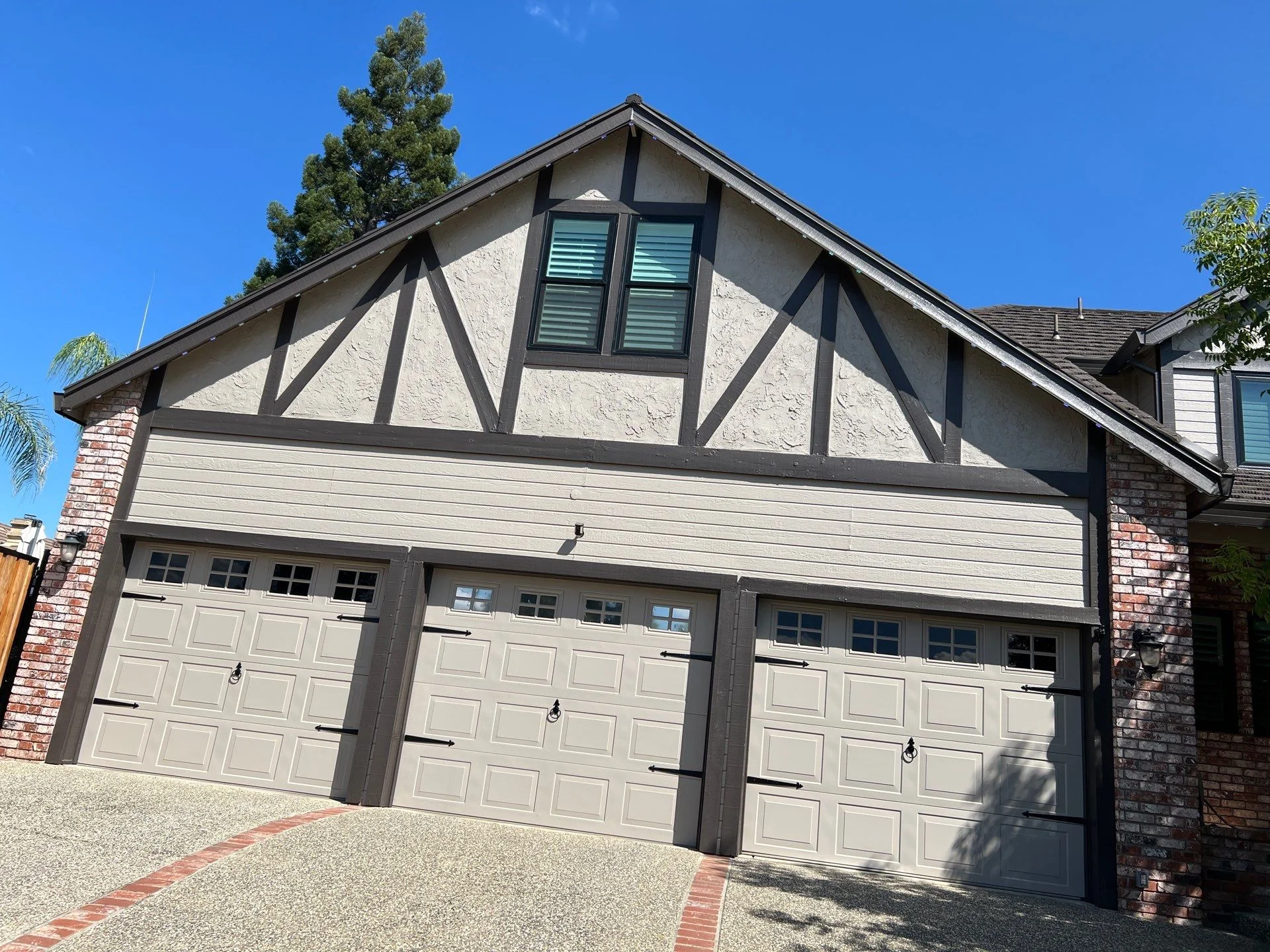
- The Tudor style home in Folsom
- Mapping the roofline before ordering a foot of track
- Matching the track to dark half timbering
- Corners, cables, and keeping wiring out of sight
- What it looks like in daylight versus lit
- Install day
- What Paul planned to do with it
- Is permanent lighting right for a Tudor or half timbered home?
- FAQ
Have dark trim and a traditional roofline?
Free design consultation, transparent pricing, no obligation.
Tudor style homes are easy to spot and tricky to light. All that dark half timbering over pale stucco is exactly what makes them look so good, and it's exactly why a bright, obvious strip of lights along the roofline is the wrong answer. A display that works on a plain white fascia can look like a sticker slapped on a house with this much architectural detail.
Paul's home in Folsom is a textbook example, and he chose permanent lighting rather than seasonal. Here's how the job was planned and installed, based on our on site documentation, including a set of close ups that show the part most people never see: how the track turns corners and where the wiring goes.
The Tudor Style Home in Folsom
Everything about the front of this house is layered. A tall gable sits over the three car garage, filled with stucco panels divided by dark diagonal timbers and a pair of shuttered windows set high in the peak. Below it, a horizontal siding band runs above carriage style garage doors with black hardware. Brick columns frame both ends of the garage, a flagpole is mounted on one of them, and the aggregate driveway is edged with brick inlay that echoes the columns. Beyond the garage, smaller gables step across the front of the house toward a second tall gable on the right with a large bank of windows.
That's a lot of edges, and every one of them is a place where lighting can either look intentional or look stuck on. Folsom has plenty of homes with this kind of traditional character, from the Historic District to larger custom builds, and the lighting question is always the same: how do you add light without competing with the architecture that's already doing the work?
| What's on the house | What it meant for the install |
|---|---|
| Dark half timbering over pale stucco | Track color chosen to match the dark trim so it reads as part of the frame |
| Tall gable over the three car garage | Long straight runs down both slopes, measured on site before anything was ordered |
| Brick columns at each end of the garage | Track ends and turns planned around the brick, with no drilling into masonry |
| Several smaller gables across the front | Each gable treated as part of one continuous design, not a separate project |
| Dark gutters and dark roof | A dark track blends with both the roof edge and the gutter line |
Mapping the Roofline Before Ordering a Foot of Track
Permanent track and the lights that clip into it are ordered to the foot. That's a different situation from seasonal lights, where a spare strand can cover a small miscalculation. Cut track can't be stretched, and a run that comes up short means a visible seam or a delay, so measuring comes first.
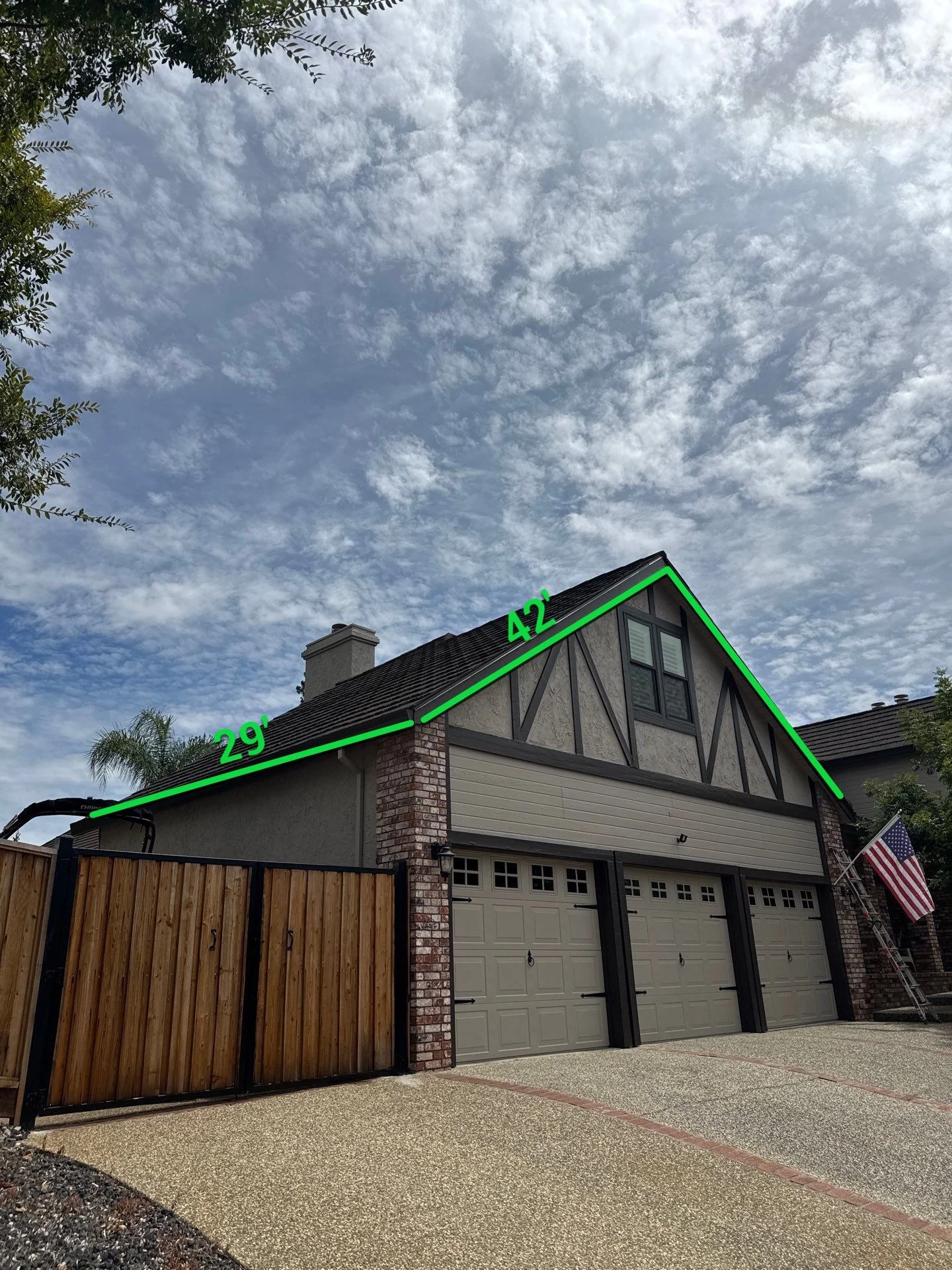
Before the install, we walked the property and marked the roofline directly on photos. The marked up front view traces the main sections in green: the large garage gable, a smaller gable beside it, the porch roof edge across the front of the house, and the tall gable at the right end. One run along the left side of the garage was traced on its own in yellow. On the garage gable, the field measurements we marked were 42 feet on the long slope and 29 feet on the lower run beside it.
| Roof section | What we planned for |
|---|---|
| Large garage gable | Both slopes plus the lower run beside it, measured at 42 and 29 feet on the sections we marked |
| Smaller gable beside it | A shorter run that has to connect cleanly back into the main line |
| Porch roof edge | A long, low run across the front of the house, close to eye level for anyone at the door |
| Right hand gable over the large window | A second tall peak that needed to match the garage gable so the two read as a pair |
| Left side of the garage | Marked separately so its route and connection point could be planned on their own |
Planning the route as one continuous line, rather than as separate pieces, is what keeps a display like this from looking disjointed. The eye should be able to follow the light from one gable to the next without noticing where one section ends and another begins.
Matching the Track to Dark Half Timbering
The single most important decision on a house like this is the track color. A permanent system sits on the roofline all day, every day, so what it looks like unlit matters just as much as what it looks like at night. We offer track in white, sand, light brown, dark brown, black, and gray, and the right choice comes from matching whatever the fascia and trim actually are, not from picking a favorite.
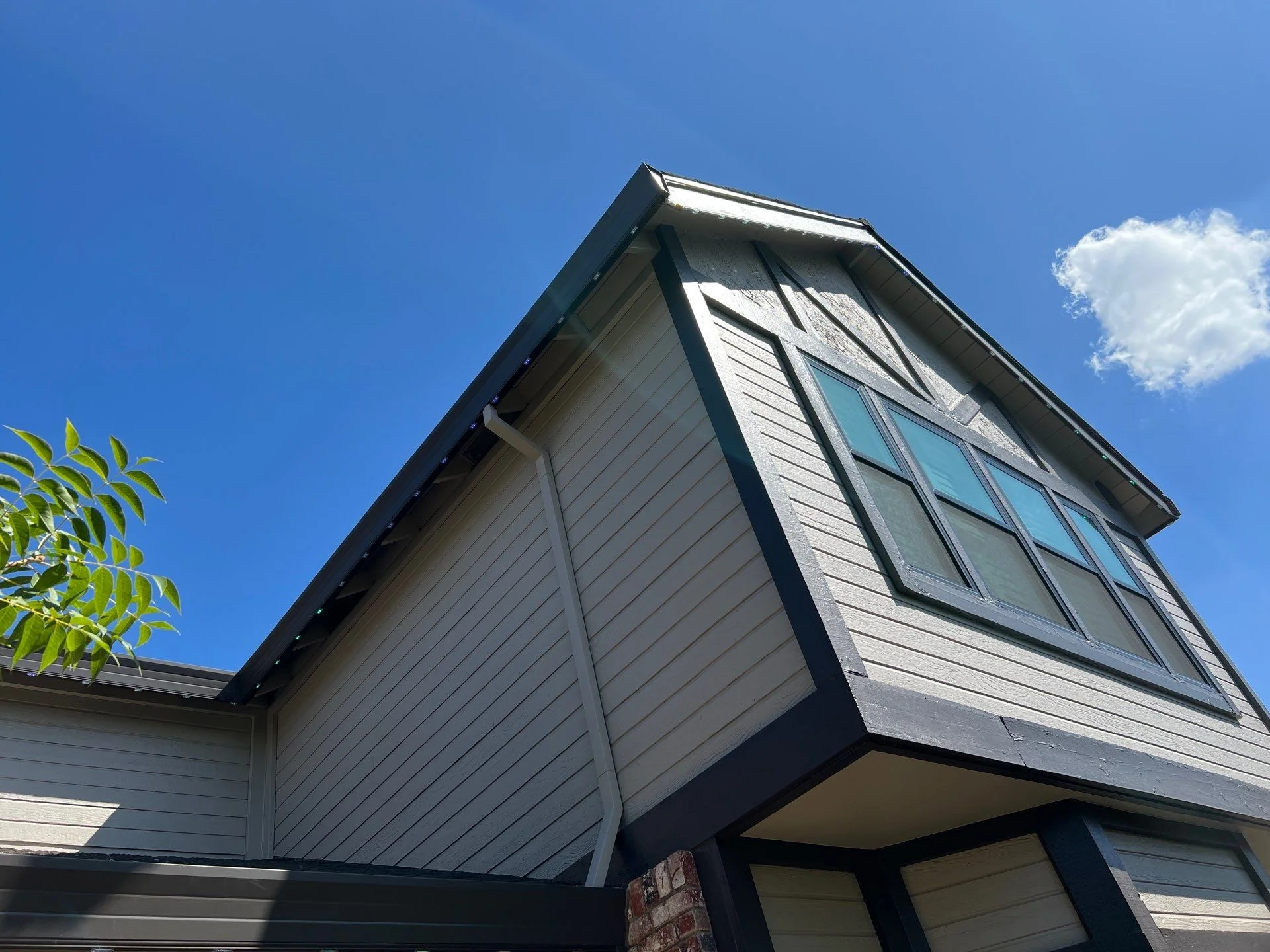
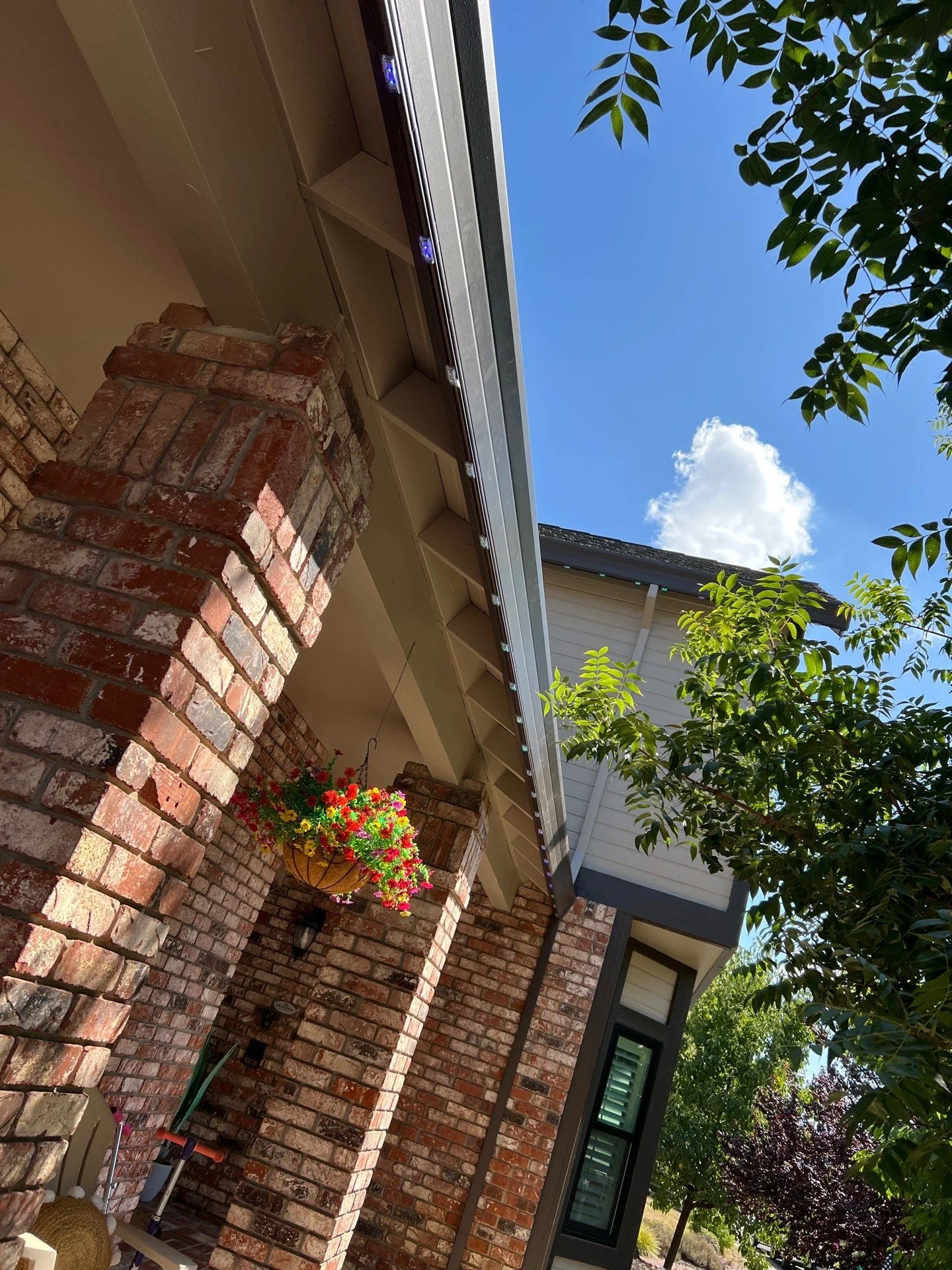
On Paul's home, the trim, the timbers, and the gutters are all a dark brown, so the track is too. In the close up photos, the channel disappears against the fascia board and the gutter edge, which is exactly the point. The only things that stand out are the small lit pebbles themselves, and those only show when the system is running.
- Match the trim, not the siding. The track mounts along the roof edge, so the fascia and gutter color are what it needs to blend with.
- Dark trim is forgiving. A dark channel against dark trim is close to invisible, which is why Tudor and craftsman homes with deep brown or black trim are some of the best candidates for permanent lighting.
- Check the color in daylight. Trim that looks dark brown at night can read warmer or cooler in full sun, so we compare the track against the actual surface during the consultation.
We cover the same idea in more detail in our guide to what permanent lights look like during the day, including what happens when a home has an unusual trim color.
Want to see how track would look against your trim?
We match color to your actual fascia during the consultation.
Corners, Cables, and Keeping Wiring Out of Sight
The close up photos from this job are the most useful part of the documentation, because corners are where most installs either look professional or fall apart. A roofline with this many gables has a lot of them.
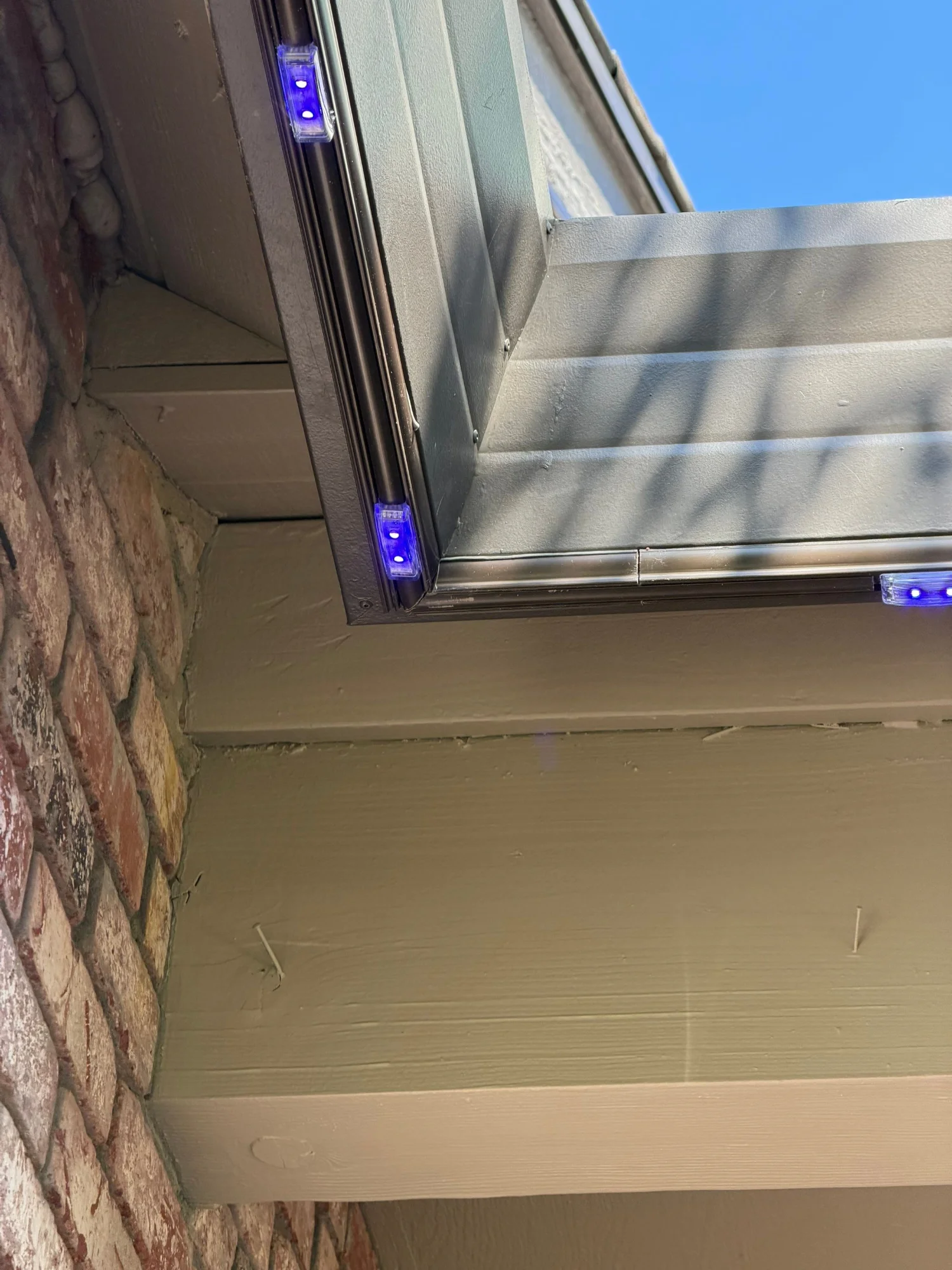
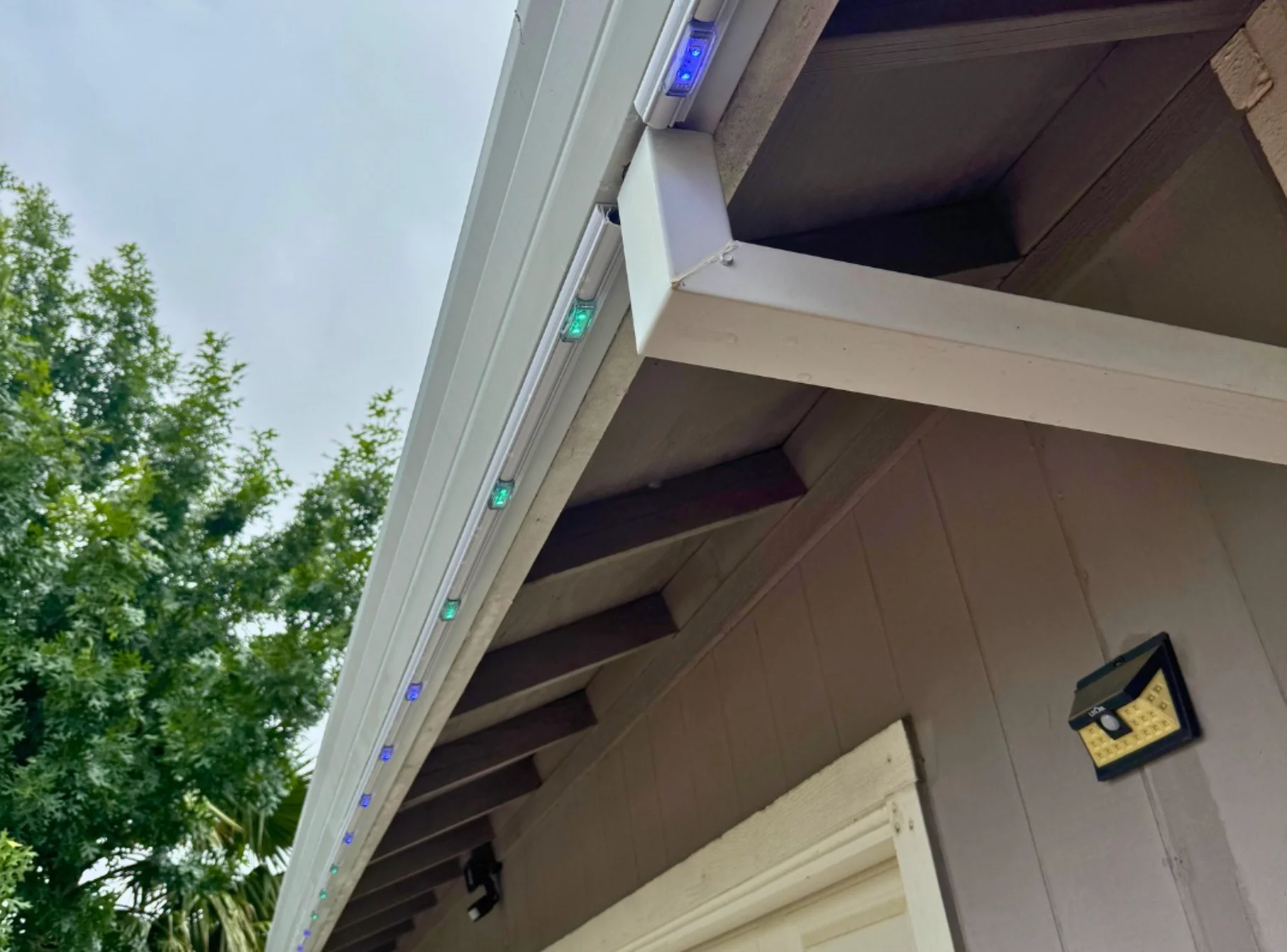
In the corner shots, the track meets at a cut angle instead of being bent around the turn, and the lit pebbles sit back from the corner rather than crowding it. Where a cable has to leave the channel to continue the run, it exits at the turn and tucks in behind the lip of the gutter, out of the line of sight from the ground. On the underside of the overhang, the run continues along the fascia and turns a second corner the same way.
| Detail | Why it matters |
|---|---|
| Cut and fit corners | A clean angle looks deliberate, a forced bend looks like a workaround |
| Pebbles set back from the turn | Keeps the light spacing even and avoids a bright cluster right at the corner |
| Cable exits at the turn | Connection points hidden behind the gutter lip instead of visible along a straight run |
| No drilling into brick | Track ends are planned to stop at the masonry rather than anchor into it |
How the Lights Themselves Work
The lit elements in these photos are small, clear pebble lights, each with two LEDs, clipped into the track at regular intervals. The track holds the lights in place and covers the wire between them, so nothing is exposed along the roofline. We install Minleon systems for exactly this reason, and we explain why in our comparison of permanent lighting brands.
What It Looks Like in Daylight Versus Lit
These close ups were taken in full sun with the system running a color scene, which is why the pebbles show up as bright blue and violet points against the dark trim even at midday. That's the system doing what it's meant to do when it's on. With it switched off, the same line is just a thin dark channel along the edge of the roof, and from the street it reads as part of the trim.
That difference is the whole appeal on a home like this. A seasonal strand of lights is visible every hour it's up, lit or not. A color matched permanent track is visible only when you want it to be.
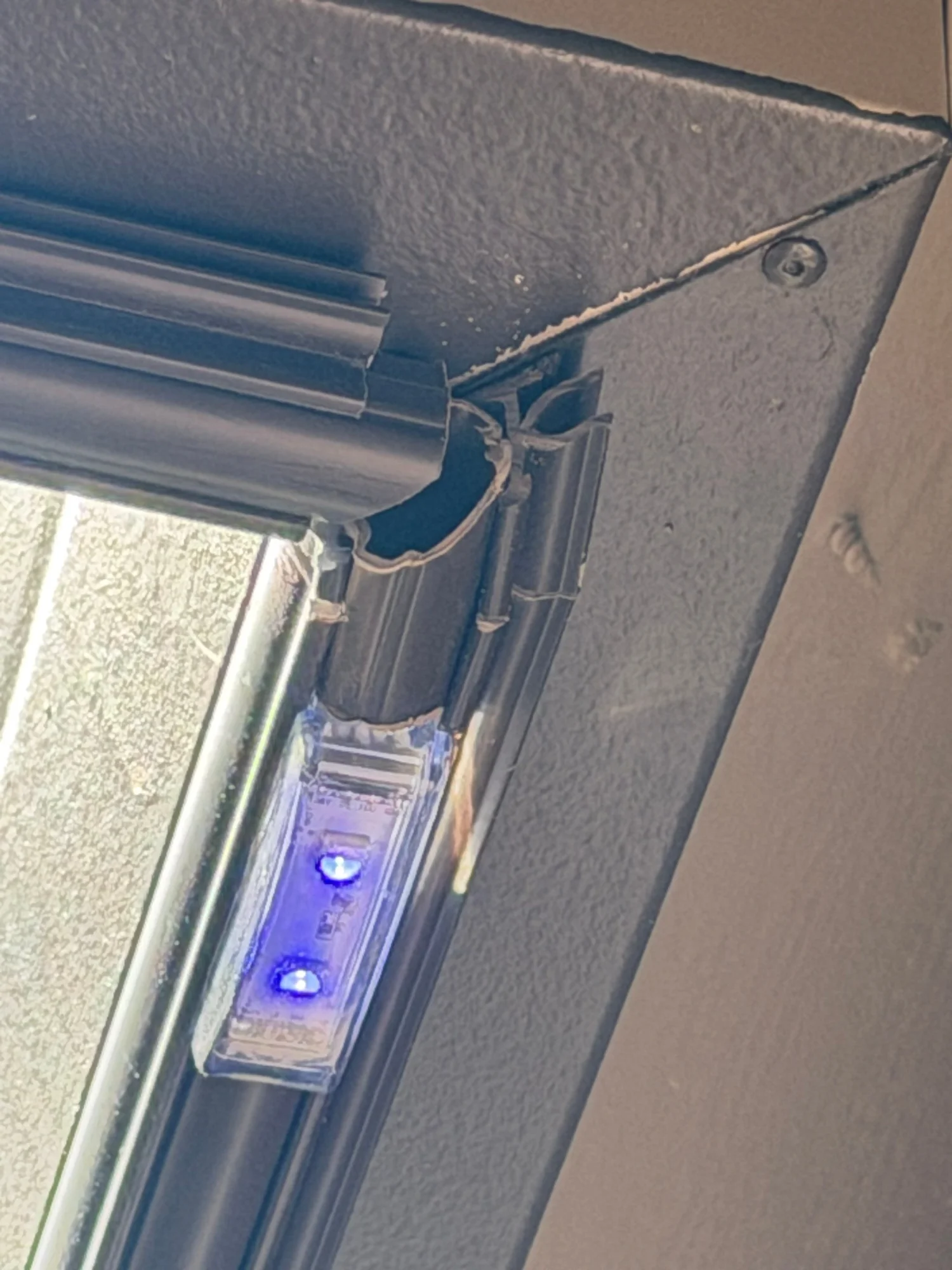
People are often surprised by how much a permanent system changes at the corners. On a straight run, any track looks fine. It's the turns, the transitions between gables, and the places where the roofline changes height that show whether the installer planned the whole route or just started at one end and kept going. This home has a lot of those moments, and it's why we walk and mark the roofline before we order anything.
Install Day
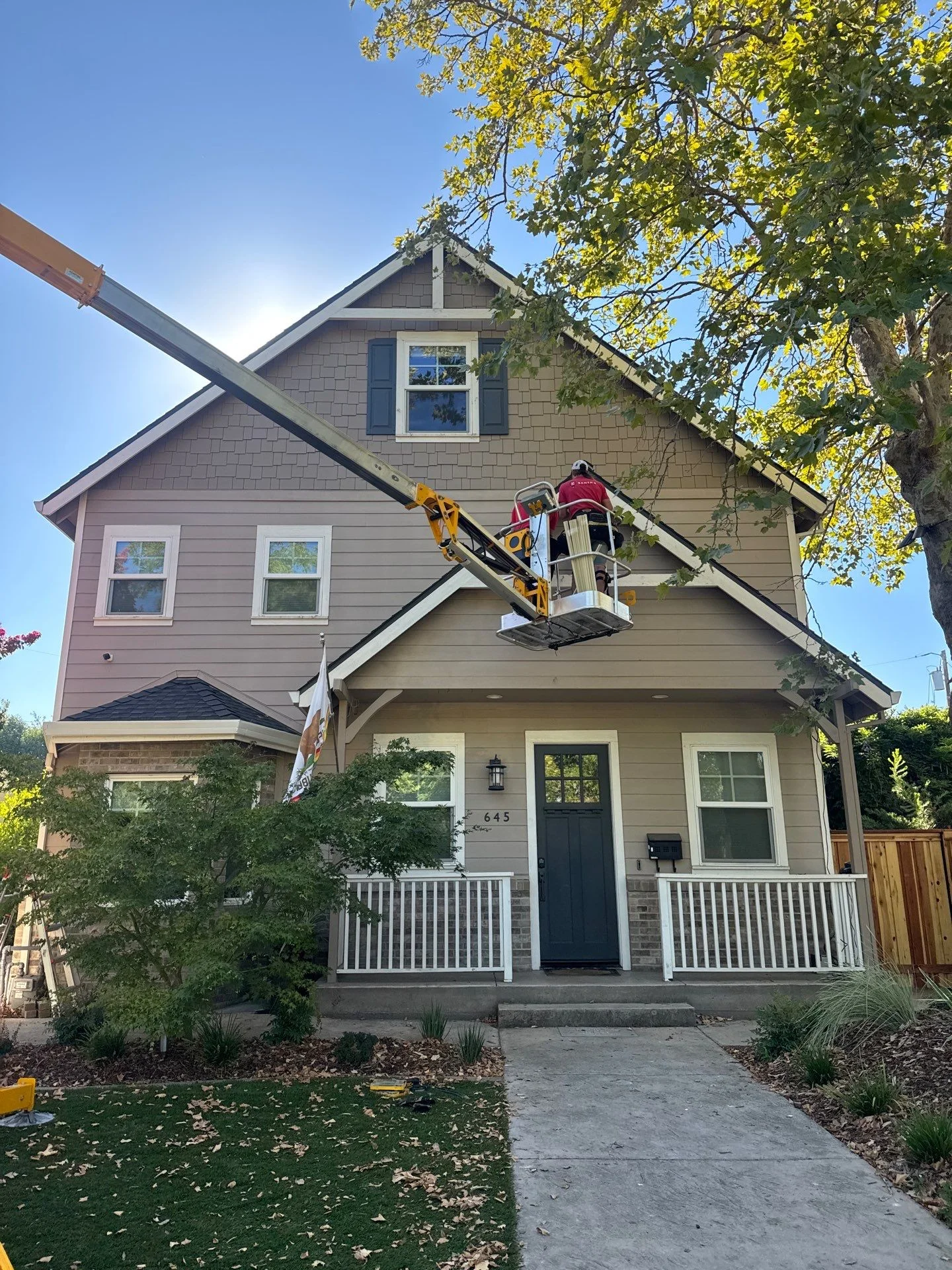
The documentation from this job shows the crew working from a multi position ladder set up beside the brick column and flag bracket at the garage, with the roofline marked and measured in advance. Because the route had been planned on photos first, install day was a matter of following the plan section by section, rather than making decisions on the roof.
- Start from the plan. Every section had a marked route and a known length before the crew climbed a ladder.
- Work the long runs first. The garage gable's two slopes set the line that everything else connects to.
- Handle the corners deliberately. Each turn gets a cut and fit, with the cable routed behind the gutter lip before the next section goes in.
- Test as you go. The system was powered up and running color during the work, which is how the close up photos came out looking the way they do.
"Better than I could have ever expected. I had Santa's Lights install permanent lighting on my house, and the process was clear from start to finish."
Verified Google ReviewWhat Paul Planned to Do With It
Once the install was done, Paul told us he was thinking of having a photographer come by one evening, and that he might change some of the color patterns himself. That's one of the best reasons to choose a permanent system over seasonal lights. The colors, scenes, and patterns are all controlled from an app, so changing the look is a few taps rather than a call to a contractor.
For a home like this one, that opens up a lot. A warm white for everyday evenings that suits the Tudor character. Team colors on game day, which we cover in our post on whether lights can change colors. Holiday scenes in December, and something different for a party or a photo session. All from the same track, with no ladder and no storage bin.
| Occasion | What a homeowner might run |
|---|---|
| Everyday evenings | Warm white that suits the home's traditional character |
| Game day | Team colors across every gable |
| Holidays | Seasonal color scenes without hanging a single strand |
| Photos and parties | Custom patterns changed from the app in minutes |
If you're weighing seasonal against permanent for your own home, our honest breakdown of Christmas lights versus permanent lighting walks through the cost and maintenance tradeoffs.
See permanent lighting on your own roofline first.
Try our AI Visualizer, completely free.
Is Permanent Lighting Right for a Tudor or Half Timbered Home?
Traditional architecture, with its defined trim, steep gables, and deep colors, tends to be a very good fit. The trim gives the track somewhere to hide, and the gables give the lights a strong shape to trace. A few questions help decide whether it's right for yours.
- Is your fascia and trim a consistent color? A defined, consistent trim color makes matching the track straightforward.
- Are most of your roof edges accessible from a ladder? Straight gables and standard eaves are simple. Very tall or awkward sections may need extra equipment, which we cover in our post on when scaffolding is needed.
- Do you want lights beyond December? Permanent lighting pays off when it's used across the year, for game days, celebrations, and everyday ambiance.
- Is your home in an HOA? Many Folsom communities have architectural guidelines, so it's worth confirming yours before you schedule. A trim-matched track is generally easier to get approved than something visible all day.
What It Costs
Permanent systems are priced by the length of track and the number of lights, so the number depends entirely on your roofline. Our permanent lighting cost guide breaks down the typical ranges, financing is available with a soft credit pull and monthly payments as low as $150, and when you book a permanent project of $4,000 or more, your Christmas lights are included free this year, a $799 value. You can see the current offer here.
FAQ: Permanent Lighting on Traditional and Tudor Style Homes, Answered
Will permanent lighting look good on a Tudor style home?
Yes, when the track is color matched to the dark trim. The channel blends into the timbers and fascia, so the lights only show when they're on.
How do you hide the wiring on a roofline with so many gables?
Cable connections are routed to exit at corners and tuck behind the gutter lip, out of sight from the ground, and the track covers the wire between lights along each run.
Do you drill into brick or stucco?
Track ends are planned to stop at masonry rather than anchor into it, and we choose mounting methods based on the surface, so brick columns and stucco panels aren't altered for the install.
Why does the roofline need to be measured before ordering?
Permanent track and lights are ordered to the foot, and cut track can't be stretched. Measuring first prevents a run that comes up short and keeps the finished line continuous.
Can I change the colors myself after installation?
Yes. Colors, scenes, and patterns are controlled from an app, so you can switch looks any time without calling us.
What does the system look like during the day?
With the lights off, it's a thin dark channel along the roof edge that blends into trim of a matching color. The lit pebbles only stand out when the system is running.
Do you install permanent lighting in Folsom?
Yes. Folsom is one of the areas we serve regularly, from custom estates to traditional homes with detailed rooflines like this one.
The best compliment a permanent system can get is that nobody notices it until it's on. A home with this much character deserves lighting that respects it, and that comes down to planning the route, matching the color, and handling every corner like it matters. Because on a roofline like this one, every corner does.
Clark, Santa's Lights

Clark started Santa's Lights back in 2014 with a ladder, a truck, and way too much confidence in his own knot tying. Since then he's lit up thousands of homes across Sacramento, Folsom, Roseville, and beyond, and he still shows up to jobs himself often enough to know exactly what he's talking about. When he's not on a roofline, he's probably answering your call directly, because that's still how this business works.