
Lighting a Complex Rocklin Roofline: Tile, Solar Panels, and Three Roof Pitches
Three roof sections, one active solar array, and a roofline that needed a real plan before a single light went up. Here's how the Cassia Way job actually came together.
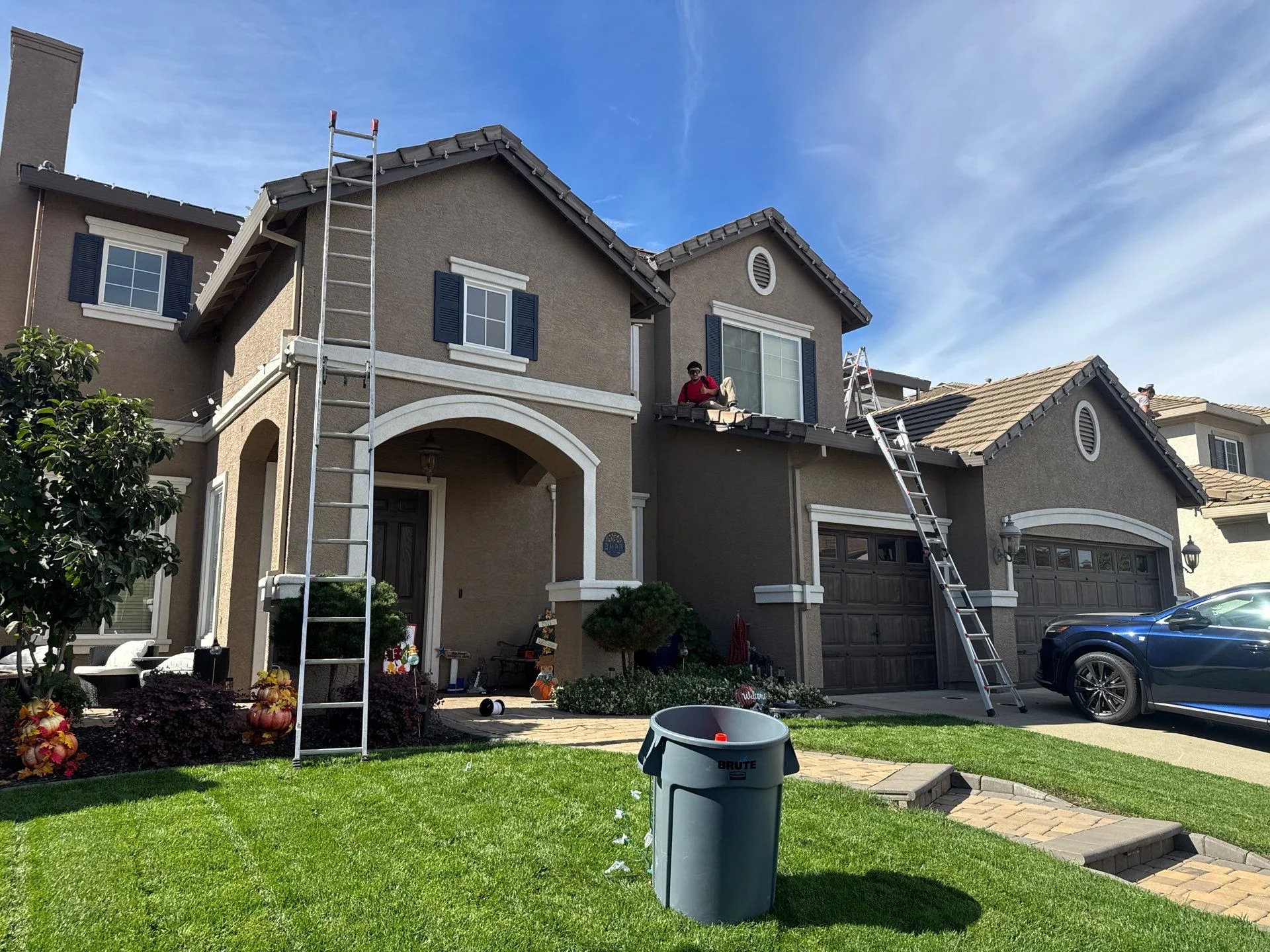
The job: a multi-gable, two-story estate home on Cassia Way in Rocklin, tile roof, rooftop solar, and three distinct roof pitches meeting at different heights. The challenge: designing a clean, continuous roofline display without a single clip or cord crossing a solar panel. The result: warm white C9 lighting tracing every gable, installed in a single visit, with the panels left completely untouched.
Have a roofline with solar panels or multiple gables?
Free design consultation, transparent pricing, no obligation.
Every home teaches us something, and this one was a good reminder of why a roofline should never get quoted from the street alone. Tim's home on Cassia Way in Rocklin has three separate roof pitches meeting at different heights, a full tile roof, and a bank of solar panels sitting right where a straightforward install would normally run its main line. It's the kind of job that looks simple in a finished photo and is anything but simple to actually plan correctly.
Here's how the whole job actually came together, from the first walkthrough to the finished display, including the parts that don't usually make it into a before-and-after photo.
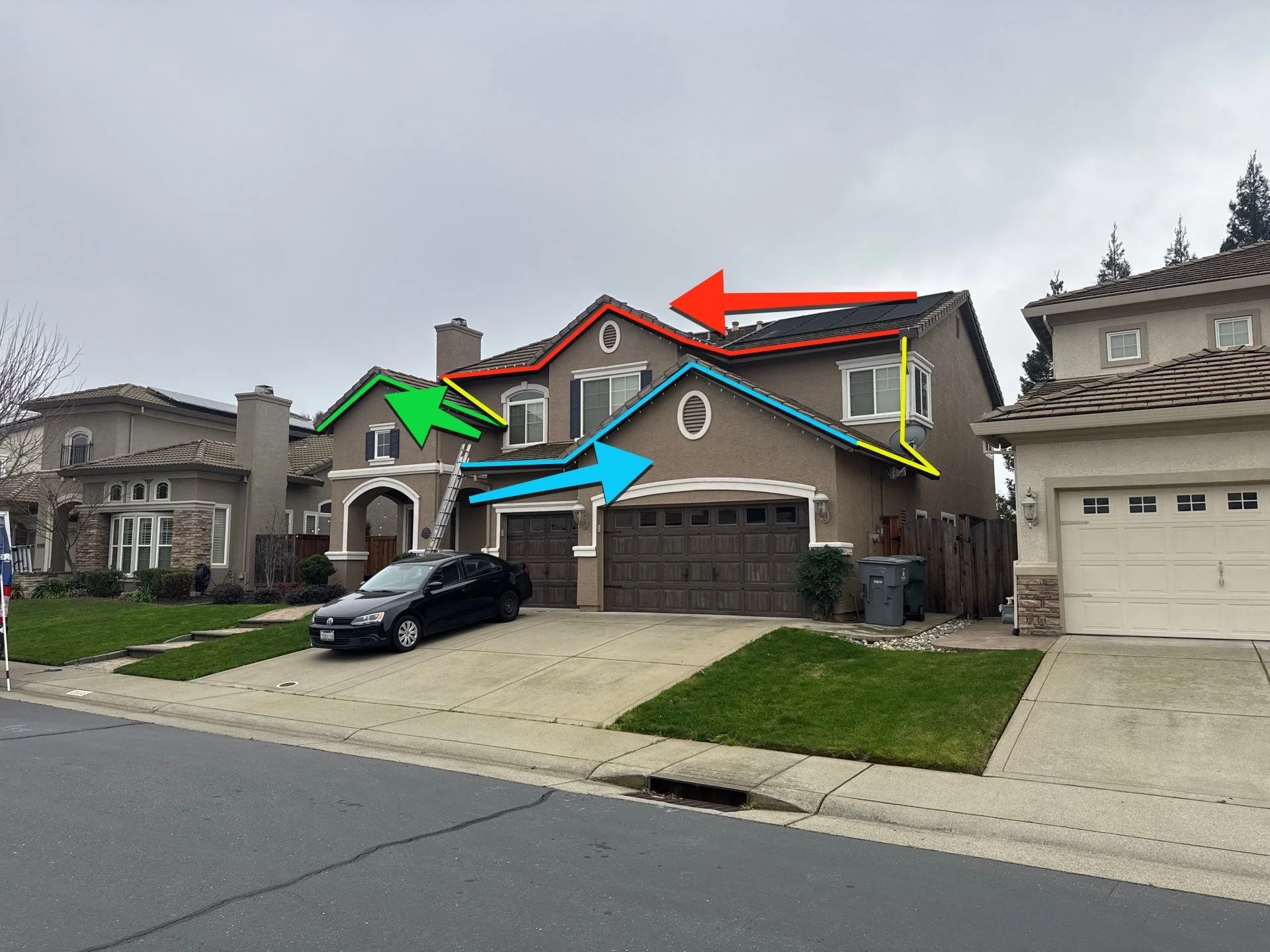
The Home on Cassia Way
This is a large, two-story stucco home typical of the custom and semi-custom construction found throughout Rocklin, tile roofing, a paver driveway and walkway, mature landscaping, and a roofline with real architectural detail rather than one flat, continuous edge. A three-car garage and a wide arched entry give the home a strong street presence, which meant the finished display needed to actually match that scale, not just outline the easiest sections and call it done.
Homes like this one are common across Rocklin's more established neighborhoods, where larger lots and custom builds from the early to mid 2000s often combine tile roofing with rooftop solar added later as an upgrade. That combination, tile plus solar, has become increasingly common as more homeowners add panels to older builds, and it's exactly the kind of roofline that punishes a rushed or generic install. A crew that doesn't know how to read the roof correctly can end up cracking tile, damaging panel wiring, or simply producing a display that looks disconnected where the different roof sections meet. It's not an exaggeration either, the Tile Roofing Industry Alliance notes that most tile manufacturers specifically don't warrant breakage caused by foot traffic, which is exactly why technique matters as much as caution.
Why this matters beyond just this one home: as more Sacramento area homeowners add solar to existing roofs, this exact scenario, tile roofing plus an existing solar array, is becoming one of the more common configurations we're asked to design around, not a rare edge case.
Why This Roofline Needed a Real Plan First
Before anything went up, we walked the property and mapped out every distinct roof section. This home has a main ridge running across the top of the house, a smaller front-facing gable over the entry, and a third gable section on the opposite side, each meeting the others at a different height and angle.
| Roof section | What it required |
|---|---|
| Main ridge | Routing around an existing solar array |
| Front entry gable | A clean transition down to the lower roofline over the garage |
| Side gable | A separate run connected back to the main line with a concealed extension cord |
| Tile surface throughout | Clips and foot placement planned to avoid cracking tile |
Skipping this step is exactly how a display ends up looking disconnected, one bright section over the garage and a dark, forgotten gable on the other side of the house. Planning it as one continuous design instead of three separate sections is what makes the finished result read as a single, intentional display.
Part of that planning also meant deciding where the custom-made extension cords needed to run between roof sections. Rather than letting the display stop and restart awkwardly at every ridge transition, we mapped out exactly where each connection would sit and how it would be concealed, the same standard we hold every roofline to, whether it's a single-story home or a three-section design like this one.
Why C9 Warm White Was the Right Call Here
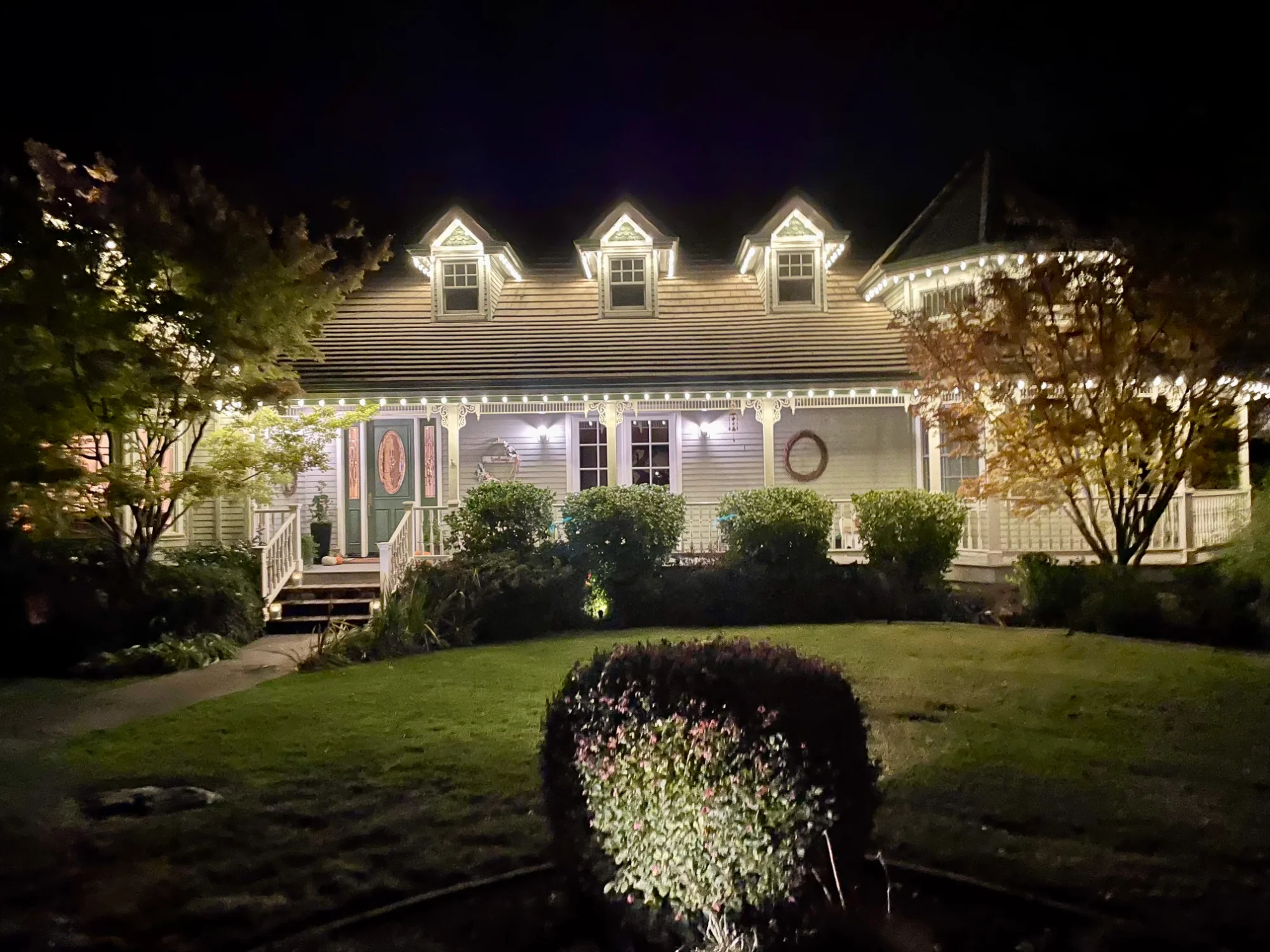
For a home with this much architectural detail, we went with classic C9 bulbs in warm white rather than mini lights or a colored scheme. C9s read clearly from the street and hold up well against a large stucco facade, giving each roofline section enough visual weight to actually register as part of the design rather than disappearing against the size of the house. Warm white also meant the display would look cohesive across three separate roof sections installed at different points during the day, since color temperature consistency matters just as much as physical continuity when a display spans multiple rooflines.
Lighting Around Solar Panels Without Touching Them
This home's main roofline runs directly alongside a rooftop solar array, which is a real, distinct constraint compared to a plain tile or shingle roof. Solar panels can't be used as a mounting point, clips and cords can't rest across them, and foot traffic near the array has to be planned around just as carefully as tile itself. Solar panels are genuinely fragile in ways that aren't obvious from the ground, utility safety guidance is direct about it: never walk on solar panels, since doing so can damage them and create a real safety hazard for anyone on the roof.
There's also an electrical consideration that's easy to overlook. Solar systems have their own conduit runs, junction boxes, and shutoff points, and a careless installer can end up running a light string's extension cord across or near solar wiring without realizing it. We map out exactly where the solar system's own wiring runs before planning our own cord paths, so the two systems stay completely separate from each other, not just physically clear of the panels themselves.
-
No mounting hardware on or near the panels
Every clip point was planned along the tile edge itself, never touching the array.
-
Cord routing planned around the array, not over it
Where the roofline continued past the panels, wiring was routed to avoid crossing directly over them.
-
Solar wiring identified and avoided separately
The home's own solar conduit and junction points were mapped out so our extension cords never run near them.
-
Careful foot placement
Solar panels are as delicate as tile in their own way, and crew movement near the array was planned the same way it would be on a fragile tile field.
-
The result still reads as one continuous line
Despite the array sitting mid-roofline, the finished display doesn't have an obvious gap or interruption where the panels are.
| Consideration | Why it matters with solar on the roofline |
|---|---|
| Mounting points | Panels can't bear clip weight or hardware of any kind |
| Cord routing | Must avoid crossing panel surfaces and solar conduit alike |
| Foot traffic | Panels can crack or scratch under careless weight, similar to tile |
| Visual continuity | A well planned route means no obvious gap where the array sits |
Worth knowing: this is the same underlying discipline we've written about for tile roofs in our Serrano and Empire Ranch guide, know exactly where you can and can't put weight or hardware before a single clip goes up, whether the obstacle is delicate tile or an active solar array.
Have solar panels on your roofline?
We plan every install around them, not through them.
What Install Day Actually Looked Like
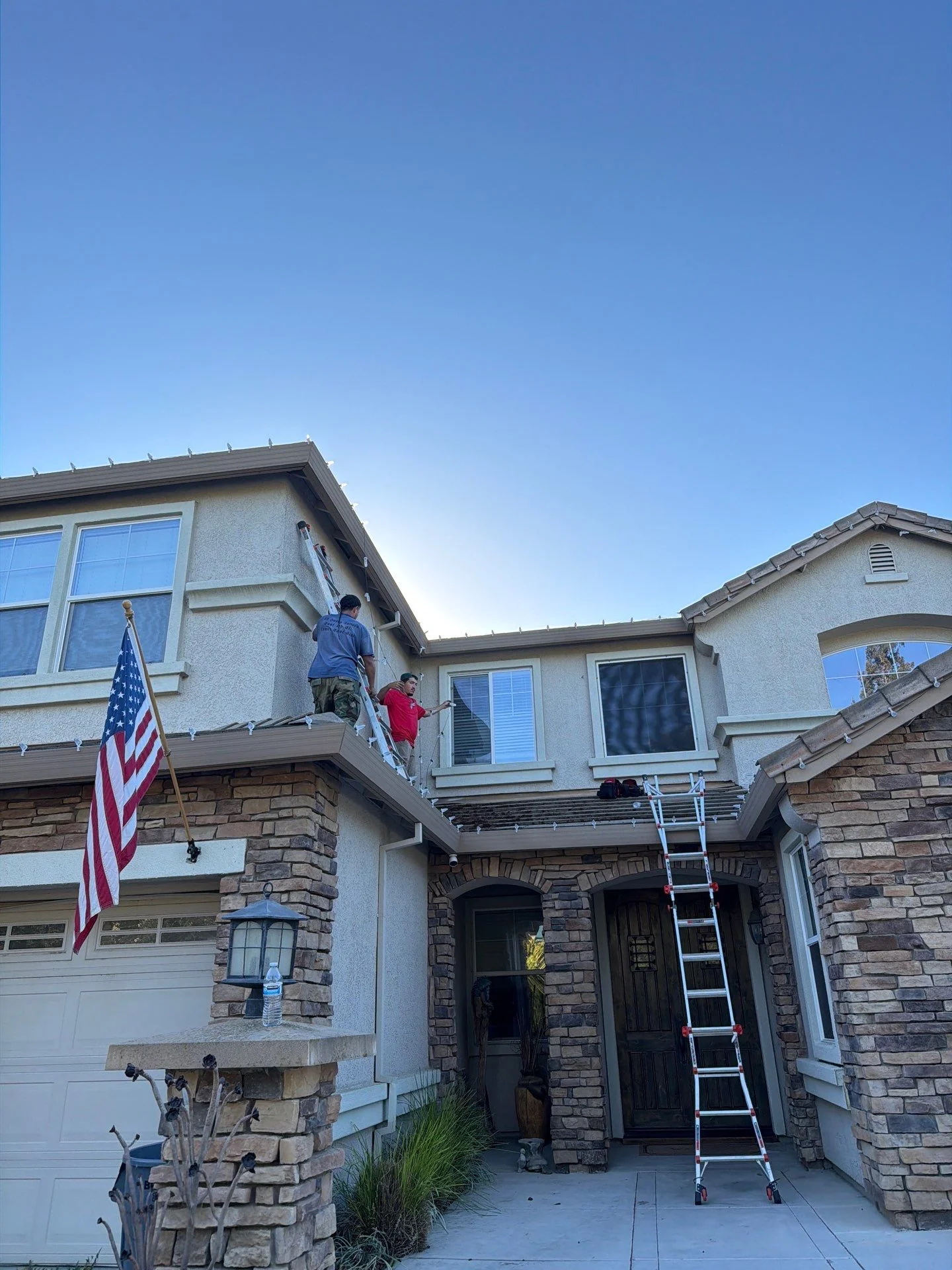
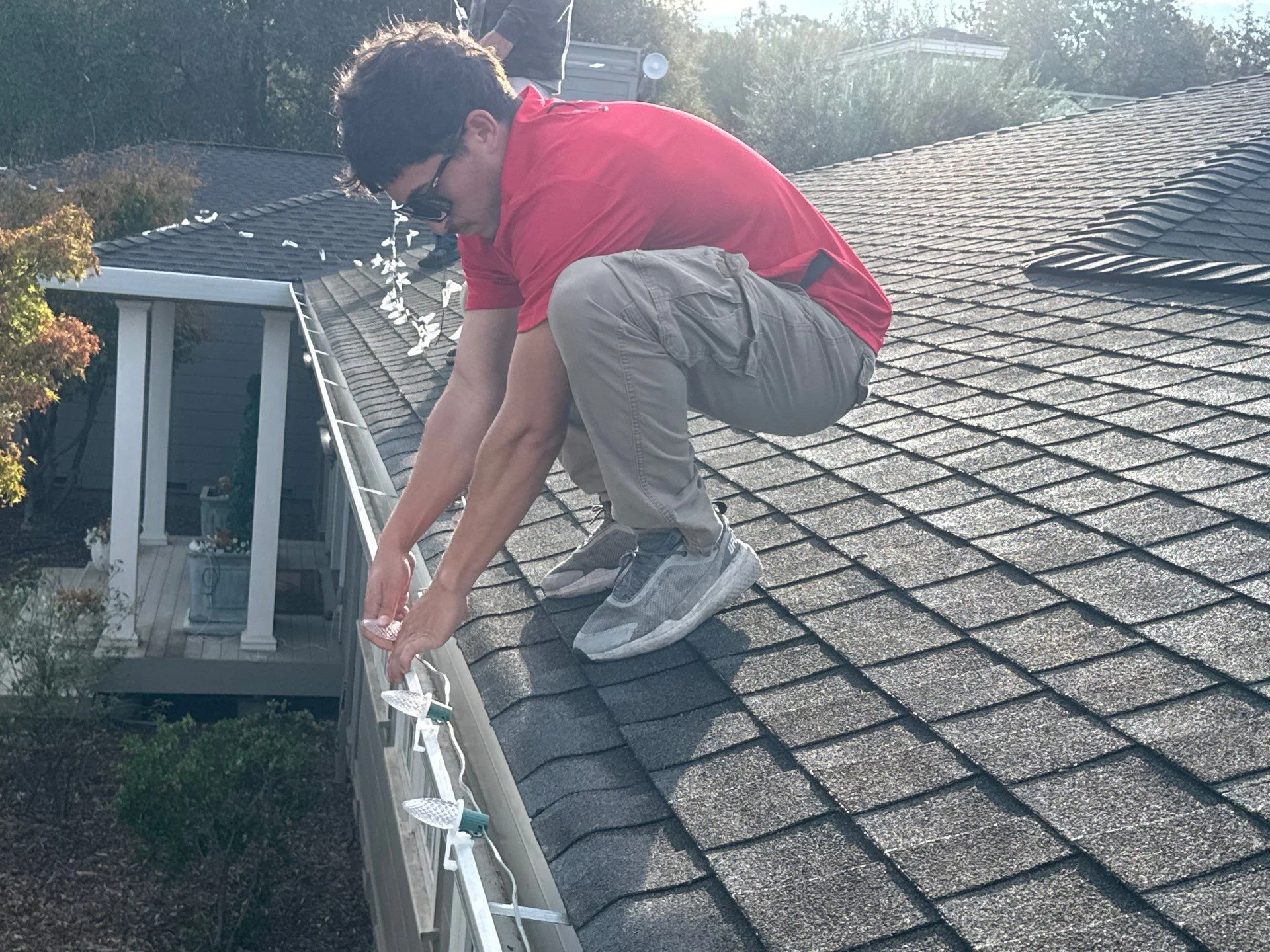
Our crew worked the roofline section by section, starting with the front entry gable before moving across the main ridge and finishing on the far side gable. Ladders were repositioned repeatedly rather than trying to reach multiple sections from one setup, which is slower but keeps every clip placement deliberate instead of rushed.
On a home like this, that repositioning adds real time to the job. A single-story home with a simple roofline might only need a ladder moved two or three times over the course of an install. Here, between the three separate roof sections, the solar array, and the tile surface throughout, the crew repositioned significantly more often, treating each section almost like its own smaller install nested inside the larger project.
The crew also worked the roofline in daylight hours specifically to get a clear, accurate read on tile condition and panel placement before committing to any clip locations. Rushing this kind of job in low light is exactly how mistakes happen, whether that's a cracked tile discovered later or a clip placed slightly too close to a panel edge.
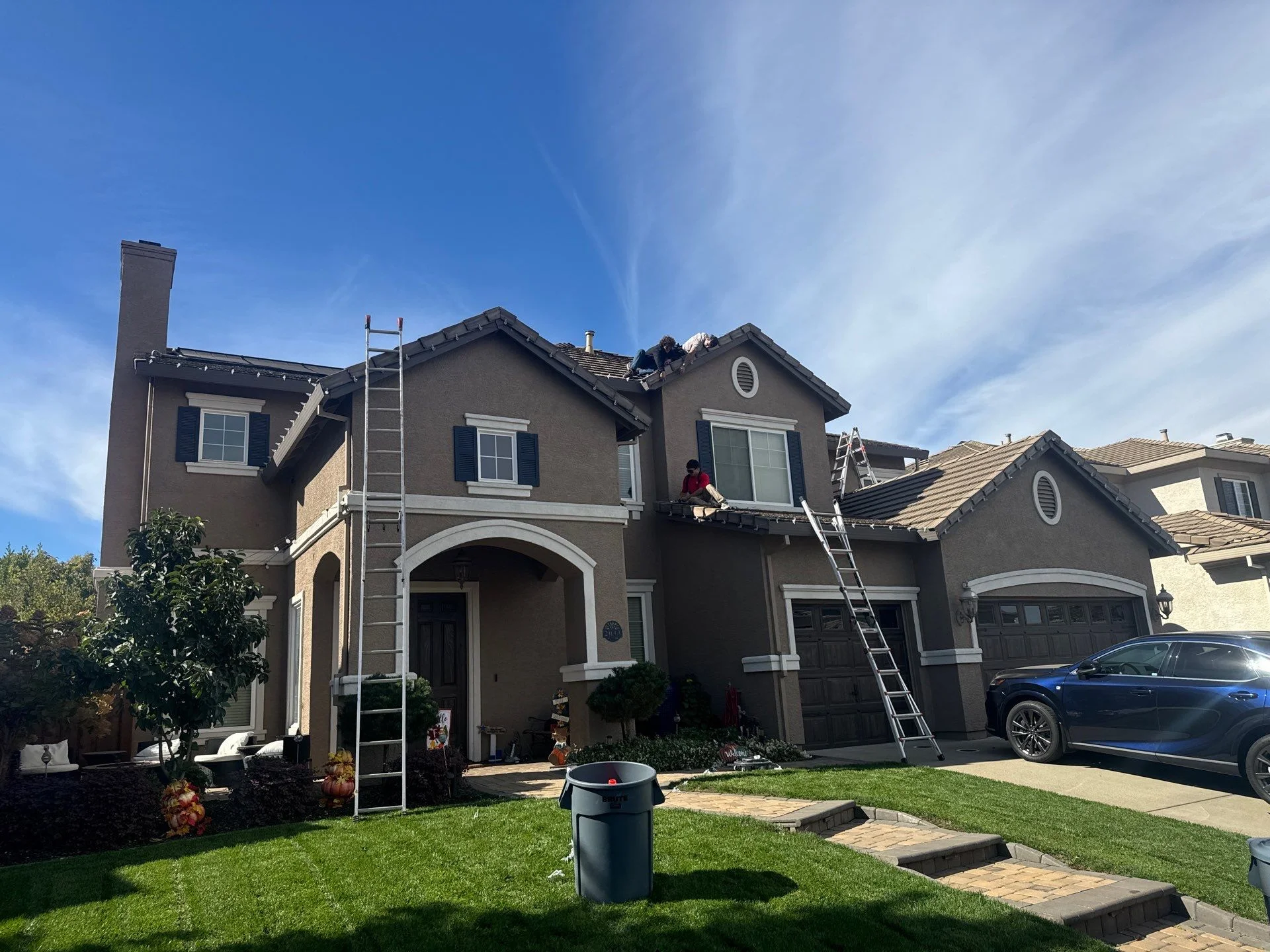
Once the roofline was finished, our team met with Tim at the front door to walk through the completed install before wrapping up, the same final check we do on every job to make sure the display matches exactly what was discussed at the consultation. That walkthrough also covers the basics of how the display is set up to run, when it turns on and off, and what to do if anything ever needs a second look during the season.
"Great experience year after year. If anything comes loose, Clark comes right away to fix it, and he schedules takedown way ahead of time, which is so convenient."
Kelley Kalin, Google Review, Sacramento Area HomeownerWhat Happens for the Rest of the Season
Installation day is really only the first part of the relationship. Once a display like this is up, it's set to run on a timer through the season, and any maintenance needed, a clip working loose, a section that needs a second look after a windy night, is covered as part of the install rather than billed separately. Given the complexity of this specific roofline, that maintenance coverage matters more than it would on a simpler home, since there are more clip points, more roof transitions, and more potential spots for something to need attention over six weeks of use.
Takedown in January follows the same section-by-section approach as the install itself, moving methodically across the main ridge, the entry gable, and the side gable, with the same care around the tile and solar array on the way down as there was going up.
The Finished Result
By the time the crew packed up, every roofline section, the main ridge, the entry gable, and the side gable, carried a continuous line of warm white C9 lighting, with the solar array sitting untouched right in the middle of it. From the street, the display reads as one clean, connected line rather than three separate sections stitched together, exactly the point of walking the roofline properly before any lights went up.
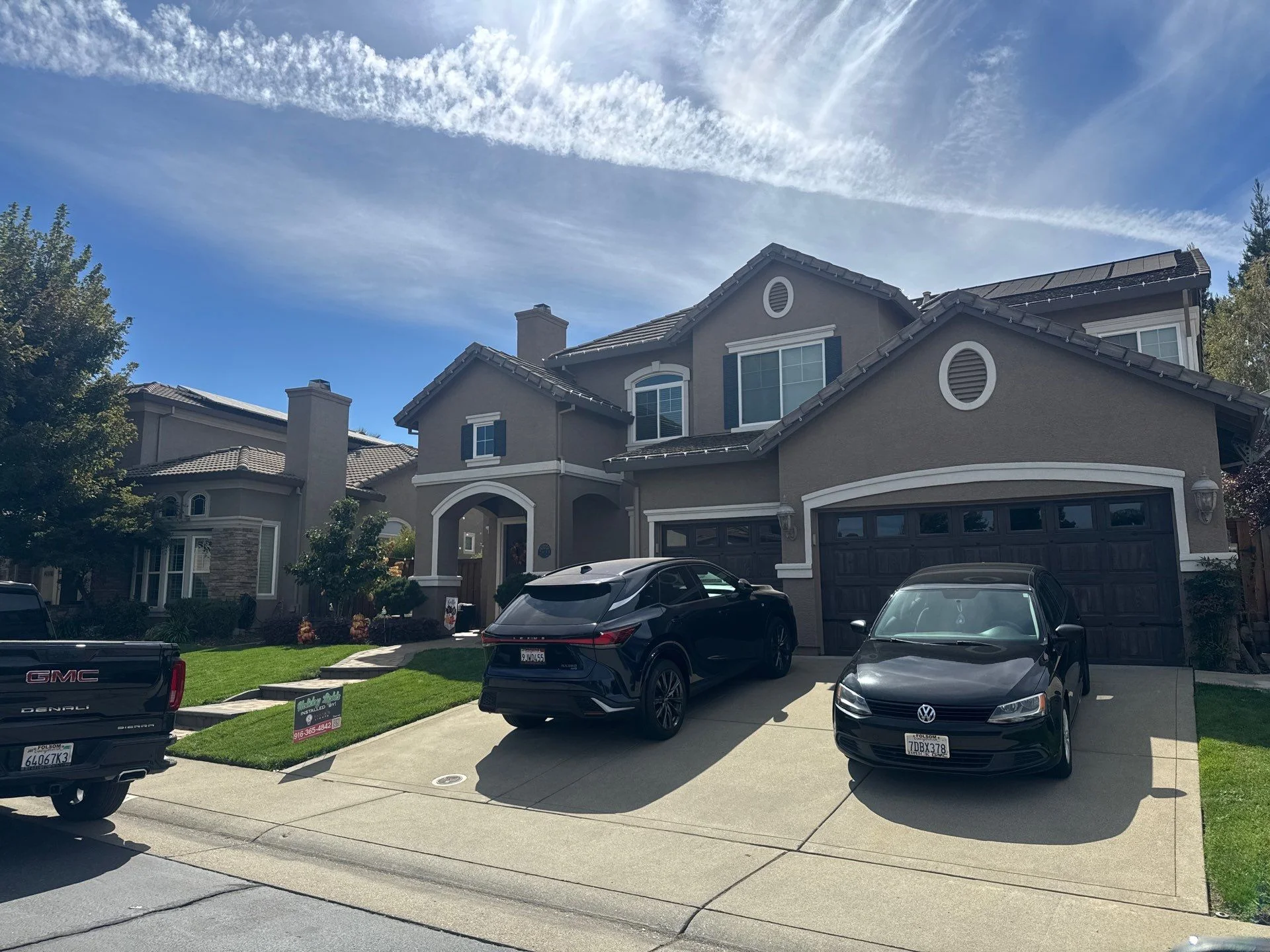
Tim's yard now carries a Santa's Lights sign at the curb, the same one you'll see on plenty of other Rocklin lawns this time of year. It's a small detail, but it's a fair summary of the job itself, straightforward from the street, a lot more planning behind it than it looks.
Want to see your own roofline planned out first?
Try our AI Visualizer, completely free.
How to Tell if Your Own Roofline Has This Same Combination
If you're reading this because your own home has tile roofing and rooftop solar, a few quick things are worth checking before you get a quote from anyone.
-
Where exactly do your panels sit relative to the roof edge?
Panels set back from the eave line leave more room to work with than panels installed close to the edge itself.
-
How many distinct roof sections does your home actually have?
A single ridge is a different job than three sections meeting at different heights, and it's worth knowing which one you're dealing with before comparing quotes.
-
Is your tile original or has it been repaired or replaced in sections?
Repaired tile sections can sometimes be more brittle than the surrounding original tile, worth mentioning during a design consultation.
-
Do you know where your solar system's conduit and junction points are?
If you don't, that's fine, it's exactly the kind of thing we identify during the walkthrough rather than something you need to track down yourself.
None of this needs to be figured out before you call. It's simply useful context to have in mind, since a home with tile, solar, and multiple roof sections is a different quote entirely than a single-story home with a plain composition shingle roof, and understanding why helps make sense of the number you're given.
FAQ: Lighting Complex Rooflines With Solar Panels, Answered
Can Christmas lights be installed on a roof with solar panels?
Yes. The panels themselves aren't used as mounting points, and clips, cords, and foot placement all get planned around the array rather than across it.
Does a multi-gable roofline cost more to light than a simple one?
Often somewhat more, since it takes additional planning and ladder repositioning to connect multiple roof sections into one continuous, intentional design rather than a single straight run.
How do you avoid damaging tile roofing during installation?
Clip placement and foot traffic are planned along the tile edge before anyone climbs a ladder, the same discipline we use on any tile roofline, solar panels or not.
Do you serve Rocklin?
Yes, Rocklin is one of the areas we regularly install in, including homes with complex rooflines like this one on Cassia Way.
Why did this job take longer than a simple single-story install?
Three separate roof sections, a solar array to route around, and a full tile surface all meant more ladder repositioning and more careful planning at each stage compared to a straightforward single roofline.
Is maintenance included if something goes wrong mid-season?
Yes. In-season maintenance is included with every install, and it matters even more on a home with this many roof transitions and clip points.
What bulb style works best on a large, architecturally detailed home?
C9 warm white bulbs, since they read clearly from the street and hold visual weight against a large facade better than smaller mini lights would.
Jobs like this one are exactly why we walk every roofline in person before quoting anything. A home this size, with this many roof sections and an active solar array in the middle of it, needs a real plan, not a guess from the driveway. It's also exactly the kind of job that separates a display that looks like an afterthought from one that looks like it was designed for that specific house from the start.
Clark, Santa's Lights

Clark started Santa's Lights back in 2014 with a ladder, a truck, and way too much confidence in his own knot tying. Since then he's lit up thousands of homes across Sacramento, Rocklin, Folsom, and beyond, and he still shows up to jobs himself often enough to know exactly what he's talking about. When he's not on a roofline, he's probably answering your call directly, because that's still how this business works.