Christmas Lights on a Tile Roof Home in North Natomas: A Two-Story Install
A real North Natomas project: a two-story stucco home with a tile roof and stone veneer, lit with a layered seasonal package by a two-person crew.
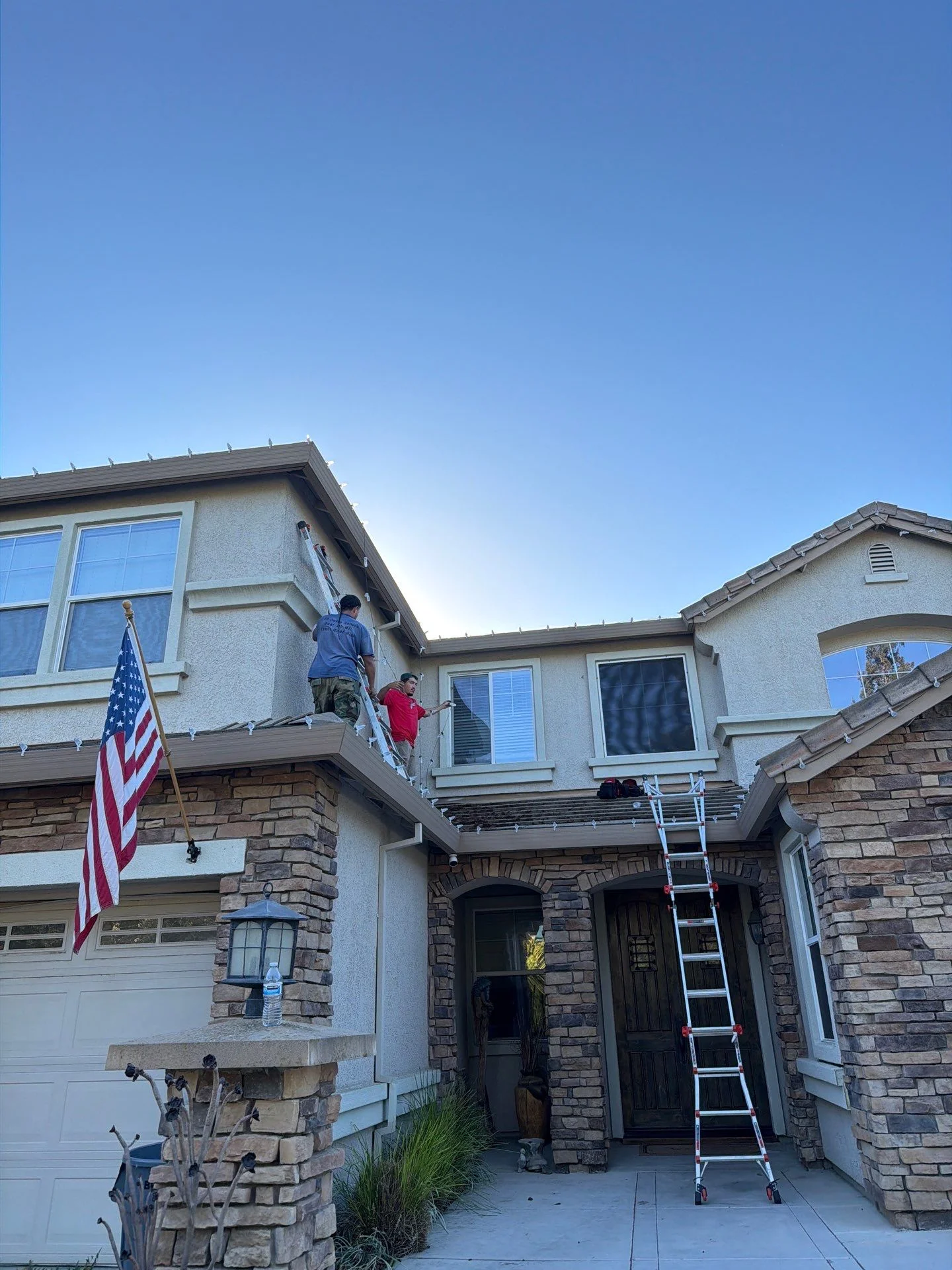
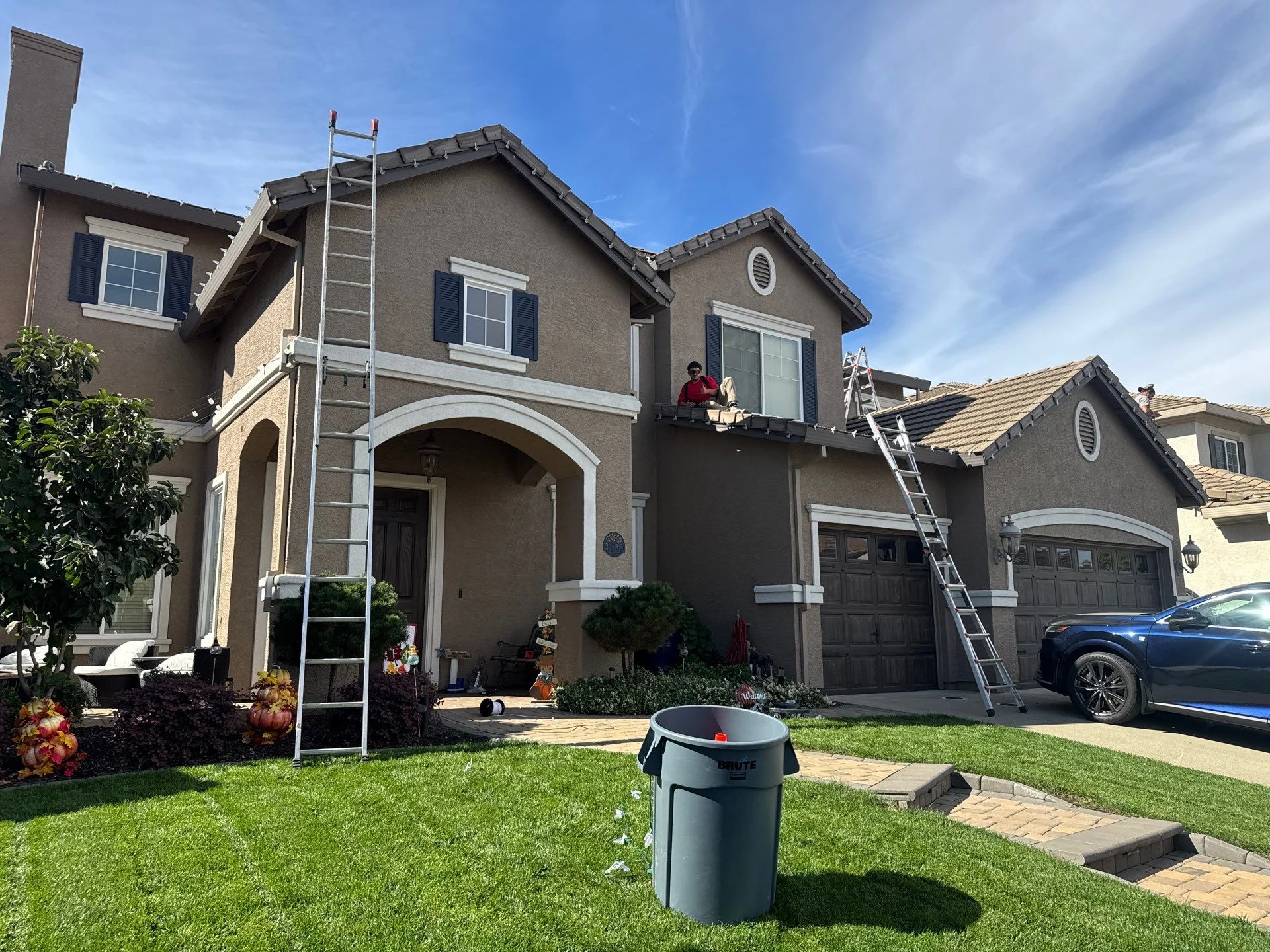
The job: a full Christmas light package for Bobbi, a two-story stucco home with a tile roof and stone veneer columns in North Natomas, Sacramento. The challenge: clipping a lighting line to a roofline that is not a standard shingle edge, then carrying the same look down to the lawn, the wreaths and the shrubs so the house reads as one design. The result: a warm, evenly spaced C9 roofline, ground stake accents along the lawn edge, wreaths with red bows on the gables and net lights on the shrubs, installed by a two-person crew.
Two stories, tile roof, stone columns?
Free design consultation, transparent pricing, no obligation.
Plenty of homes in North Natomas look alike from the street, and that is exactly why the finishing details matter. When Bobbi called us, the house already had strong bones: a two-story stucco front, a tile roof, and a stone veneer base around the garage. What it needed was a lighting plan that respected all of that instead of fighting it.
This is how the job came together, based on what our crew documented on site, and what we think every homeowner with a tile roof and a two-story front should know before they book.
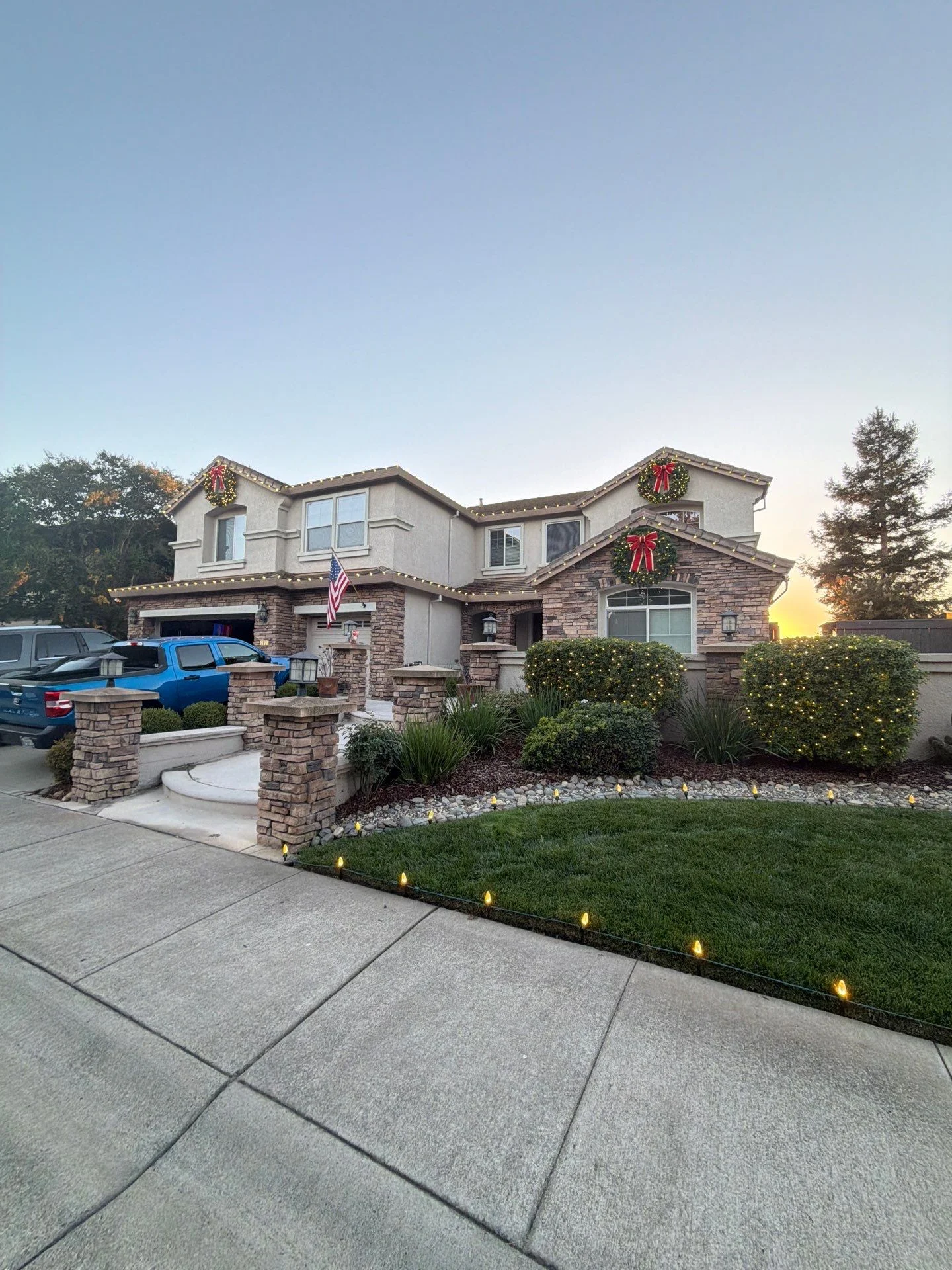
The Home in North Natomas
North Natomas grew quickly over the last couple of decades, and the homes reflect it. Many are two-story stucco houses with tile roofs, a street-facing garage and a tidy front lawn, built in tight, well-kept neighborhoods. Bobbi's house fits that pattern: warm stucco walls, a clay-style tile roof, and a stone veneer column and wall section that frames the garage and gives the front its character.
That combination is common across 95835, and it is a good canvas for lights. The tile roof gives a clear, repeating line. The stone adds texture that warm light picks up beautifully. The lawn gives a long, flat edge that is perfect for ground accents. What takes planning is how to connect those three layers so the display feels deliberate from the street.
Two-story fronts also change how a display is seen. From the sidewalk and from across the street, the upper roofline is the first thing the eye lands on, so the line has to be straight, even and complete. If it wobbles at the second floor, the whole house looks unfinished, no matter how nice the shrubs and wreaths are below it.
Lighting a Tile Roofline
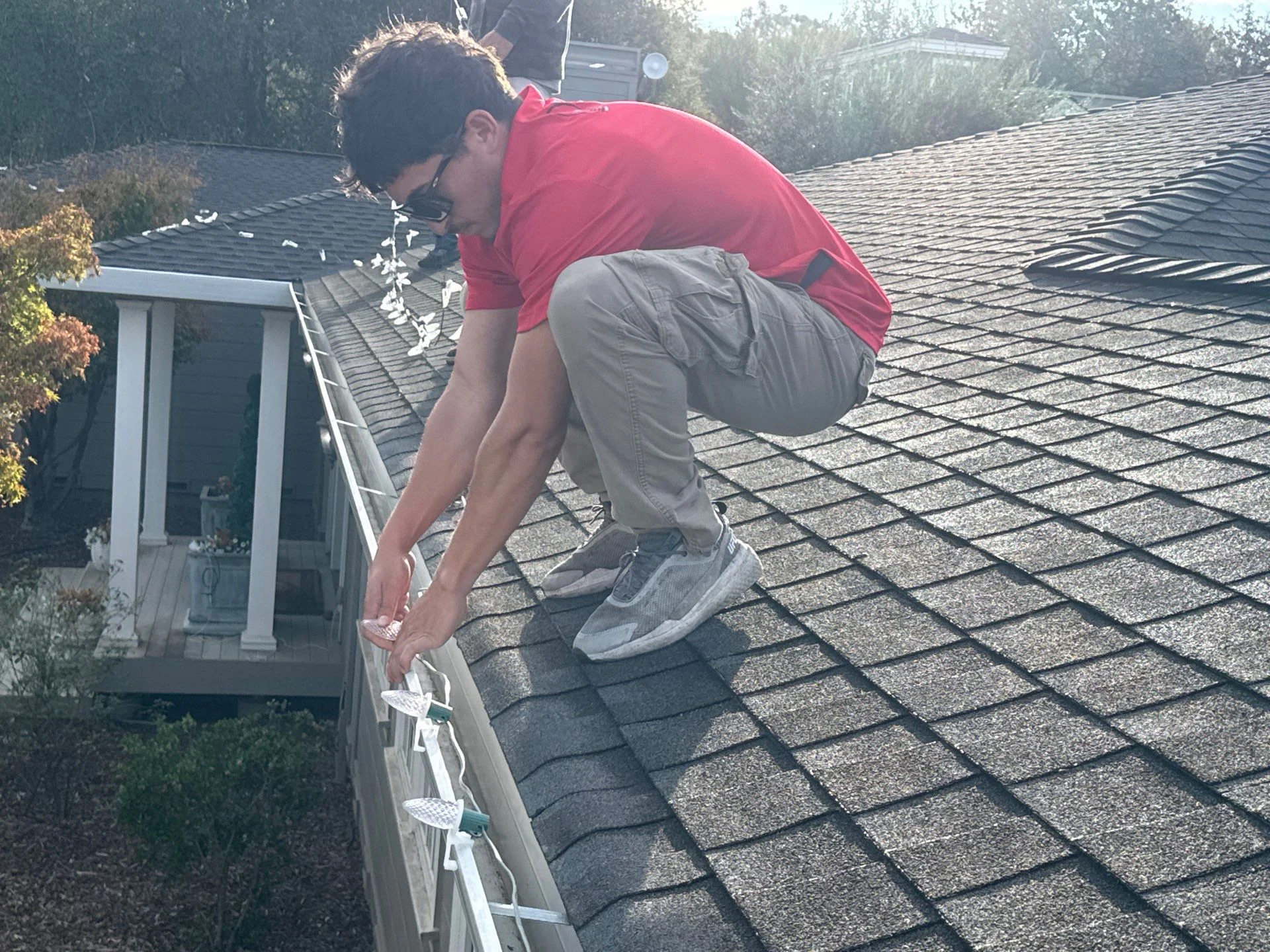
Tile changes the way a roof edge works. There is no flat shingle edge to press a clip against, and tile is brittle enough that nobody should be walking it carelessly or hammering anything into it. Our approach is to attach the lights at the fascia and gutter line with purpose-made clips, so the strand holds its spacing without any fasteners going through the roof surface.
| Roof detail | What it means for the install |
|---|---|
| Tile roof surface | Fragile underfoot, so the crew limits foot traffic and works from the edge wherever it can |
| Gutter and fascia line | The attachment point for clips, which keeps the lights off the tile itself |
| Gable and garage roof sections | Each section is measured and clipped separately, then joined with concealed cord runs |
| Second story height | A taller ladder setup and a second person footing it, which is why this was a two-person job |
The clips hold each C9 at a consistent distance from the edge, and that consistency is what gives the line its crisp look from the street. Loose, uneven spacing is the most common giveaway of a rushed install, and it shows up more on a two-story front than on a single-story house, because the line is viewed from farther away and at a steeper angle.
For the bulbs themselves, we use custom cut commercial C9 LEDs. ENERGY STAR reports that certified LED decorative light strings use about 92 percent less energy than incandescent strings, which is why LED is the practical choice for a display that stays up for several weeks. If you want the long version of that comparison, our guide on Christmas lights versus permanent lighting walks through it.
Not sure your roof type can take lights?
Tile, shingle, metal or flat, we plan around it. Send us a photo.
Why Warm Light Suits Stucco and Stone
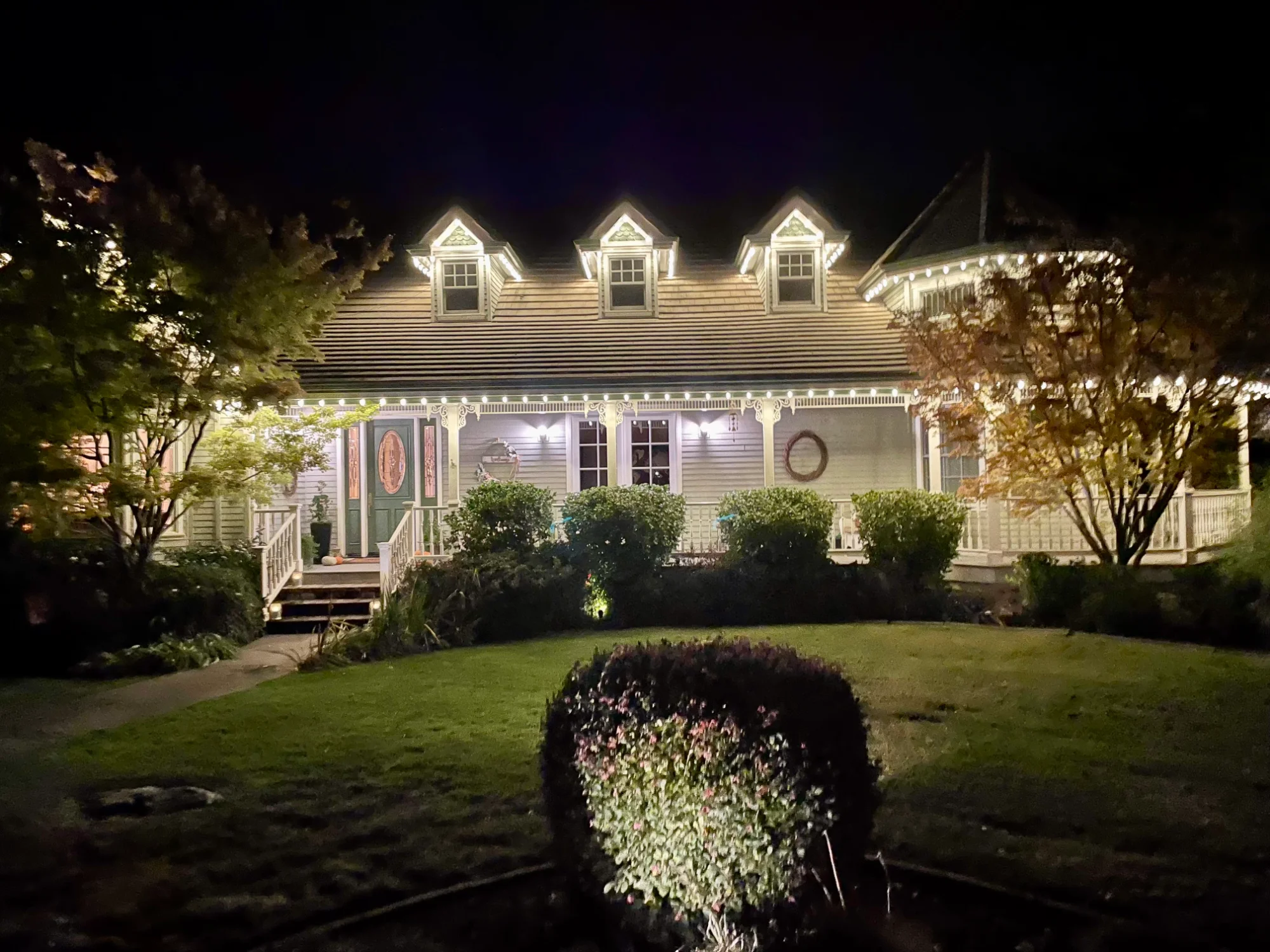
Stucco and stone are both textured, earth toned surfaces, and they respond to light very differently from smooth white siding. Cool white bulbs can look harsh against a warm stucco wall and flatten the stone. Warm white and soft amber tones pick up the texture, throw a gentle glow across the wall and make the whole front look richer. That is the reason the finished dusk photo reads as warm and inviting rather than stark. If you are choosing between warm and cool white for your own home, our color temperature and bulb style guide compares them side by side.
The red bows on the wreaths earn their place for the same reason. Against warm neutrals, one clear red accent is enough. It gives the eye somewhere to land, and it keeps the display from feeling like a single wash of one color.
Planning Your Own Install Around a Busy Season
Homes like this one are exactly why we ask people to book early. A two-story front, a tile roof and a layered package take more time to plan than a single strand along one eave. The earlier the design is settled, the more flexible the install date can be.
| Step | What happens | What you do |
|---|---|---|
| Design consultation | We review photos of the home, the roof type and your power access | Send photos or book a visit |
| Quote | Transparent pricing, starting at $799, built around the elements you want | Choose your layers: roofline, ground, wreaths, shrubs |
| Install day | A two-person crew sets the lights, usually while you go about your day | Make sure the crew can reach your outlets |
| Season and takedown | We maintain the display and schedule takedown ahead of time | Call us if anything comes loose |
Financing is also available, with a soft credit pull and payments as low as $150 a month, so a fuller package does not have to be a single large payment.
What the Full Package Included
This was not a roofline only job. Bobbi wanted the whole front of the house to feel finished, so the plan layered several elements, each doing a different job.
- C9 roofline. The anchor of the display. A continuous, evenly spaced line along the roof edge and gables that traces the shape of the house.
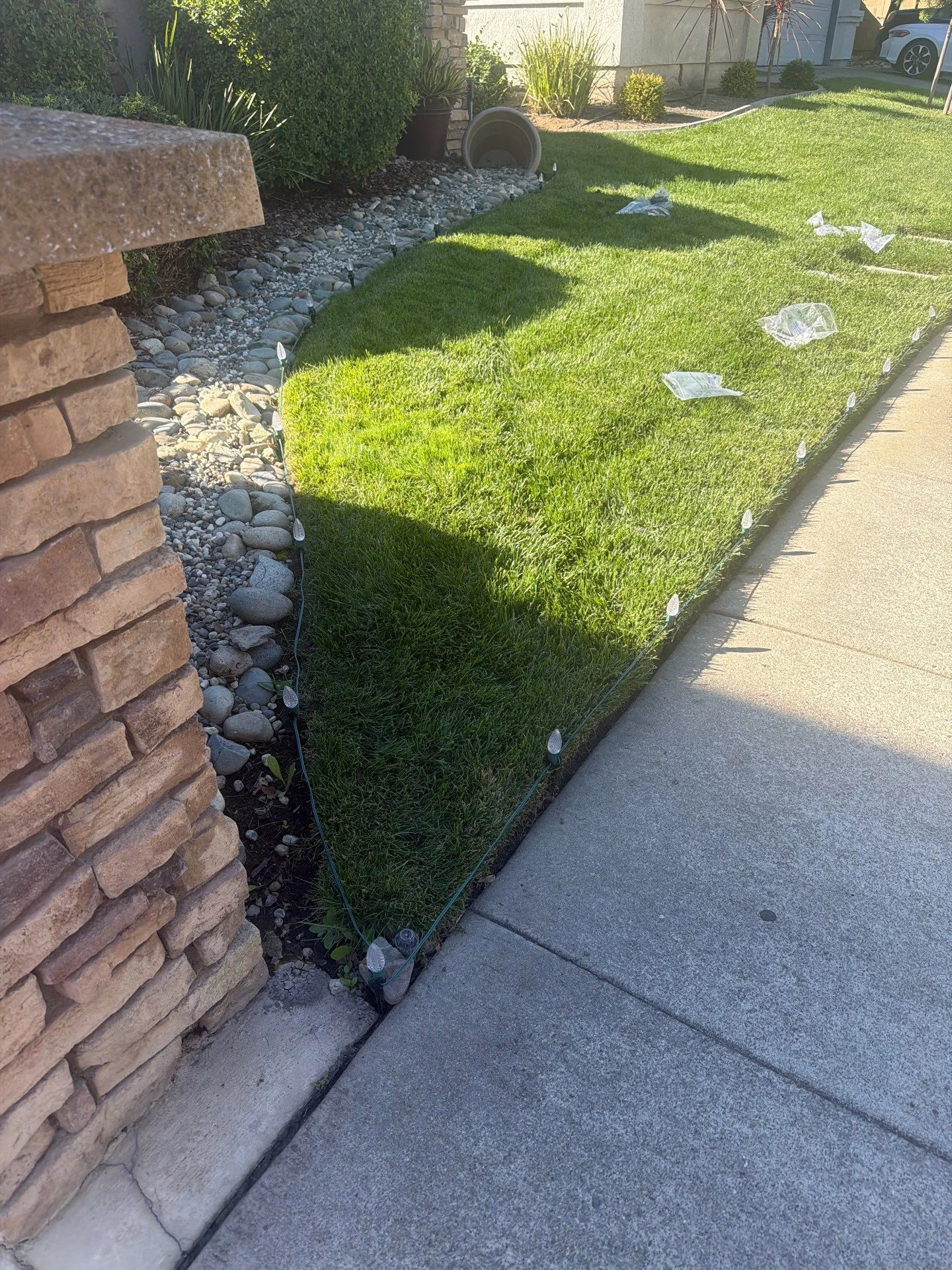
- Ground stake C9s. A row of C9 lights set along the lawn edge that adds a warm, low glow and brings the eye down from the roof to the yard.
- Wreaths with red bows. Wreaths on the gables, each finished with a red bow. They add color and a traditional focal point against the stucco.
- Net lights on shrubs. Net lights drape over the shrubs quickly and evenly, so they glow as solid mounds of light rather than a tangle of strands.
- Concealed power runs. Extension cords are routed between roof sections and along edges so the finished display looks clean in daylight too.
| Element | Where it goes | What it adds |
|---|---|---|
| C9 roofline | Roof edge and gables | The structure and the shape of the house |
| Ground stakes | Lawn edge | A low glow that ties the yard to the house |
| Wreaths and bows | Gables | Traditional color and a focal point |
| Net lights | Shrubs | Even, full coverage with little effort |
Layering is what separates a display that looks designed from one that looks collected. A roofline alone can look sparse on a large two-story front. Adding a ground layer and a few focal points fills the space between the roof and the lawn, so the whole elevation is lit instead of just the top edge.
Two People, One Ladder, One Plan
The photos from the day show two crew members working the front of the house together: one steadying the ladder and handling cord and clips from the ground and the lower roof, the other placing lights along the upper edge. On a two-story front with a tile roof, this is the right way to do it. One person cannot safely foot a tall ladder and place clips at the same time.
- One person on the ladder. Placing clips and bulbs along the gutter line at a steady, even spacing.
- One person footing and feeding. Holding the ladder, passing material up and managing cord routing so nothing gets pulled or kinked.
- Short sections at a time. Working in measured sections rather than trying to string a whole elevation at once.
- A check from the street. Stepping back to look at each finished section from where a neighbor would see it.
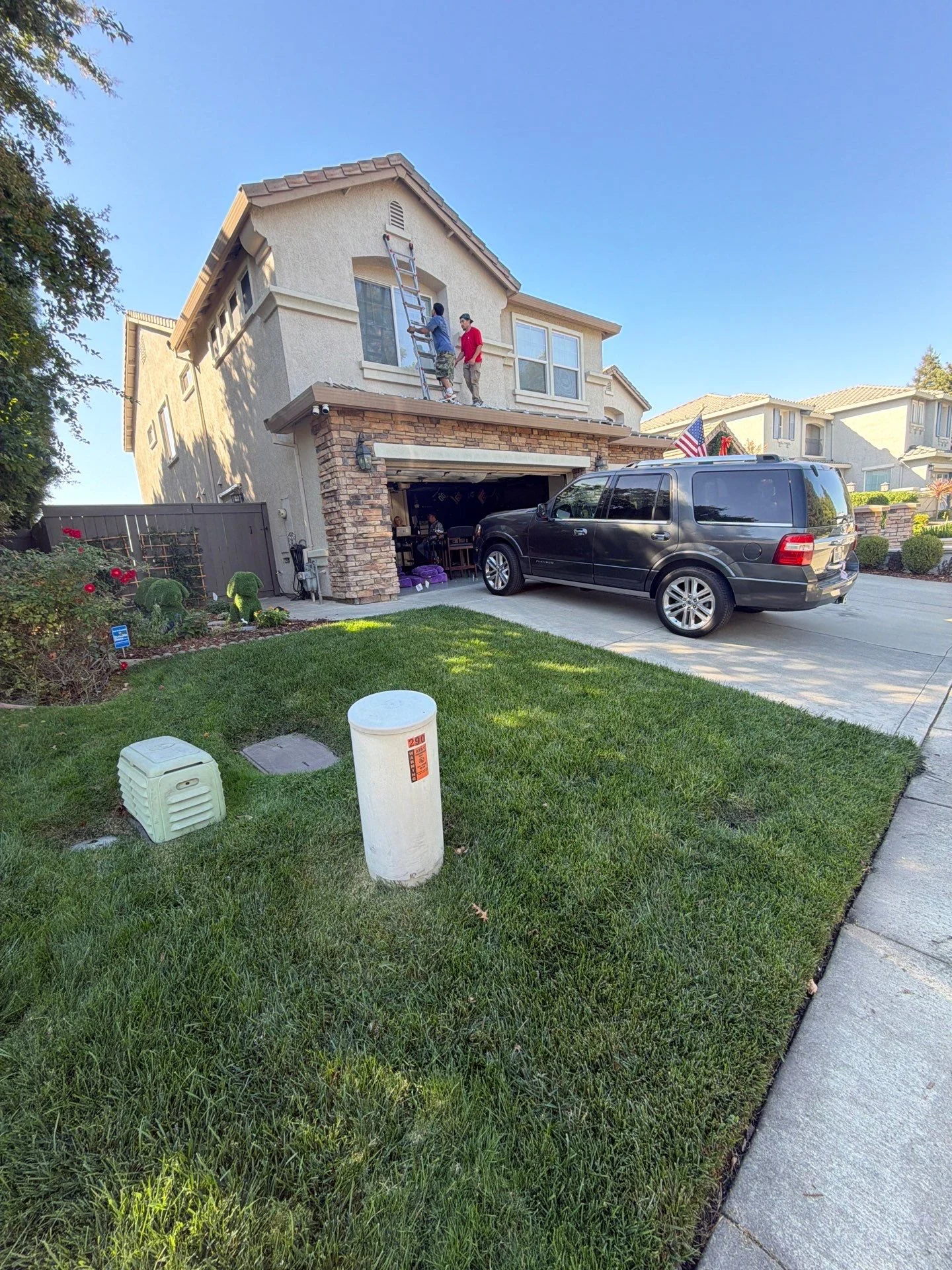
That last step is easy to skip and it matters. A line that looks straight when you are on the roof can look slightly off from the sidewalk, so we check from the street before moving on.
"Great experience year after year. If anything comes loose, Clark comes right away to fix it, and he schedules takedown way ahead of time, which is so convenient."
Kelley Kalin, Google Review, Sacramento Area HomeownerThe Small Details That Keep It Running
The details that make or break a display are usually the ones nobody sees. On this job, one of those is how the strands join at corners and gable transitions. A T-connector at a corner lets one run split cleanly in two directions, so power reaches both sides without a visible gap or a cord looped across the front of the house.
| Detail | Why we do it this way |
|---|---|
| T-connectors at corners | Splits power cleanly where two roof edges meet, with no dark gap at the corner |
| Concealed extension cords | Cords run between roof sections instead of hanging down the wall |
| One planned power source | Every run traces back to a single, deliberately chosen outlet |
| Outdoor rated cords only | Matched to the load and kept clear of standing water |
Power planning is the part homeowners rarely think about. Before a single clip goes up, we decide where the display will plug in and how each run will reach it. That is how you avoid the cord that turns out to be three feet too short on the last gable.
Safety on a Two-Story House
A two-story front with a tile roof is the kind of job where doing it yourself carries real risk. The U.S. Consumer Product Safety Commission estimates that holiday decorating has sent 12,000 or more people to emergency departments every year since 2009, and falls were the most frequently reported incident. Tile makes that worse, since it is brittle and slippery underfoot.
The electrical side matters just as much. The Electrical Safety Foundation International recommends using extension cords and decorations marked for outdoor use, plugging outdoor lights into ground fault circuit interrupter protected outlets, and keeping cords clear of standing water. Those are the same habits our crew follows on every install.
- Use outdoor rated products. Cords and lights should be marked for outdoor use.
- Plug into GFCI protected outlets. A portable outdoor GFCI is an option if your outlets are not protected.
- Check ladder height and footing. A ladder should extend well past the edge, and someone should foot it.
- Keep clear of power lines. Stay at least 10 feet from overhead lines.
- Turn displays off when you leave or sleep. A timer makes this automatic.
Our crews carry the equipment and the experience to do this safely. If you would rather not climb a two-story ladder over a tile roof, that is exactly what the service is for. For a deeper look at the equipment side, see our post on when a job needs scaffolding.
Good to know: if you are weighing seasonal lights against a permanent system for a house like this, our permanent lighting cost guide lays out the numbers. Permanent lighting of $4,000 or more also qualifies you for free Christmas lights this year, a $799 value, through our current offer.
The Finished Result
By the end of the day, Bobbi's home carried a clean, warm C9 line along the roof and gables, a glowing row of ground stakes along the lawn, wreaths with red bows on the gables and lit shrubs in front. In the dusk photo, the warm glow against the stucco and stone is exactly what you want from the street: soft, even and inviting.
A good display does not shout. It looks like it belongs to the house. The tile line, the stone base and the lawn edge are all picked out by the lights, and the red bows add one clear note of color against the warm tones. That is the goal on every job: let the architecture do the work, and use the lights to show it off.
Want to see it on your own house first?
Try our AI Visualizer, completely free.
FAQ: Christmas Lights on Tile Roof Homes, Answered
Can you hang Christmas lights on a tile roof?
Yes. We attach lights at the gutter and fascia line with clips, so nothing is fastened through the tile and the roof surface is not disturbed.
Do you walk on the tile?
We keep roof traffic to a minimum, since tile is brittle. Wherever possible the crew works from ladders at the edge.
Why did this job need two people?
A two-story front needs one person on the ladder and one footing it and managing cords. It is safer and it keeps the spacing consistent.
What are ground stake lights?
They are C9 lights set on stakes along the lawn edge. They add a low, warm layer that connects the yard to the roofline.
How do you light shrubs quickly and evenly?
Net lights drape over shrubs and give full, even coverage without hand wrapping each branch.
Do you serve North Natomas?
Yes, North Natomas and the rest of Sacramento are part of our regular service area.
Is LED really more efficient?
Yes. ENERGY STAR reports that certified LED decorative light strings use about 92 percent less energy than incandescent strings.
What colors work best on stucco and stone?
Warm white and soft amber usually look best, because they bring out the texture of the wall. A single accent color, like red bows, adds contrast.
Is financing available?
Yes. Financing uses a soft credit pull, with payments as low as $150 a month.
How do I get a quote?
Use the free quote button on this page. We design around your roof, your power access and your budget, with pricing starting at $799.
Homes like Bobbi's are a good reminder that the best displays work with the house. Tile, stone, stucco and a tidy lawn already give you a lot to work with. Our job is to light it cleanly, safely and evenly, so it looks the way you pictured it.
Clark, Santa's Lights

Clark started Santa's Lights back in 2014 with a ladder, a truck, and way too much confidence in his own knot tying. Since then he's lit up thousands of homes across Sacramento, Natomas, Folsom, and beyond, and he still shows up to jobs himself often enough to know exactly what he's talking about. When he's not on a roofline, he's probably answering your call directly, because that's still how this business works.